
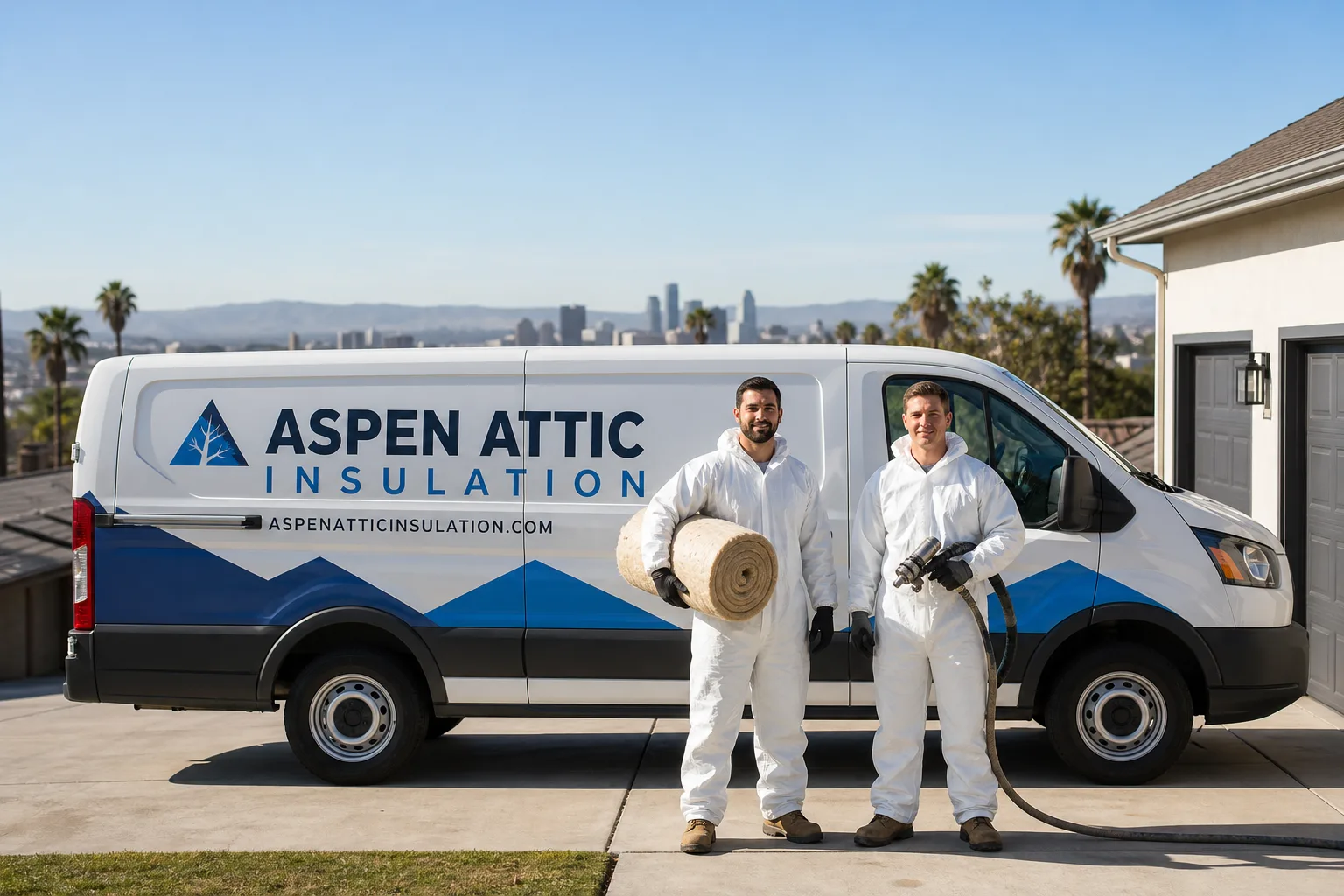
Fast, Reliable Blown In Insulation Across Stanford
Blown-in insulation in Stanford typically costs $1.80 to $3.50 per square foot for attic applications and $2.50 to $5.00 per square foot for wall retrofits, with most residential jobs in College Terrace, Professorville, and the Stanford University area running $2,400 to $6,800 total. Our crews dispatch from the San Francisco Bay Area office and usually reach Stanford properties within 45 minutes to an hour. We’re familiar with the specific challenges of insulating 1920s redwood-clad faculty homes, mid-century ranch houses, and 1960s university buildings where standard approaches fail. Call (864) 428-1615 for a written estimate before any work begins.
Why Aspen Attic Insulation Is Stanford’s Preferred Blown In Insulation Company
Stanford homeowners choose us because we understand what other crews miss: the original redwood siding on College Terrace homes has no sheathing behind it, and blowing insulation without a vapor-permeable membrane traps moisture that rots the wall from the inside. Garrett Sloane and our team have worked on dozens of these historic properties and know where to drill, what membrane to specify, and how to protect the siding during installation.
Our reviews from Stanford customers consistently mention two things: the technician’s photo and name sent before arrival, and the written price that didn’t change after the job. One recent homeowner on Waverley Street noted that our tech spotted dry rot starting in a wall cavity that three previous estimates had missed entirely.
Response time to Stanford averages under an hour for standard appointments and same-day scheduling for urgent cases like failed insulation after a winter freeze. We carry Johns Manville, Knauf, and GreenFiber materials on our trucks, so we’re not making a supply run while your walls are open.
Every technician meets the Threshold Standard: background-checked, identity-verified, photo-badged, and in a clean marked uniform. You get their name and photo before they arrive. Anyone else shows up, the visit is free and we make it right.
Blown In Insulation Contractors in Stanford
Blown In Insulation Contractors working in Stanford need to know the difference between insulating a standard tract home and a 1930s faculty house with original redwood siding and no wall sheathing. Our crews assess cavity depth, existing moisture conditions, and siding attachment before recommending a material or approach. A typical attic blow-in for a 1,800-square-foot Stanford home runs $2,400 to $4,200, while wall retrofits in older homes with membrane requirements range $4,500 to $6,800 due to the additional labor and materials.
Attic Blow-In Applications
Most Stanford attics we see have some existing insulation, often compressed or displaced by decades of storage traffic or rodent activity. We remove the compromised material, air-seal penetrations around recessed lights and duct boots, then blow fresh cellulose or fiberglass to R-38 or R-49 depending on your roof configuration. Attic work is usually completed in a single day with minimal disruption to living spaces below.
Wall Cavity Retrofits
Homes built without wall insulation, common in Professorville and College Terrace, require drilling access holes either from the exterior or interior. In Stanford’s older homes, we prefer exterior drilling to preserve interior plaster and trim, then patch with matching siding material. The critical step is membrane selection: vapor-permeable for redwood-clad homes, standard vapor retarder for homes with sheathing and newer siding.
Cellulose Insulation in Stanford
Cellulose Insulation is our most common recommendation for Stanford’s older residential stock because it conforms to irregular cavities, fills around wiring and plumbing without gaps, and handles the mild seismic activity better than rigid alternatives. A standard attic installation with GreenFiber or CertainTeed cellulose runs $1.80 to $2.80 per square foot in the Stanford market, while dense-packed wall applications with vapor-permeable membrane run $3.50 to $5.00 per square foot. We specify cellulose for most College Terrace and Professorville jobs because it manages moisture vapor transmission without trapping water against original redwood siding.
Material Properties for Local Conditions
Cellulose is treated with borate fire retardant and pest deterrent, which matters in Stanford’s mature tree canopy where roof rats and carpenter ants are active. The material also dampens sound transmission between rooms and from exterior traffic on streets like Embarcadero Road and El Camino Real. For homeowners near Stanford University’s 24-hour operations, that acoustic benefit is noticeable.
University and Commercial Applications
Stanford University’s 1960s – 70s laboratory and office buildings present a different challenge: existing HVAC systems were designed for specific air volumes and pressures, and adding insulation without recalculating duct capacity creates uneven heating and cooling. Our commercial team coordinates with campus facilities to specify materials that integrate with existing mechanical systems rather than fighting them.
Trusted Brands We Service in Stanford
We stock Johns Manville, Knauf, Rockwool, and CertainTeed products on our Bay Area trucks, with GreenFiber cellulose available for same-day residential jobs in Stanford. This matters when you’re dealing with an open wall cavity or a failed insulation patch after a winter storm: we don’t leave your home exposed while ordering materials. Each brand is matched to the specific application, not whatever’s cheapest or already on the truck. For historic homes with moisture-sensitive siding, we default to Knauf’s stabilized cellulose with integrated vapor management. For modern attics with good ventilation, Johns Manville fiberglass blown-in offers excellent thermal performance at moderate cost. Our 365-Day Done Right Promise covers every installation, and if a repair fails, the second visit is free.
Common Blown In Insulation Problems We See in Stanford Homes
- Moisture trapped behind original redwood siding in College Terrace. Blown-in cellulose installed without a vapor-permeable membrane wicks winter condensation into the wall cavity, where it can’t dry outward through the siding. We’ve opened walls where the redwood was punky and black behind seemingly intact paint.
- Uneven pressurization in 1960s – 70s university buildings. Adding insulation to walls and roofs without adjusting HVAC ductwork creates positive and negative pressure zones. Occupants on one side of a lab building freeze while others overheat, and the system runs constantly trying to compensate.
- Cracked rigid foam from seismic activity. Some contractors install brittle foam board in 1920s – 40s wall cavities. Minor quakes, common on the Peninsula, crack the material and create thermal bridges exactly where insulation was supposed to help.
- Compressed or displaced attic insulation from storage use. Stanford’s smaller historic homes often use attics for storage. Boxes, plywood walking surfaces, and holiday decoration traffic flatten insulation to a fraction of its rated R-value, making the home harder to heat and cool.
Pricing for Blown In Insulation in Stanford, CA
| Application | Price Range | Typical Home Size |
|---|---|---|
| Attic blow-in (cellulose or fiberglass) | $2,400 – $4,200 | 1,500 – 2,500 sq ft |
| Attic blow-in (large or complex) | $4,500 – $6,200 | 2,500 – 4,000 sq ft |
| Wall cavity retrofit with standard vapor retarder | $3,50 – $5.00/sq ft | Per wall area |
| Wall cavity retrofit with vapor-permeable membrane (historic homes) | $4.00 – $5.50/sq ft | Per wall area |
| Removal and replacement of failed insulation | $1,800 – $3,600 | Varies by contamination |
What moves you within these ranges: cavity accessibility, presence of knob-and-tube wiring that must be addressed first, siding type and condition, and whether we’re working around existing HVAC ducts or recessed lighting. We inspect every Stanford property before quoting and deliver a written price before any work starts. No post-job additions. Call (864) 428-1615 to schedule your free estimate.
We Also Serve Cities Near Stanford
Our crews work throughout the mid-Peninsula, including Stanford and neighboring Palo Alto, Menlo Park, Atherton, and Los Altos. Each community has distinct housing stock and insulation challenges, from Atherton’s estate homes to Los Altos’ Eichler and ranch-style neighborhoods. If you’re unsure whether your property falls within our service area, call and we’ll confirm.
Serving Stanford, CA - Our Local Coverage Area
We’re based in the Stanford area and know this community well. Use the map below to see our service coverage - if you’re nearby, we can almost certainly help.
FAQs About Blown In Insulation in Stanford
Yes, but only with a vapor-permeable membrane installed between the insulation and the redwood siding. The original faculty homes in College Terrace were built without sheathing, so standard vapor retarders trap moisture against the siding and rot the wall from inside. Our crew drills from the exterior, installs the membrane, then blows GreenFiber cellulose that allows vapor to escape while blocking liquid water. Call (864) 428-1615 and we’ll inspect your siding condition before recommending the approach.
University buildings require coordination with existing HVAC systems that were engineered for specific air volumes and pressures. In a residential attic, we simply air-seal and insulate to R-value targets. In campus labs and offices, we calculate how added wall and roof insulation affects duct static pressure and zone balancing, then specify materials that work with the mechanical system rather than against it. The Threshold Standard requires our commercial techs to document existing conditions and submit integration plans to campus facilities before installation begins.
Loose-fill cellulose and blown fiberglass outperform rigid foam board in seismically active areas because they compress and rebound without cracking. Rigid foam develops fractures during even minor ground movement, creating thermal bridges and air leaks exactly where insulation was needed. We specify Knauf or CertainTeed blown products for wall cavities in Stanford’s earthquake country, and we avoid brittle board stock in any retrofit application.
No, wall insulation and window replacement are separate decisions, though we often recommend addressing both for maximum comfort. Original single-pane windows will still conduct heat and allow condensation even with insulated walls. However, insulating the walls first delivers the larger thermal improvement per dollar spent, and many Professorville homeowners stage window replacement later. Our written estimate breaks out each component so you can decide without pressure.
Yes, and this construction type is common in Stanford’s 1950s – 60s neighborhoods as well as the older faculty areas. Without sheathing, the wall cavity is open from siding to interior drywall, which actually simplifies the blow-in process but requires careful membrane selection to prevent moisture problems. We inspect the siding attachment, check for existing water damage, then install the appropriate barrier and blow insulation with minimal interior disruption. Most ranch retrofits complete in two days.
Written by Garrett Sloane, Owner at Aspen Attic Insulation, serving Stanford and the Bay Area since 2002.