
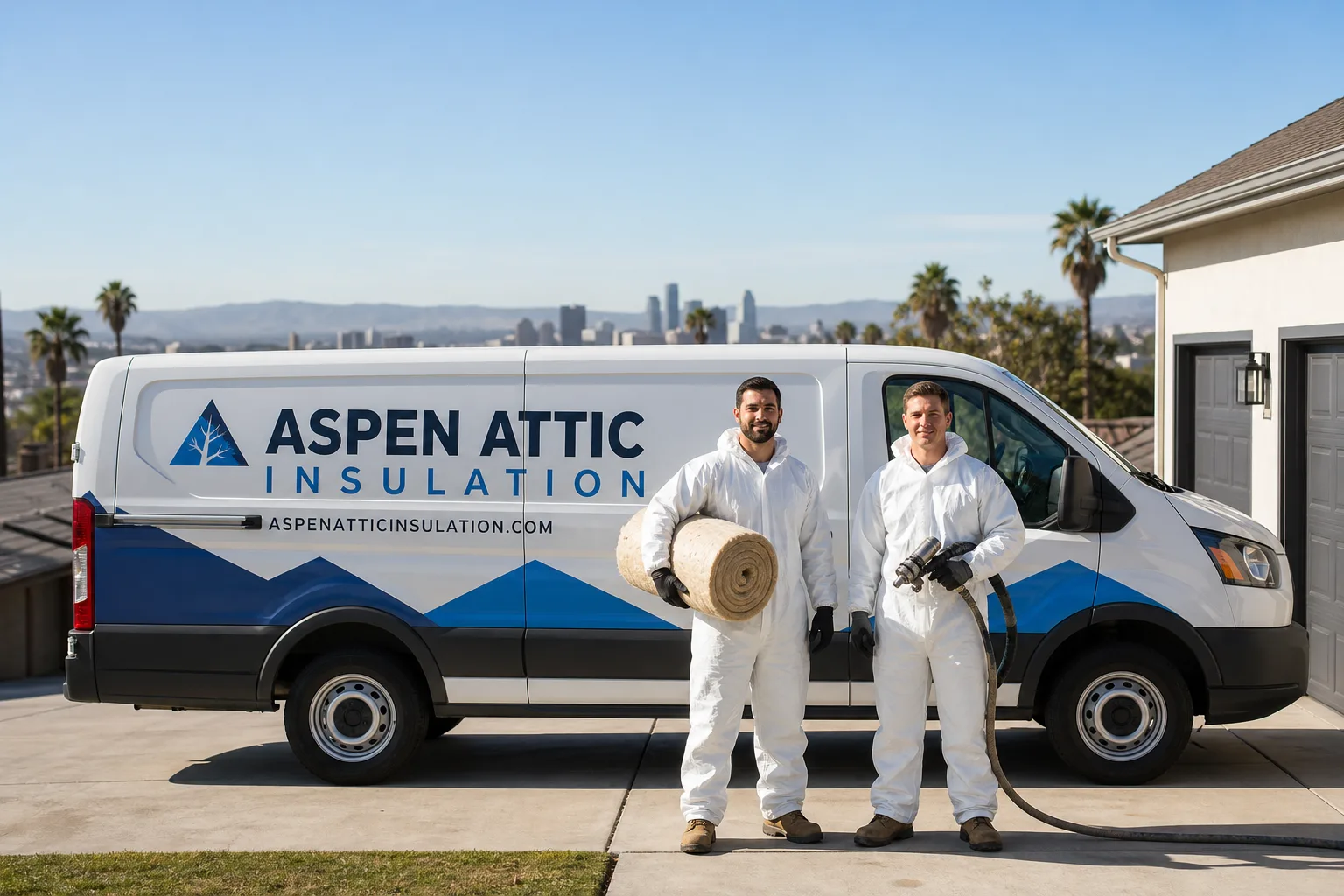
Fast, Reliable Blown In Insulation Across Palo Alto
Blown-in insulation in Palo Alto typically costs $1,800 – $4,500 for attic work and $2,200 – $5,800 for wall retrofits, with most jobs completed in one day. Our crews serve Palo Alto from our San Francisco Bay Area dispatch office, and we’re familiar with the specific challenges of insulating 1920s – 1950s ranchers near Old Palo Alto, the tree-lined streets of Professorville, and the newer ADUs popping up around Midtown. If you’re dealing with uneven temperatures, high PG&E bills, or a remodel that needs to pass Title 24, call us at (864) 428-1615. We’ll send you a written price before any work starts, and you’ll know your technician’s name and photo before they arrive at your door.
Why Aspen Attic Insulation Is Palo Alto’s Preferred Blown In Insulation Company
We’ve worked in Palo Alto long enough to know that a generic insulation job fails here. The combination of old knob-and-tube wiring, balloon framing, and strict city green-building rules means the contractor who just blows material into a cavity and leaves is creating problems for the homeowner at final inspection.
Our Palo Alto customers choose us because of the Threshold Standard: every technician is background-checked, identity-verified, and arrives in a clean marked uniform with a photo ID badge. You get the tech’s name and photo sent to your phone before the visit. If anyone else shows up, the visit is free and we make it right.
Calls are answered by a live person 24/7. No voicemail loops. No “we’ll call you back between 2 and 6.” And every job carries our 365-Day Done Right Promise in writing. If the repair fails, we come back free.
Blown In Cellulose Insulation in Palo Alto
Blown In Cellulose Insulation in Palo Alto is most often the right choice for wall retrofits in older homes and for homeowners who want a recycled, dense-pack material that slows air movement. We install cellulose made from recycled paper fibers, treated with borate for fire and pest resistance, blown at high density into attic floors or wall cavities to eliminate gaps. In Palo Alto’s 1920s – 1950s housing stock, cellulose shines because it can be dense-packed into irregular wall cavities around old wiring and plumbing, something batts can’t do well. A typical attic job runs $1,800 – $3,800, while wall retrofits range from $2,800 – $5,800 depending on cavity depth and access.
Dense-Pack for Old Wall Cavities
Older Palo Alto walls weren’t built for modern insulation. They’re narrow, often 2×4 construction, with no building wrap and irregular stud spacing. We blow cellulose at 3.5 pounds per cubic foot or higher, which creates a monolithic fill that doesn’t settle and blocks air convection. In Professorville and the Professorville Historic District, this is how we insulate without touching the exterior façade.
Fire-Blocking and Code Compliance
California’s Title 24 and Palo Alto’s local green-building requirements mandate specific R-values and proper fire-blocking at penetrations. Cellulose is Class A fire-rated when borate-treated, but the installation still requires careful detailing around electrical boxes, recessed lights, and balloon-framed wall cavities. We handle that detailing as part of the scope, not as an add-on.
Blown In Fiberglass Insulation in Palo Alto
Blown In Fiberglass Insulation in Palo Alto works best for attic floors in homes with good air-sealing already in place, or for new construction and ADU additions where the building envelope is clean and modern. We blow loose-fill fiberglass from brands like Knauf and CertainTeed across attic floors to achieve even, gap-free coverage at the R-value specified by Title 24. Fiberglass doesn’t absorb moisture the way cellulose can, which matters in Palo Alto’s coastal-fog zones where marine-layer air can find its way into poorly sealed attics. Typical attic jobs run $1,800 – $3,200 for fiberglass, with premium high-R systems up to $4,200.
Attic Floor Systems
We blow fiberglass to a uniform depth, installing rulers every few hundred square feet so you can verify the coverage. In Palo Alto’s newer infill homes and ADUs near California Avenue, we often pair blown fiberglass with raised-heel trusses or energy-heel framing to get full-depth insulation at the eaves without compression.
Moisture Management
Fiberglass won’t hold water if condensation occurs, but it also won’t stop air movement on its own. In Palo Alto’s climate, with diurnal temperature swings that can hit 30 degrees between foggy morning and sunny afternoon, we always inspect attic ventilation and exhaust fan terminations before blowing. Bad ventilation ruins good insulation.
Trusted Brands We Service in Palo Alto
We stock materials from eight leading manufacturers so we match the product to the house, not force whatever’s on the truck. For Palo Alto jobs, we commonly pull from Knauf’s blown fiberglass line for attic floors, CertainTeed’s dense-pack cellulose for historic-district wall retrofits, and Rockwool’s mineral wool for fire-blocking and high-temperature applications around old chimneys or recessed lighting. Having local inventory means we don’t delay your job waiting for a special order. If your project needs a specific R-value or assembly to pass Palo Alto’s green-building checklist, we already have the material on hand or can source it within 48 hours.
Common Blown In Insulation Problems We See in Palo Alto Homes
- Settled cellulose from moisture cycling. Marine-layer moisture and diurnal swings in Palo Alto can create condensation in poorly sealed 1920s – 1950s wall cavities, causing blown-in cellulose to settle unevenly and lose R-value at the top of the wall. We find this most often in ranchers near the foothills where fog burns off slowly.
- Failed inspections from hidden air paths. Older Palo Alto homes often have knob-and-tube wiring and balloon framing, so improper blown-in installation can leave hidden air paths and fire-blocking gaps that fail Title 24 and city green-building inspections. We air-seal and block before we blow.
- Historic-district access challenges. In historic districts like Professorville, exterior-alteration restrictions mean blown-in insulation must be installed from the inside, making it easy to miss dense-packing voids or blow cellulose into wall cavities without proper air-sealing. Our crews use infrared verification to confirm complete fill.
- ADU and addition tie-in failures. Palo Alto’s wave of second-story bump-outs and ADU conversions often creates thermal bridges where new high-performance assemblies meet old uninsulated walls. Blown-in insulation at the tie-in, done right, prevents the cold spots that show up on winter mornings.
Pricing for Blown In Insulation in Palo Alto, CA
Here’s what blown-in insulation costs in Palo Alto’s current market:
- Attic floor, blown fiberglass: $1,800 – $3,200
- Attic floor, blown cellulose: $2,000 – $3,800
- Wall retrofit, dense-pack cellulose: $2,800 – $5,800
- ADU or addition, blown insulation: $2,200 – $4,500
- Air-sealing and fire-blocking (required scope on most older homes): $800 – $2,200
What moves the price: cavity depth, square footage, access difficulty, whether we can work from the attic or need interior wall access, and the condition of existing wiring. Homes with active knob-and-tube may need electrical coordination before we insulate. We don’t guess at your price over the phone and then change it on site. A technician visits, assesses the space, and gives you a written price before any work begins. Estimates are free. Call (864) 428-1615 to schedule.
We Also Serve Cities Near Palo Alto
Our crews work throughout the Peninsula. If you’re in Palo Alto or nearby, we can typically schedule within a few days. We also serve Stanford, Menlo Park, Atherton, and Los Altos with the same Threshold Standard: named technician, photo sent in advance, written price, written guarantee. For our full service details, visit our Blown In Insulation hub page.
Serving Palo Alto, CA - Our Local Coverage Area
We’re based in the Palo Alto area and know this community well. Use the map below to see our service coverage - if you’re nearby, we can almost certainly help.
FAQs About Blown In Insulation in Palo Alto
Yes. In districts like Professorville, exterior alterations are restricted, so we install blown-in insulation from the interior through small holes that get patched and painted. In the Professorville historic district, we blew dense-pack cellulose into the wall cavities of a 1930s Spanish-revival bungalow through small interior holes because the city’s historic-preservation rules restrict exterior alterations. The walls had no building wrap and older knob-and-tube wiring, so we air-sealed and fire-blocked before insulating to satisfy Title 24 and local green-building expectations. The result was a quieter, more comfortable interior without changing the visible façade. Call (864) 428-1615 if your home is in a historic district; we’ll plan the access strategy during your free estimate.
These homes typically have uninsulated wall cavities, knob-and-tube wiring, balloon framing, and no building wrap, so adding modern blown-in insulation requires air-sealing, fire-blocking, and electrical clearances rather than just filling a cavity. In Palo Alto, blown-in insulation decisions are often locked to the house’s age and wiring: 1920s – 1950s ranchers commonly hide uninsulated wall cavities with knob-and-tube wiring and no building wrap, so adding modern blown-in insulation usually requires air-sealing, fire-blocking, and careful clearances rather than just filling a cavity. That combination – old walls plus strict Title 24 and city green-building requirements – makes the insulation scope more about code-ready detailing than about extreme weather. We assess the full scope before quoting so you pass inspection the first time.
Yes, if it’s paired with proper air-sealing. Blown-in insulation alone won’t stop condensation caused by marine-layer moisture and diurnal temperature swings, but dense-pack cellulose or properly installed fiberglass in a sealed cavity reduces the temperature differential that causes fog-season condensation. We always inspect and seal bypasses around top plates, electrical penetrations, and recessed lights before blowing. Call (864) 428-1615 for an assessment of your specific moisture patterns.
Dense-pack cellulose and high-R loose-fill fiberglass both satisfy Title 24 when installed to the required depth and paired with verified air-sealing. The best choice depends on your assembly: cellulose for irregular old wall cavities, fiberglass for clean attic floors in newer construction. We specify the exact R-value, coverage depth, and fire-blocking details your permit requires. Our materials come from Knauf, CertainTeed, and other verified brands with published performance data inspectors recognize.
Yes. ADUs and bump-outs are common in Palo Alto, and we regularly insulate them with blown fiberglass or cellulose to tie into the existing structure. The critical detail is the thermal bridge at the connection point between old and new construction. We typically dense-pack the old wall and blow new material in the addition, then verify continuity with thermal imaging. Most ADU insulation jobs run $2,200 – $4,500. Call (864) 428-1615 for a written estimate on your specific project.
Ready to stop the cold spots and high bills? Call Aspen Attic Insulation at (864) 428-1615 for a free, written estimate. We’ll send you your technician’s name and photo before they arrive, and every job is backed by our 365-Day Done Right Promise in writing.
Written by Garrett Sloane, Owner at Aspen Attic Insulation, serving Palo Alto and the Bay Area.