
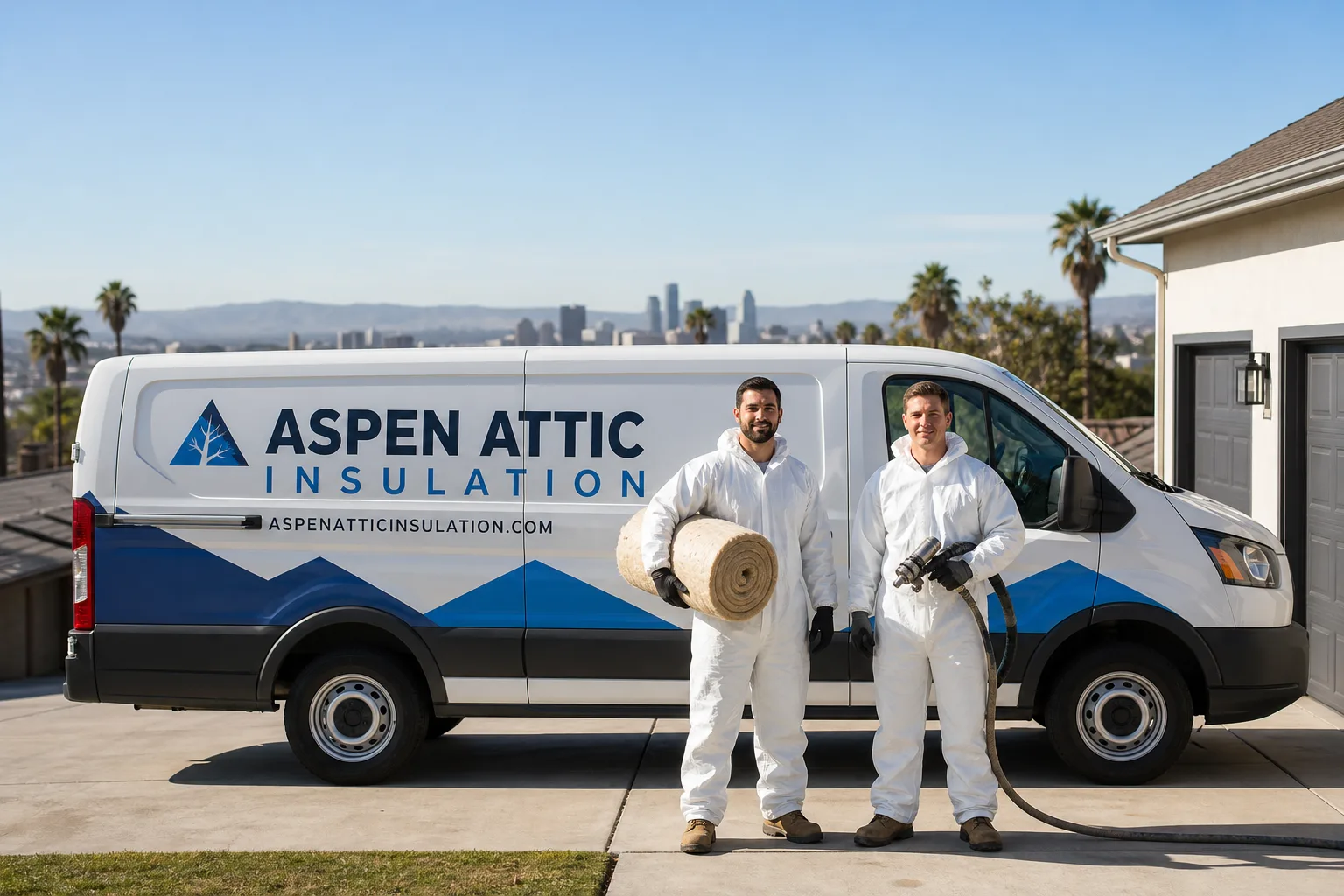
Trusted Blown In Insulation Nationwide
Blown in insulation fills attic cavities, wall bays, and floor joists with loose fibers that settle into every gap, cutting heating and cooling bills by 15% to 25% in most homes. Most jobs take four to six hours, and our crews carry enough material on the truck to finish same day. Call (864) 428-1615 and a live person will pick up, 24 hours a day.
Since 2002, Aspen Attic Insulation has installed blown in insulation in thousands of homes across the country. We’re part of the Threshold Group family, and every location operates to the Threshold Verified standard: background-checked technicians, written prices before any work starts, and a 365-Day Done Right Promise backed in writing. You’ll get the technician’s name, photo, and ID badge details before anyone knocks. If a different person shows up, that visit is free and we make it right.
Our crews stock eight leading brands so we match the material to your home, not just what we have on the truck. We install blown in insulation in attics, walls, and crawl spaces, and we also offer attic insulation and spray foam insulation when those make more sense for the job.
Cellulose Insulation
Cellulose Insulation is ground paper fiber treated with borate fire retardant, blown dry into attics or walls at 1.5 to 3.5 pounds per cubic foot depending on the target R-value. It performs best in older homes with irregular joist spacing or plenty of obstructions, because the loose material snakes around wiring and plumbing that rigid batts can’t accommodate. A typical attic runs $1.20 to $2.00 per square foot installed, with whole-house projects between $1,500 and $4,000 depending on accessibility and existing insulation depth.
When Cellulose Beats Fiberglass
Cellulose settles 20% denser than fiberglass, which means fewer air pockets and better sound dampening between floors. We see it specified most often in homes built before 1980 with balloon framing or minimal existing insulation, where the blown material needs to fill irregular cavities completely.
Fire and Pest Resistance
The borate treatment in quality cellulose products repels insects and resists mold growth without adding formaldehyde or ammonia. We source cellulose from GreenFiber and CertainTeed, both of which publish independent test data on settled density and smolder resistance.
Blown In Attic Insulation
Blown In Attic Insulation refers specifically to loose-fill material installed across the attic floor or against the roof deck using a gas-powered hopper and flexible hose. It’s the fastest way to bring an under-insulated attic up to current DOE recommendations, typically R-38 to R-60 depending on your climate zone. Most attic jobs run $1.00 to $2.50 per square foot, with an average single-family home falling between $1,200 and $3,500 total.
Attic Floor vs. Roof Deck Application
Floor blow-ins are simpler and cheaper: we lay material across the joists, adding depth until we hit the target R-value. Roof deck applications require netting or rigid baffles to hold insulation against the slope, which adds labor but creates conditioned attic space suitable for HVAC equipment or storage.
Air Sealing First
We seal bypasses around chimneys, recessed lights, and top plates before blowing any material. Skipping this step is like pouring water into a cracked bucket, and we include it in every attic estimate at no extra charge.
Blown In Cellulose Insulation
Blown In Cellulose Insulation is the same recycled paper product as standard cellulose, but specified here to distinguish the installation method from dense-pack wall applications or wet-spray techniques. It installs dry through a 3-inch hose, typically reaching settled depths of 10 to 16 inches in open attics. Pricing tracks standard cellulose at $1.20 to $2.00 per square foot for attic floors, with wall retrofits running higher due to access requirements.
Dense-Pack Walls
For enclosed wall cavities, we switch to higher-pressure dense-pack at 3.5 to 4.0 pounds per cubic foot, which eliminates settling and creates an air barrier without removing drywall. This requires drilling access holes every 16 inches, then patching and painting afterward.
Moisture Management
Cellulose absorbs and releases moisture without degrading, but it needs proper ventilation to dry. We inspect attic intake and exhaust ventilation before every job and recommend corrections if your soffit vents are blocked or your ridge vent is insufficient.
Blown In Fiberglass Insulation
Blown In Fiberglass Insulation consists of molten glass spun into fibers, then blown through a machine to create a fluffy, low-density layer across attic floors or into wall cavities. It weighs less than cellulose per R-value, which matters in attics with undersized joists. Expect $0.90 to $1.80 per square foot for attic applications, with premium high-performance batts running toward the higher end.
Knauf and Owens Corning Options
We stock Knauf’s Jet Stream Ultra and Owens Corning AttiCat systems, both of which use proprietary fiber conditioning to reduce airborne dust during installation. The Knauf product achieves R-38 at 12 inches versus 14 inches for standard fiberglass, which helps when headroom is limited.
When Fiberglass Makes Sense
Choose blown fiberglass when attic trusses can’t handle cellulose weight, or when you’re topping existing fiberglass and want compatible materials. It doesn’t absorb moisture, so it’s more forgiving in attics with minor roof leaks that haven’t been addressed yet.
Loose Fill Insulation
Loose Fill Insulation is the generic industry term for any fiber or pellet material installed by blower rather than in batt or board form. It includes cellulose, fiberglass, mineral wool, and newer options like recycled denim. The category covers everything from $800 attic top-offs to $6,000 whole-house retrofits, with most residential projects landing between $1,500 and $3,500.
Material Matching by Application
We don’t default to one product. Rockwool loose fill goes into high-temperature areas near chimneys, GreenFiber cellulose into standard attics, and Icynene open-cell spray foam into rim joists where air sealing matters most. The right material costs less over time than the cheapest upfront option.
Depth Markers and Verification
After every loose fill job, we install depth markers every 300 square feet and photograph coverage from multiple angles. These photos go into your job file with your written price and warranty documents, so there’s no dispute about what was installed.
Blown In Insulation Contractors
Blown In Insulation Contractors are specialists with pneumatic blowing equipment, material calculators, and training in respiratory protection and confined-space safety. General handymen rarely own the right machines or carry the liability coverage for attic work. Aspen Attic Insulation charges the same market rates as competent competitors, $1.00 to $2.50 per square foot depending on material and access, but adds verification protocols most contractors skip.
The Threshold Verified Difference
Every technician passes a criminal background check, identity verification, and drug screen before wearing the Aspen uniform. You get their name and photo by text or email before the appointment, and they show a photo ID badge at your door. This isn’t optional. It’s The Threshold Standard, applied to every visit.
Written Price, Written Guarantee
Your estimate arrives by email with line-item pricing for materials, labor, and any prep work like air sealing or baffle installation. The 365-Day Done Right Promise covers labor and materials in writing, with a free second visit if anything fails.
Brands We Service
We install and source from eight leading manufacturers so we’re never pushing the one product our warehouse happens to stock. Owens Corning’s AttiCat system sets the standard for blown fiberglass consistency, with on-site packaging that reduces handling contamination. Johns Manville supplies formaldehyde-free fiberglass for chemically sensitive households. Knauf’s EcoSeal and Jet Stream lines give us high-density options for tight spaces and premium performance specs. Rockwool’s stone wool handles temperatures up to 2,150°F, making it the only choice near masonry chimneys and furnace flues. CertainTeed’s InsulSafe SP and TrueComfort cellulose lines offer established fire-test ratings and consistent settled density. Icynene and Demilec provide our open-cell and closed-cell spray foam options for hybrid jobs that combine air sealing with blown fill. GreenFiber’s all-borate cellulose, made from 85% recycled content, serves homeowners prioritizing recycled content without sacrificing fire safety.
Whether you have a preference for Rockwool, Knauf, CertainTeed, or any other make, we can help. We don’t earn spiffs or rebates from manufacturers, so our recommendation tracks your home’s needs, not our margin.
Signs You Need a Pro Right Now
- Ice dams form along your roof edge every winter. Heat escaping through insufficient attic insulation melts snow from below, and the refreeze at the eave backs water under shingles. Blown in insulation to proper depth, combined with air sealing, breaks this cycle before it damages sheathing or interior ceilings.
- Your upstairs rooms run 8 to 12 degrees hotter in summer than the downstairs. This temperature stratification means your attic is functioning as a solar oven above your ceiling, and your HVAC is fighting a battle it can’t win. Adding blown in insulation reduces that heat transfer and lets your system cycle normally.
- Your energy bills jumped 20% or more year-over-year with no rate increase. Insulation settles and compresses over decades, and some older blown-in jobs were underfilled from the start. A quick attic inspection with a depth gauge tells us whether you’re getting the R-value you paid for.
- You can see floor joists in your attic. Joists are 1.5 inches tall. If they’re visible above the insulation, you almost certainly have less than R-19 in a space that probably needs R-38 to R-60. This is the most common finding on our inspections.
- Your home was built before 1980 and has never been reinsulated. Original blown-in or batt insulation from this era was often installed to R-19 or less, and may contain vermiculite with asbestos risk. We test suspicious material before disturbing it, and we never blow new product over hazardous old insulation.
Our Process, Step by Step
- 1
Call or schedule online. A live person answers (864) 428-1615 24 hours a day. We’ll ask about your home’s age, square footage, and any symptoms you’ve noticed, then schedule a no-obligation inspection at your convenience.
- 2
Pre-visit technician notification. You’ll receive your technician’s name, photo, and ID badge number by text or email before they arrive. If anyone else shows up, the visit is free.
- 3
Attic inspection and measurement. We enter the attic with a depth gauge, thermal camera, and moisture meter. We photograph existing conditions, identify air leaks with a smoke pencil or blower door when needed, and measure square footage and obstructions.
- 4
Written estimate on the spot. Your technician builds a line-item estimate using our pricing software: material type, bags needed, labor hours, prep work, and total cost. No hidden fees, no “we’ll send it later,” no pressure to decide immediately.
- 5
Installation and verification. We install to manufacturer specs with depth markers, take post-installation photos, and clean the work area completely. Your warranty documents and final invoice arrive by email the same day.
How Much Does Blown In Insulation Cost?
A typical job runs $1.00 to $2.50 per square foot for standard Blown In Insulation pricing, with most single-family homes falling between $1,200 and $3,500 total. Cellulose attic floors typically cost $1.20 to $2.00 per square foot, while blown fiberglass runs $0.90 to $1.80 per square foot. Dense-pack wall retrofits cost more, usually $2.00 to $4.00 per square foot, because of access work and higher material density requirements. Whole-house jobs combining attic, walls, and crawl spaces range from $3,000 to $8,000 depending on home size and existing conditions.
Several factors move the price. Attic accessibility matters: a hatch in a closet versus a pull-down stairs versus a walk-up stairwell changes labor hours significantly. Existing insulation removal adds $0.50 to $1.50 per square foot. Air sealing around recessed lights, chimneys, and top plates is essential but adds time. The target R-value drives material volume: going from R-30 to R-60 roughly doubles the bags needed.
To avoid overpaying, get at least one estimate that specifies material brand, bag count, and installed depth rather than a vague per-square-foot number. Some contractors quote low by planning thin coverage that doesn’t meet code. Our estimates include the exact bag count and target depth, and we verify with photos afterward.
Every free estimate includes the attic inspection, moisture and depth assessment, air-leak identification, and written line-item pricing. There’s no charge for the visit and no obligation to book.
Where We Work
Aspen Attic Insulation serves homeowners and businesses across the United States through a network of locally operated crews, including our Blown In Insulation in Los Angeles and other major markets. Each location is independently owned and operated under the Threshold Group umbrella, with every technician meeting the same Threshold Verified standards for background checks, identification protocols, and written pricing. You get the consistency of a national program with the accountability of a local business owner who lives in the community they serve.
Frequently Asked Questions About Blown In Insulation
Blown in insulation is loose fiber material, usually cellulose or fiberglass, installed with a blowing machine that propels it through a hose into attics, walls, or floors. It fills irregular cavities and gaps around obstructions better than batts or rolls. The installed depth determines the R-value, which measures thermal resistance.
Most attic jobs take four to six hours for a crew of two technicians. Wall retrofits with dense-pack cellulose take longer, typically one to two days, because of access hole drilling and patching. We finish most standard attic jobs in a single visit with material carried on the truck.
Attic applications typically run $1.00 to $2.50 per square foot installed, with most homes between $1,200 and $3,500 total. Cellulose runs $1.20 to $2.00 per square foot, fiberglass $0.90 to $1.80. Call (864) 428-1615 for a free written estimate with exact pricing for your home.
Yes. We install Knauf’s Jet Stream and EcoSeal lines, Rockwool’s stone wool loose fill, and CertainTeed’s InsulSafe SP and TrueComfort cellulose. We stock all three brands and can match your existing insulation or recommend based on your specific application and budget.
We answer calls live 24 hours a day and schedule same-day or next-day appointments when possible. True insulation emergencies are rare, but we prioritize homes with no heat due to ice dam damage or exposed insulation from pest intrusion. Call (864) 428-1615 and we’ll fit you into the schedule.
Every job carries our 365-Day Done Right Promise in writing. If the insulation settles below specified depth, fails to perform as estimated, or any repair we make fails within a year, we return free and make it right. This covers labor and materials with no deductible or service fee.
Clear a path to the attic hatch and remove stored items from the attic floor. We’ll handle everything else, including laying protective sheeting, setting up the blowing machine, and cleanup afterward. If you have recessed lights or a furnace in the attic, leave them accessible for our air-sealing inspection.
Schedule Your Blown In Insulation Service Today
Call (864) 428-1615 now and a live person will answer, 24 hours a day. We’ll schedule your free estimate, send your technician’s name and photo before the visit, and put the exact price in writing before any work begins. Every job carries our 365-Day Done Right Promise. No surprises, no strangers at your door.
Written by Garrett Sloane, Owner at Aspen Attic Insulation, serving homeowners nationwide since 2002.