
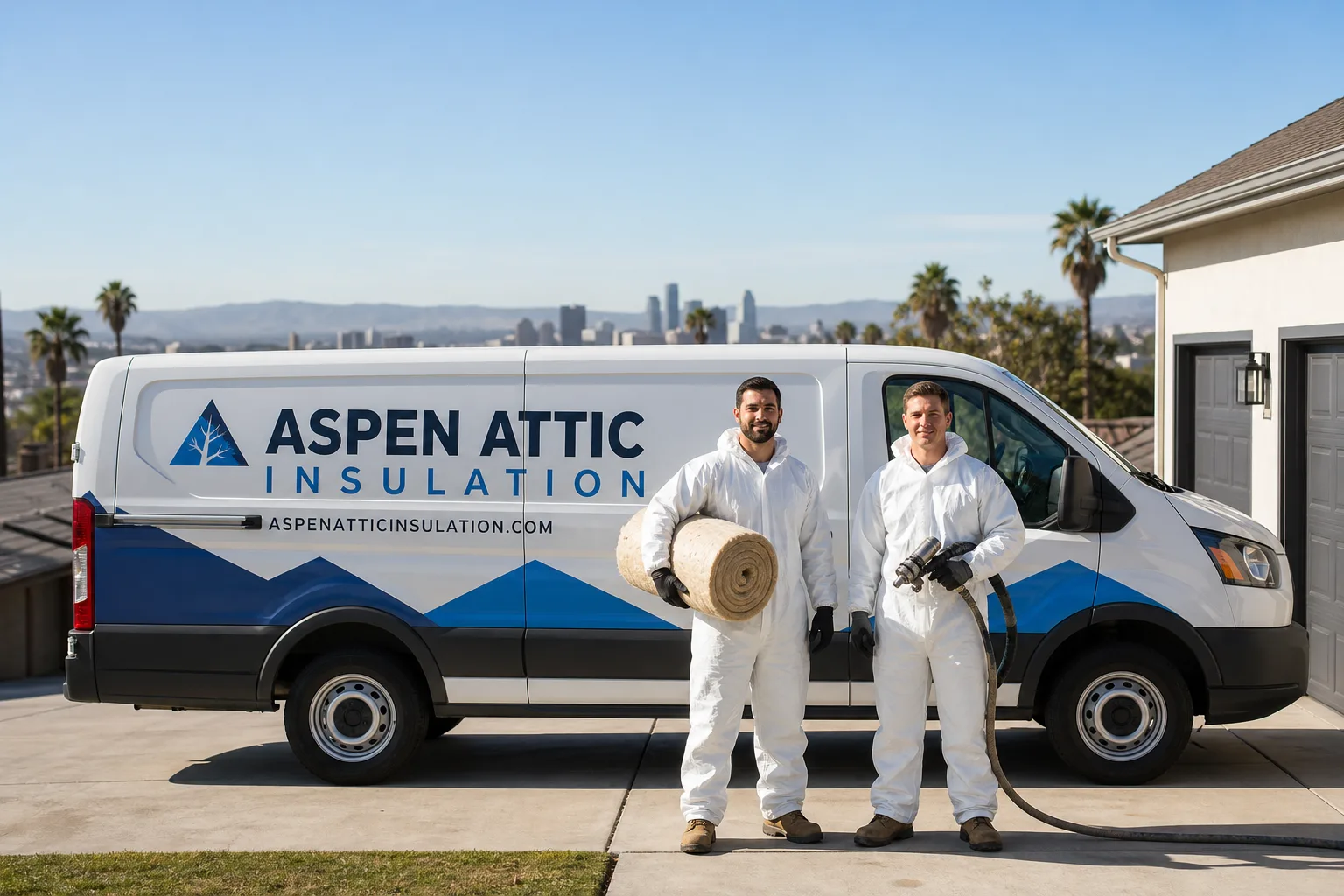
Fast, Reliable Blown In Insulation Across Spring Valley
Blown-in insulation in Spring Valley, CA typically costs $1.20 – $2.80 per square foot installed, with most ranch homes running $1,800 – $4,200 depending on attic size and condition. Most jobs are completed in a single day, and crews can often be on-site within 24 – 48 hours of your call. If your Spring Valley home still has the original R-11 batts from the 1960s – 1980s, you’re likely losing cooled air fast and running your AC harder than you need to in this inland heat.
We know Spring Valley’s housing stock because we’ve worked it for years. From the slab-on-grade ranches off Dictionary Hill Road to the manufactured home parks along Campo Road, we’ve crawled attics that hit 150°F+ by early afternoon and found the same pattern: sagging kraft-faced batts, open eave bays, and insulation that’s doing almost nothing. Our Blown In Insulation team dispatches from our San Diego office, but the crews serving Spring Valley live and work locally. They understand the difference between a coastal install and what your canyon-adjacent ranch actually needs. Call (864) 428-1615 and a live person will pick up, 24/7.
Why Aspen Attic Insulation Is Spring Valley’s Preferred Blown In Insulation Company
Spring Valley homeowners choose us because we remove two uncertainties at once: who is walking through your door, and what you’ll actually pay. Every technician is background-checked, identity-verified, and sent to you by name and photo before the visit. They arrive in a clean marked uniform with a photo ID badge. If anyone else shows up, the visit is free and we make it right. That’s The Threshold Standard, and it applies to every job we run in Spring Valley.
Our reviews from Spring Valley customers consistently mention the same things: the written price delivered before any work starts, the 365-Day Done Right Promise backed in writing, and the free second visit if a repair fails. We’ve earned a strong local reputation here because we don’t treat Spring Valley as an afterthought to coastal San Diego. We know the 91977 and 91978 ZIP codes, the difference between a canyon-exposed home near La Presa and a valley-floor ranch near Bancroft Drive, and why ember-resistant details matter on one but not the other.
Response time to Spring Valley is typically same-day or next-day for estimates, with most blown-in installations completed in one visit. Our crews carry materials from eight leading brands, so we’re matching product to condition, not forcing whatever’s on the truck.
Cellulose Insulation in Spring Valley
Cellulose Insulation in Spring Valley is most often borate-treated cellulose, specified for its Class A fire resistance and its ability to pack tightly into the irregular cavities left by sagging legacy batts. For a typical 1,200 – 1,800 square foot ranch, expect $2,000 – $4,500 depending on whether we need to remove degraded existing material first and whether ember-resistant vent screening is part of the scope.
Fire Resistance and Ember Protection
Borate-treated cellulose doesn’t just slow flame spread; it forms a dense, settled blanket that helps block ember intrusion through compromised eave bays. In Spring Valley’s wildland-adjacent neighborhoods, that’s a real consideration. Standard fiberglass blown loose won’t give you the same ember resistance, and exposed foam products can be a genuine liability near canyon interfaces.
Retrofitting Over Existing Batts
Where original R-11 batts are still in place but sagging, we often blow cellulose over and around them after sealing air leaks and repairing the facing attachment. This avoids the cost of full removal while restoring thermal performance. The key is assessing whether the existing batts are mold-free and structurally intact enough to leave in place.
Blown In Attic Insulation in Spring Valley
Blown In Attic Insulation in Spring Valley addresses the single biggest performance failure we see: attics that functionally have no thermal barrier because original batts have pulled away from the roof deck. For a complete attic blow on a standard ranch, figure $1,800 – $3,800; if we’re also removing old material, sealing penetrations, and installing ember-resistant screening, the range moves to $2,800 – $5,200.
Slab-On-Grade Ranch Specialists
Spring Valley’s slab-on-grade ranches have no crawl space to lose heat through, which means the attic is doing almost all the thermal work. When that attic hits 150°F+ and your batts are hanging in folds, your AC is fighting a battle it can’t win. We blow to a uniform depth, typically R-38 to R-49 depending on roof geometry, and we don’t leave until we’ve verified coverage with depth markers.
Mobile and Manufactured Home Upgrades
The older mobile and manufactured homes in Spring Valley’s parks often have thin or missing underbelly insulation, which means a blown-in attic upgrade alone leaves the floor assembly underperforming. We’ll tell you honestly if attic-only work makes sense or if you need a combined approach. Sometimes the right call is attic cellulose plus belly wrap; sometimes it’s addressing the attic first and evaluating the rest separately.
Trusted Brands We Service in Spring Valley
We stock materials from eight industry-leading brands, and for Spring Valley we most commonly reach for Owens Corning fiberglass loose-fill where fire exposure is minimal, Johns Manville mineral wool for its superior heat resistance in extreme attics, and Knauf EcoFill or GreenFiber borate-treated cellulose where wildfire ember protection is the priority. Because we carry multiple product lines, we’re not forcing your job to fit what’s available. A crew serving a ranch near Sweetwater Springs Boulevard might spec cellulose for ember resistance, while a valley-floor home near Spring Valley Parkway gets fiberglass for cost efficiency. Both get the same written price upfront, the same 365-Day Done Right Promise, and the same technician verification protocol.
Common Blown In Insulation Problems We See in Spring Valley Homes
- Sagging R-11 kraft-faced batts pulling off the roof deck. This is the classic Spring Valley failure. The facing adhesive degrades in 150°F+ attic heat, batts sag into the cavity, and eave bays are left completely exposed. We find this on roughly half the 1960s – 1980s ranches we inspect.
- Blown-in cellulose applied over compromised existing batts without air sealing first. Gaps in the old batt layer create convection channels that carry conditioned air straight through the new insulation. The homeowner pays for a blow that performs at a fraction of its rated R-value.
- Flat or low-pitch roofs with no ember-resistant vent screening. Spring Valley’s dry canyon winds drive hot air and wind-borne embers directly into the insulation field. Without proper screening, you’re undermining both thermal performance and fire safety.
- Attic-only upgrades on manufactured homes with failed underbelly insulation. The attic gets fixed, the floor assembly still bleeds heat, and the homeowner doesn’t get the comfort or bill reduction they expected. We flag this before we quote.
Pricing for Blown In Insulation in Spring Valley, CA
Here’s what blown-in insulation actually costs in the Spring Valley market right now:
| Service | Typical Range |
|---|---|
| Basic blown-in attic (no removal, standard access) | $1.80 – $2.40/sq ft |
| Attic with degraded batt removal and disposal | $2.50 – $3.50/sq ft |
| Complete retrofit with air sealing and ember vent screening | $3.00 – $4.20/sq ft |
| Mobile/manufactured home attic (limited access, smaller cavity) | $1,400 – $2,800 total |
Most Spring Valley ranch homes fall in the $2,200 – $4,200 range for a complete, done-right job. What moves you up or down: attic square footage, whether old material needs removal, accessibility (some of those low-pitch roofs are tight), and whether we’re adding ember-resistant screening or other fire-hardening details. We give you a written price before any work starts. No post-job surprises, ever. Call (864) 428-1615 for a free estimate and we’ll put real numbers to your specific attic.
We Also Serve Cities Near Spring Valley
Our crews work throughout East County San Diego. If you’re in Spring Valley proper, La Mesa, Lemon Grove, El Cajon, or Bonita, we have local techs who know your housing stock and your climate conditions. Same verification standards, same written pricing, same 365-Day Done Right Promise.
Serving Spring Valley, CA - Our Local Coverage Area
We’re based in the Spring Valley area and know this community well. Use the map below to see our service coverage - if you’re nearby, we can almost certainly help.
FAQs About Blown In Insulation in Spring Valley
Yes, and it’s often the most cost-effective upgrade you can make. Those original batts have likely sagged, compressed, or pulled away from the roof deck entirely, meaning your attic is functionally uninsulated. We typically remove or work around the degraded batts, seal air leaks, and blow new material to a uniform R-38 to R-49. Call (864) 428-1615 for a free inspection and written quote.
Borate-treated cellulose is the better choice for canyon-adjacent Spring Valley homes. Its Class A fire rating and dense pack characteristics provide ember resistance that standard fiberglass doesn’t match. For valley-floor homes with minimal wildfire exposure, fiberglass may be more cost-effective. We’ll assess your specific exposure and recommend accordingly, with both options priced upfront.
Spring Valley’s inland East County location means attics run 10 – 20°F hotter than coastal San Diego, with more extreme daily temperature swings. This accelerates degradation of older batt facings and increases convective air movement through gaps. Properly installed blown-in insulation, especially dense-pack cellulose, resists these convection losses and maintains its R-value under thermal stress better than degraded legacy batts.
Attic-blown insulation helps, but it’s only part of the solution for many Spring Valley manufactured homes. These units often have thin or compromised underbelly insulation that leaves the floor assembly underperforming even after the attic is fixed. We’ll inspect both areas and give you an honest assessment of whether attic-only work makes sense or if you need a combined approach.
Flat and low-pitch roofs in Spring Valley have limited attic volume, which means less room for insulation depth and more critical need for proper venting. Without adequate eave ventilation and ember-resistant screening, hot air and wind-driven embers can enter the insulation field directly. We evaluate venting as part of every low-pitch quote and won’t install over a configuration we know will fail.
Written by Garrett Sloane, Owner at Aspen Attic Insulation, serving Spring Valley since 2002.