
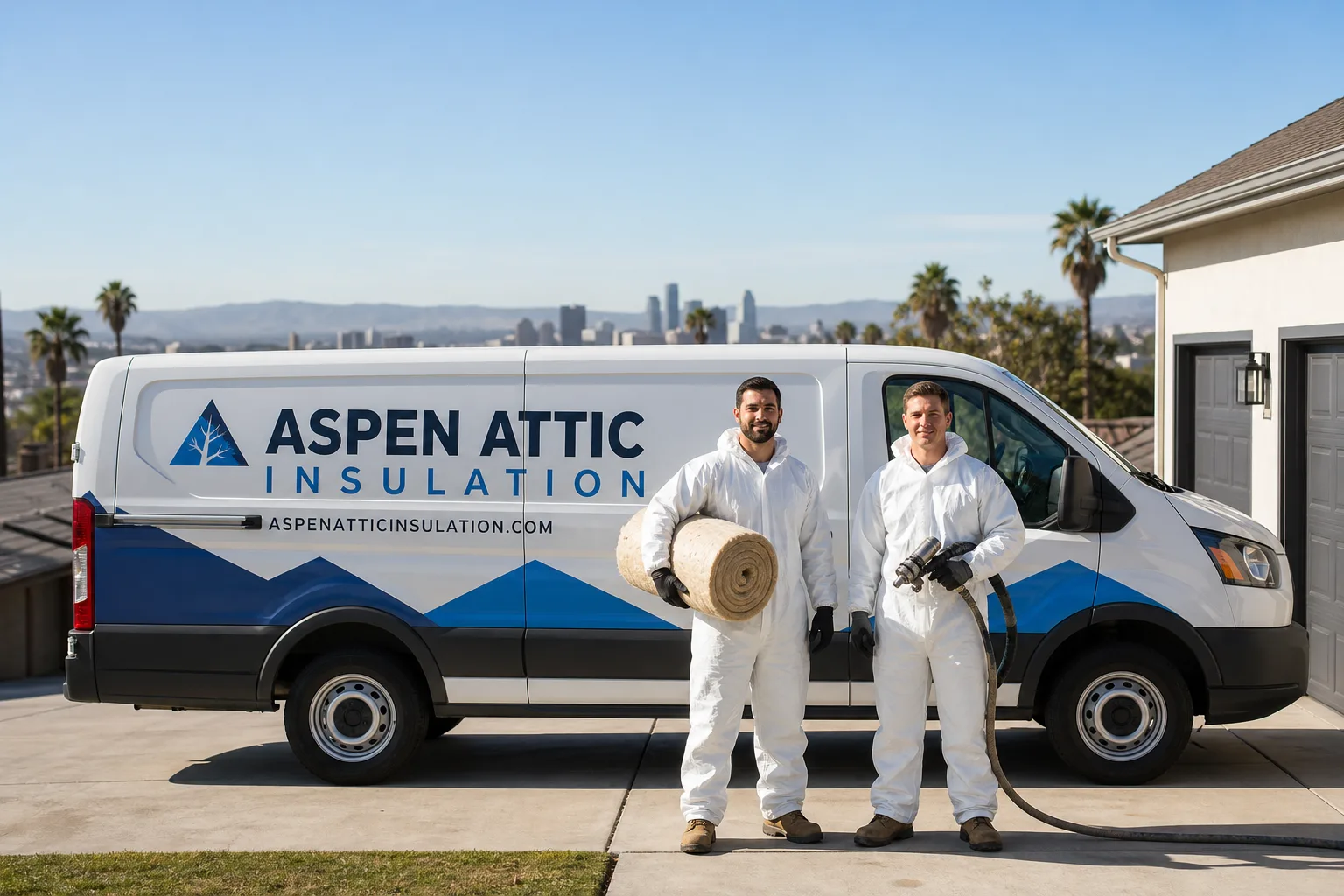
Fast, Reliable Blown In Insulation Across El Cajon
Blown in insulation in El Cajon typically costs $1.20 – $2.80 per square foot installed, with most attic retrofits running $1,800 – $4,500 for a standard 1,200 – 2,000 square foot home. Our crews serve El Cajon from our San Diego dispatch office, and we’re usually on-site in Fletcher Hills, Bostonia, or the central El Cajon Valley within a couple hours of your call. If your AC runs non-stop through August and your upstairs bedrooms won’t cool below 78°F, the problem is almost certainly in your attic, and we can diagnose it same-day. Call (864) 428-1615 to schedule a free estimate with a written price before any work begins.
El Cajon sits in a tough thermal pocket. That inland heat, 10 – 15°F above coastal San Diego, doesn’t just make summer uncomfortable. It cooks attics to 150°F or higher in foothill neighborhoods, forces air conditioners into overtime, and quietly destroys the insulation that’s supposed to protect your living space. Our Blown In Insulation team has worked hundreds of El Cajon attics, from 1950s tract homes near Madison Avenue to newer builds on the city’s east side, and we know the local failure patterns that generic contractors miss.
Why Aspen Attic Insulation Is El Cajon’s Preferred Blown In Insulation Company
We’ve built our reputation in El Cajon on showing up as promised and delivering exactly what we quoted. Our reviews from El Cajon customers consistently mention the same things: the technician’s photo and name arrived by text before the truck pulled up, the written price matched the final invoice, and the crew actually cleaned the attic of old debris instead of blowing new material on top of it. That last point matters especially here, where decades of compressed rock wool and rodent damage sit hidden under a thin layer of newer insulation.
Response time to El Cajon is typically same-day or next-morning. Our San Diego office dispatches crews directly to El Cajon addresses without the scheduling delays common to companies routing from North County or Riverside. We know the local building stock: the pre-1970s vented attics with open top plates, the 2000s-era homes that skimped on R-value during the construction boom, and the specific challenges of hillside lots in Fletcher Hills where attic access is tight and heat gain is extreme. That local knowledge means faster diagnosis, accurate quotes, and no surprises once we’re in the attic.
Every technician we send to El Cajon meets The Threshold Standard: background-checked, identity-verified, photo-badged, and in a clean marked uniform. You get their name and photo before they arrive. If anyone else shows up, the visit is free and we make it right. The 365-Day Done Right Promise covers every job in writing: labor and materials for a full year, with a free second visit if anything fails.
Blown In Cellulose Insulation in El Cajon
Blown In Cellulose Insulation in El Cajon is our most common retrofit for older homes, and for good reason. Cellulose (loose fibers blown into the attic cavity to fill every gap) handles El Cajon’s specific problems better than almost any alternative. It’s treated with borate fire retardant, which also discourages the rodents and insects that thrive in our warm, dry climate. More importantly for El Cajon, cellulose can be packed to the exact density needed to block air movement through the open framing cavities and recessed-light gaps that plague pre-1970s construction. A typical blown-in cellulose job in El Cajon runs $1.40 – $2.60 per square foot, or $2,200 – $4,200 for a complete attic retrofit on a standard single-story home.
We don’t just blow and go. In El Cajon’s legacy housing stock, cellulose installed without air sealing and radiant-barrier prep is money wasted. The original rock-wool batts have compressed to roughly half their installed thickness by now, so the R-value has quietly decayed to well under its label rating. That’s why our crews treat air sealing and radiant-barrier installation as mandatory prep before blowing cellulose, rather than simply topping off what’s already there.
When Cellulose Makes Sense
Cellulose is our first recommendation for El Cajon homes built before 1980 with vented attics and minimal existing insulation. It fills irregular cavities around ductwork and electrical runs that batts can’t cover, and its higher density per inch helps suppress the convective air loops that steal conditioned air through open top plates. For homes near the El Cajon Valley’s foothills, where attics bake to 150°F+, we often pair cellulose with a radiant barrier stapled to the rafters.
Fire Safety and Local Codes
El Cajon falls under San Diego County fire safety guidelines, and all cellulose we install meets Class 1 fire rating with borate treatment. We document the product spec on every written quote, so there’s no question about what went into your attic. Johns Manville and GreenFiber are our standard cellulose sources for El Cajon jobs, matched to the specific attic conditions we find.
Blown In Fiberglass Insulation in El Cajon
Blown In Fiberglass Insulation in El Cajon works best for newer homes with tighter construction and existing insulation that’s merely underperforming, not actively degraded. Fiberglass (fine glass fibers blown as loose fill) doesn’t absorb moisture, won’t settle as quickly as cellulose, and maintains its R-value longer in the extreme attic temperatures common to El Cajon’s inland climate. We typically recommend fiberglass for homes built after 1990 with reasonable air sealing already in place, or for homeowners who prefer a synthetic material over cellulose’s paper-based content. Pricing runs slightly lower: $1.20 – $2.40 per square foot installed, or $1,800 – $3,800 for a standard attic.
Fiberglass alone won’t fix El Cajon’s classic failure mode: the vented attic with open top plates leaking conditioned air straight into the 140°F+ roof cavity. We always inspect for air sealing needs before recommending fiberglass, and we’ll tell you honestly if cellulose or a hybrid approach makes more sense for your specific home.
Fiberglass for East Side Newer Construction
Homes built during El Cajon’s 2000s construction boom on the east side often have tighter envelopes but still carry inadequate attic insulation from cost-cutting during that period. Blown fiberglass can bring these attics to current code without the density concerns of older, leakier structures. Knauf and CertainTeed supply our standard fiberglass products for these applications.
When We Recommend Against Fiberglass
We don’t install loose-fill fiberglass in El Cajon attics with active roof leaks, significant rodent infestation, or compressed original rock wool that’s trapping moisture against the ceiling drywall. In those conditions, the attic needs cleaning and air sealing first, and cellulose’s mold resistance and better gap-filling usually win out. We’ll show you photos of what we find and explain why.
Trusted Brands We Service in El Cajon
We stock materials from eight industry-leading brands, but for El Cajon blown-in work we most commonly pull from Johns Manville, Knauf, and CertainTeed. Johns Manville supplies our high-density cellulose for maximum air-sealing performance in older vented attics. Knauf and CertainTeed provide loose-fill fiberglass in multiple densities, so we can match the product to your attic’s existing conditions rather than forcing a one-size-fits-all approach. Having these brands on hand locally means no waiting for special orders: we measure, quote, and install on a timeline that works for your schedule, not a distributor’s truck route. Every bag’s spec sheet goes on your written quote, so you know exactly what product and R-value you’re paying for.
Common Blown In Insulation Problems We See in El Cajon Homes
- Compressed 1960s rock wool with false R-value. The original batts in El Cajon tract homes have settled to half their labeled thickness, but homeowners see “R-19” printed on the paper facing and assume they’re protected. In reality, they’re getting R-9 or less, and the compressed material actually bridges heat across the joists instead of blocking it.
- 150°F+ attic temperatures destroying radiant barriers. Foothill neighborhoods like Fletcher Hills cook attic surfaces far beyond what coastal San Diego experiences. Older radiant-barrier facings delaminate and oxidize in these conditions, turning reflective surfaces into dull absorbers that make the insulation work even harder.
- Open top plates leaking conditioned air into vented attics. Pre-1970s El Cajon homes were built with minimal attention to the boundary between living space and attic. We regularly find continuous gaps along wall top plates, around chimney chases, and through recessed-can light housings that make blown-in insulation fight a losing battle against air movement.
- 2000s-era homes with code-minimum insulation that hasn’t kept up with energy costs. The east side building boom prioritized fast turnover over long-term efficiency. Attics in these homes often carry the absolute minimum R-value permitted at the time, and with El Cajon’s summer cooling loads, that’s no longer enough.
Pricing for Blown In Insulation in El Cajon, CA
A typical blown in insulation job in El Cajon runs $1,800 – $4,500 depending on attic size, existing material condition, and whether air sealing and radiant-barrier prep are needed. Here’s how that breaks down for most homes we see:
| Service Component | Price Range (El Cajon) |
|---|---|
| Blown cellulose insulation (standard attic, 1,200 – 2,000 sq ft) | $2,200 – $4,200 |
| Blown fiberglass insulation (standard attic, 1,200 – 2,000 sq ft) | $1,800 – $3,800 |
| Air sealing (top plates, penetrations, can lights) | $400 – $900 |
| Radiant barrier installation (rafter-mounted) | $600 – $1,400 |
| Old insulation removal and disposal | $800 – $1,600 |
| Attic cleaning and sanitizing | $300 – $700 |
What moves the needle: attic square footage is obvious, but the bigger cost drivers are access difficulty (tight hatches, low clearances), existing material that must come out first, and the extent of air sealing needed. A Fletcher Hills home with a walk-up attic and clean joists might hit the low end. A 1962 tract home with compressed rock wool, rodent damage, and open top plates across every exterior wall will need more prep work. We inspect every attic before quoting, and every homeowner receives a written price before any work starts, with no post-job surprises. Estimates are free. Call (864) 428-1615 to schedule.
We Also Serve Cities Near El Cajon
Our crews regularly work in El Cajon and the surrounding communities: Spring Valley to the west, Lakeside to the north, La Mesa to the southwest, and Santee to the northwest. Same technician protocols, same written pricing, same 365-Day Done Right Promise apply across the entire service area. If you’re unsure whether your address falls within our coverage, call and we’ll confirm immediately. A live person answers 24/7.
Serving El Cajon, CA - Our Local Coverage Area
We’re based in the El Cajon area and know this community well. Use the map below to see our service coverage - if you’re nearby, we can almost certainly help.
FAQs About Blown In Insulation in El Cajon
No, and we’d be doing you a disservice if we did. The original rock wool in 1960s El Cajon tract homes has compressed to roughly half its design thickness, so its actual R-value is far below the label. We remove the degraded material, air-seal the open top plates and penetrations, then install new blown-in insulation to a measured, verified depth. Call (864) 428-1615 for a free attic inspection and written quote.
Fletcher Hills sits in the El Cajon Valley’s foothills where summer attic temperatures routinely exceed 150°F, compared to 110 – 120°F in coastal San Diego. That 30 – 40°F difference comes from less marine influence, more direct solar exposure, and longer cooling lag times. Combined with pre-1970s construction that lacks radiant barriers and adequate ventilation, the heat gain is extreme. We address this with radiant-barrier prep and dense-packed cellulose, not just more R-value. Call (864) 428-1615 to discuss your specific attic conditions.
We use both, and the choice depends on your home’s construction era and attic condition. Cellulose is our default for pre-1980 El Cajon homes with vented attics and air-leakage issues because it fills gaps and resists rodents. Fiberglass works well for tighter, newer homes where settling and moisture aren’t concerns. We inspect first, then recommend. Call (864) 428-1615 to schedule a free evaluation.
A radiant barrier is standard practice for El Cajon, not overkill. In our climate zone, with summer highs above 95°F and attic temperatures pushing 150°F in foothill neighborhoods, radiant heat transfer across the roof deck is a major cooling load. A properly installed rafter-mounted barrier can reduce attic temperatures by 20 – 30°F, which lets your insulation and AC system work as designed rather than fighting extreme heat. We include radiant-barrier assessment on every El Cajon attic inspection. Call (864) 428-1615 for details.
Probably. Many east side homes from the 2000s boom were built with code-minimum attic insulation that hasn’t kept pace with rising energy costs and El Cajon’s intensifying heat. The construction is tighter than 1960s stock, which helps, but the R-value is often still inadequate for inland summer cooling loads. We can assess what’s there and calculate the payback on upgrading. Estimates are free. Call (864) 428-1615.
Written by Garrett Sloane, Owner at Aspen Attic Insulation, serving El Cajon and the San Diego area since 2002.