
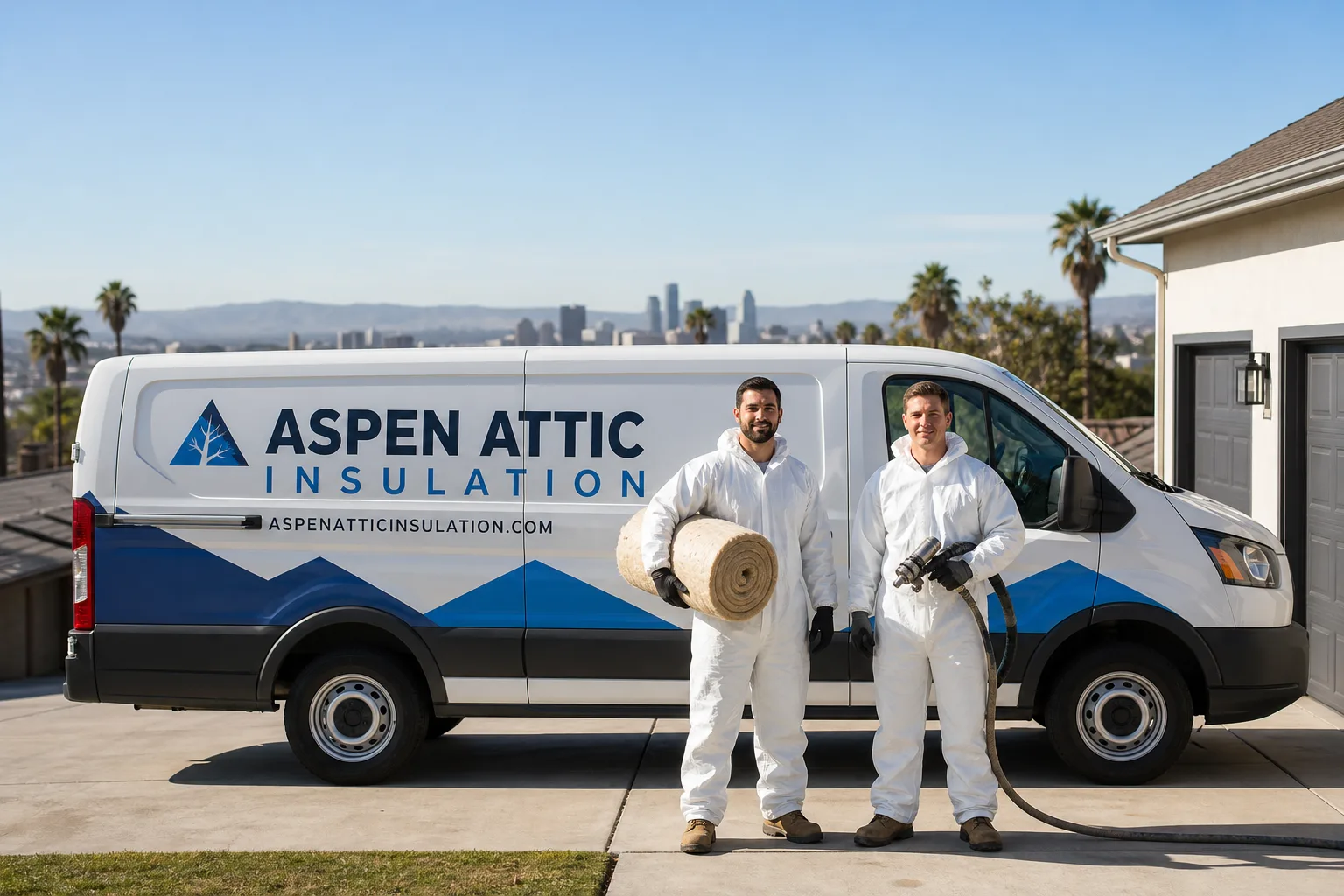
Fast, Reliable Attic Insulation Across Spring Valley
Most attic insulation jobs in Spring Valley run $1,800 – $4,500 depending on attic size and whether we’re topping up existing material or stripping failed batts and starting fresh. Our crews are usually on-site in Spring Valley within 24 – 48 hours of your call, and every homeowner gets a written price before we open a single bag of insulation. Call (864) 428-1615 and a live person will pick up, day or night.
We know Spring Valley’s housing stock because we’ve worked in it for years. The 1960s – 1980s ranch homes off Grand Avenue, the manufactured home parks along Jamacha Boulevard, the low-pitch stucco ranches near Bancroft Drive – these aren’t abstract building types to us. They’re attics that hit 150°F by early afternoon, original R-11 kraft-faced batts that have baked and sagged, and eave bays left open to canyon winds. Our Attic Insulation team treats every job as both a cooling upgrade and a wildfire hardening detail, because in Spring Valley’s urban-wildland interface, those two goals aren’t separate.
Dispatch and scheduling for your visit are coordinated from our San Diego office, but the crew that arrives at your door lives and works in this area. You’ll get the technician’s name, photo, and ID badge details before anyone knocks. That’s The Threshold Standard, and it’s how we’ve operated since 2002.
Why Aspen Attic Insulation Is Spring Valley’s Preferred Attic Insulation Company
Spring Valley homeowners choose us for the same reason they choose a locksmith or an electrician they can verify: letting someone into your attic means letting them into your home. Every Aspen technician is background-checked, identity-verified, and arrives in a clean marked uniform with a photo ID badge. We send you the tech’s name and photo before the visit. If anyone else shows up, the visit is free and we make it right.
Our reviews from Spring Valley customers consistently mention two things: the upfront written price and the 365-Day Done Right Promise. That promise covers labor and materials for a full year, with a free second visit if anything fails. No call-back windows, no voicemail loops – a live person answers our phone 24/7.
We’re familiar with the specific headaches of Spring Valley attics. The slab-on-grade ranches with scissor-truss roofs that barely clear 4 feet at the ridge. The original R-11 batts in Jamacha area homes that have turned to dust. The mobile home attics in the valley parks where space is tight and ventilation is often an afterthought. This local knowledge means we show up with the right materials and the right plan, not a generic approach copied from coastal San Diego.
Our response time to Spring Valley is typically same-day or next-day for standard calls, and we carry materials from eight premium brands so we’re not waiting on a supplier run.
Radiant Barrier in Spring Valley
Radiant Barrier in Spring Valley addresses a problem that standard insulation alone cannot solve: the radiant heat transfer from roof decking that routinely reaches 150°F+ in afternoon sun. Even well-insulated attics in this climate absorb enormous thermal load through the roof plane, and that heat radiates downward into living spaces, forcing air conditioners to run longer and harder than they should.
A radiant barrier is a reflective foil layer installed on the underside of the roof deck or across the attic floor, depending on your home’s configuration. In Spring Valley’s inland East County climate, where summer temperatures run 10 – 20°F hotter than coastal San Diego and AC run hours are significantly higher, this addition often pays for itself in 2 – 4 cooling seasons. Typical installation runs $1,200 – $2,800 for a standard ranch attic, depending on accessibility and whether we’re pairing it with new insulation.
South-Facing and Low-Pitch Applications
Spring Valley’s ranch homes with low-pitch or flat roofs see the worst radiant heat gain, especially on south-facing planes. We install radiant barrier specifically oriented to these high-load areas, often pairing it with mineral wool or fiberglass batts that won’t sag in the extreme attic temperatures. On a 1970s ranch home off Grand Avenue backing to a canyon, our crew found the original kraft-faced R-11 batts sagged a foot off the roof deck, leaving the eave bays wide open to ember intrusion. We removed the failed batts, air-sealed the top plates, and installed a mineral-wool-based system with a Class A fire-rated facing plus a radiant barrier on the south-facing roof plane. The homeowner’s summer AC runtime dropped noticeably the first week, and the open eave bays are now sealed against wind-driven embers.
Wildfire-Hardened Radiant Barrier Details
Standard radiant barrier installations common in coastal markets often leave edges and penetrations exposed. In Spring Valley’s extreme wildfire exposure zone, we tape and seal all seams with fire-rated tape and avoid installations that create new gaps in the thermal envelope. The barrier becomes part of a system, not a standalone fix.
Attic Cleaning Services in Spring Valley
Attic Cleaning Services in Spring Valley are often the necessary first step before any insulation upgrade can be done properly. Decades of baked dust, rodent debris, failed kraft facing fragments, and canyon-blown organic material accumulate in these attics, and blowing new insulation over that contamination locks in problems rather than solving them.
Our cleaning process removes all loose debris, treats for odor and biological contaminants, and inspects for compromised top plates, recessed light housings, and duct penetrations that leak conditioned air. For a typical Spring Valley ranch attic of 800 – 1,200 square feet, cleaning runs $800 – $1,600. This is almost always bundled with insulation replacement, and the combined job typically ranges $2,800 – $5,200 depending on insulation type and attic condition.
Contamination Assessment and Removal
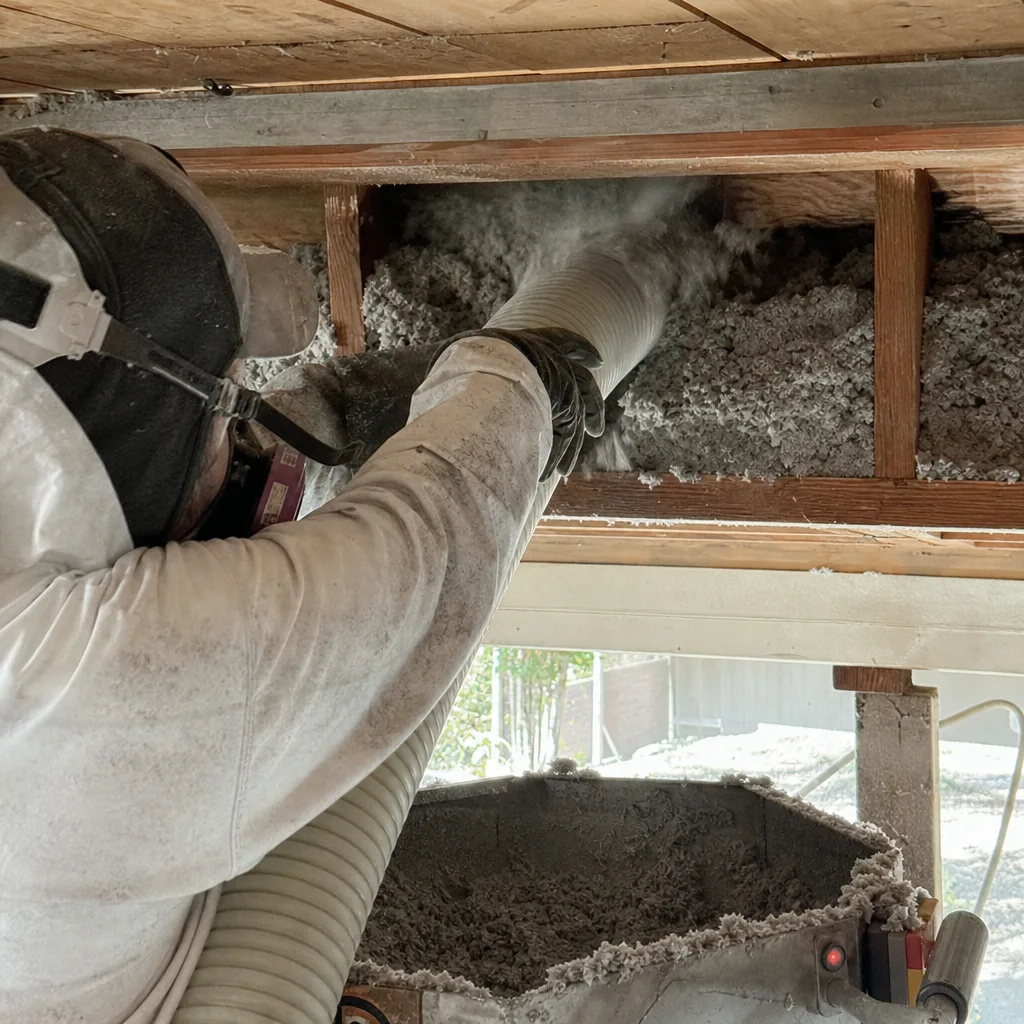
We inspect every attic before recommending cleaning. Some Spring Valley homes, especially older ranches near canyon edges, show heavy dust infiltration from dry Santa Ana wind events. We HEPA-vacuum all surfaces, remove contaminated material, and apply enzyme treatment where rodent activity has occurred. The attic is left clean enough for our crew to work – and for you to store items safely afterward.
Prep for Fire-Rated Insulation Systems
Cleaning is particularly critical when we’re installing mineral wool or other Class A fire-rated systems for wildfire hardening. These materials require clean, dry surfaces for proper adhesion and performance. Skipping cleaning to save money typically costs more in premature failure and redo work.
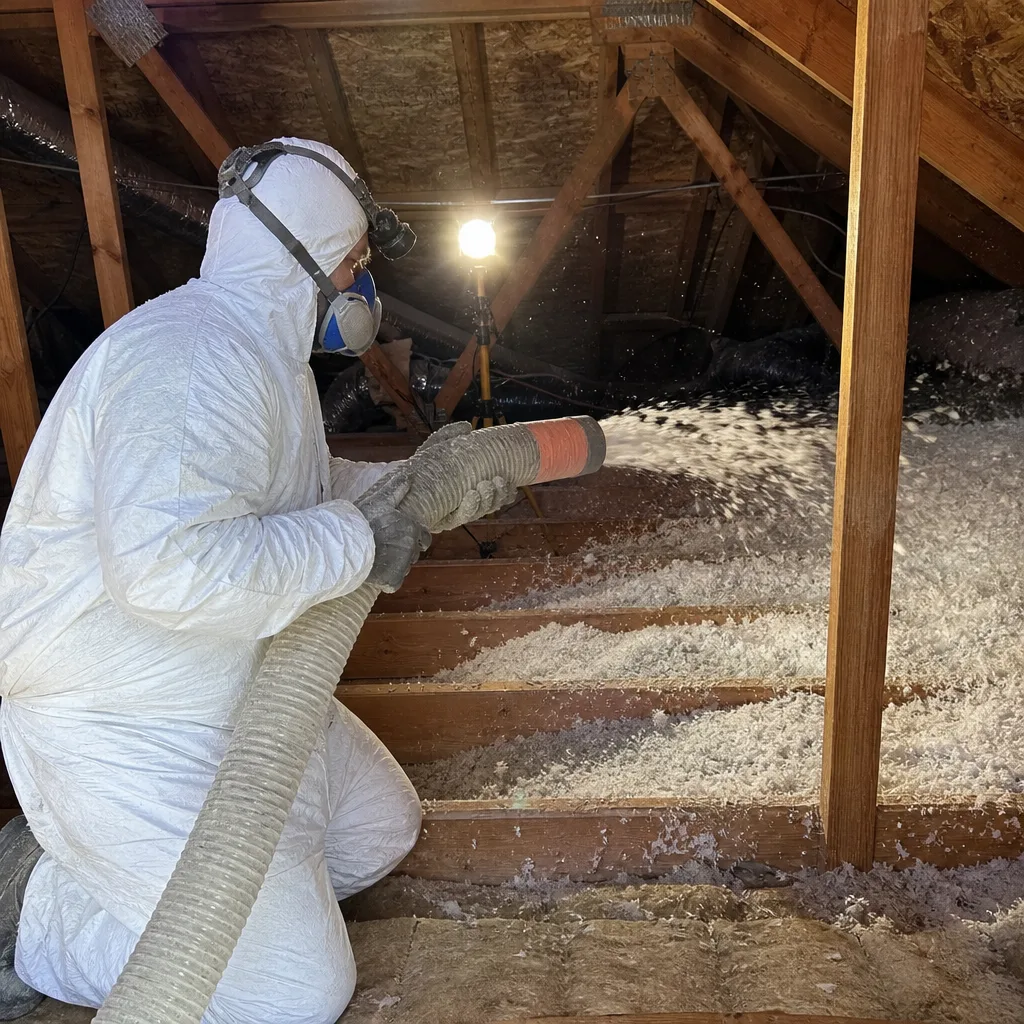
What happens when you call
- 1
A real person answersNo phone trees - you reach a local pro.
- 2
You get an upfront price rangeHonest numbers before anyone is dispatched.
- 3
A background-checked tech heads outLicensed & insured, dispatched right away.
- 4
You approve before work beginsNothing starts until you say go.
Trusted Brands We Service in Spring Valley
We stock materials from eight industry-leading brands – Owens Corning, Johns Manville, Knauf, Rockwool, CertainTeed, Icynene, Demilec, and GreenFiber – and we match the product to the specific condition of your Spring Valley attic, not whatever happens to be on the truck. For the canyon-edge ranch homes common in this area, we often specify Rockwool or Owens Corning mineral wool products for their Class A fire rating and dimensional stability in extreme heat. For mobile home attics in Spring Valley’s valley parks, where weight and space are constraints, GreenFiber blown cellulose or Knauf fiberglass may be the better fit. Because we carry multiple product lines, we’re not waiting on a supplier run to start your job. That means faster turnaround and a material choice that’s defensible, not convenient.
Common Attic Insulation Problems We See in Spring Valley Homes
- Kraft-faced batts sagging off the roof deck. In 150°F+ slab-ranch attics, the asphalt adhesive on original R-11 kraft facing bakes and releases. The batts fall, R-value drops to near zero, and the exposed eave bays become entry points for wind-driven embers from nearby canyons.
- Standard exposed foam or open soffit vents installed like a coastal job. In Spring Valley’s extreme wildfire exposure zone, these details are liabilities. Ember-resistant detailing – sealed soffits, rated vents, and enclosed eave construction – is required, not optional.
- Loose-fill blown over unsealed top plates. Original low-pitch and flat-roof ranch attics often have significant gaps at wall top plates and around duct boots. Hot afternoon air and canyon dust bypass the insulation entirely, rendering even thick loose-fill ineffective.
- Insulation compressing in mobile home attics. Spring Valley’s manufactured home parks include units with 2×4 or 2×6 roof trusses and minimal ventilation. Fiberglass batts installed in these tight cavities often compress or moisture-damage, losing their rated R-value within a few seasons.
Pricing for Attic Insulation in Spring Valley, CA
Here’s what attic insulation costs in Spring Valley’s current market:
| Service | Typical Range |
|---|---|
| Attic Insulation Top-Up (blown-in over existing) | $1,800 – $2,800 |
| Attic Batt Insulation (new installation) | $2,200 – $3,600 |
| Attic Insulation Replacement (remove old, install new) | $3,200 – $5,500 |
| Attic Baffles & Ventilation Prep | $400 – $900 |
| Radiant Barrier Installation | $1,200 – $2,800 |
| Attic Cleaning Services | $800 – $1,600 |
What moves you within these ranges? Attic square footage is the biggest factor – a 1,500-square-foot ranch runs higher than an 800-square-foot mobile home. Accessibility matters too: truss height below 3 feet requires specialized equipment and more labor hours. Material choice affects cost – mineral wool for wildfire hardening runs 15 – 25% above standard fiberglass. And condition of existing material determines whether we can top up or must strip and start over, which is the difference between a $2,000 job and a $4,500 job.
Every homeowner receives a written price before any work starts, always, with no exceptions. Estimates are free. Call (864) 428-1615 to schedule yours.
We Also Serve Cities Near Spring Valley
Our crews work throughout San Diego’s East County and nearby communities. We regularly handle Attic Insulation in Spring Valley and also serve La Mesa, Lemon Grove, El Cajon, and Bonita. Each area has its own housing stock and climate conditions, and we adjust our recommendations accordingly – coastal-adjacent La Mesa sees different moisture patterns than canyon-backed Spring Valley, and El Cajon’s older stock has its own quirks.
Serving Spring Valley, CA - Our Local Coverage Area
We’re based in the Spring Valley area and know this community well. Use the map below to see our service coverage - if you’re nearby, we can almost certainly help.
FAQs About Attic Insulation in Spring Valley
No, and we won’t. Sagging kraft-faced batts have failed adhesively; the facing is compromised and the batts trap moisture against the deck. We remove all failed material, inspect for mold or deck damage, air-seal the top plates and penetrations, then install new insulation properly. Call (864) 428-1615 for a free inspection and written quote.
Yes, particularly for south-facing and low-pitch roofs. Insulation slows conductive heat transfer; radiant barrier blocks radiant heat from the roof deck. In Spring Valley’s 150°F+ attics, both are needed. The combination typically reduces afternoon ceiling surface temperatures by 15 – 25°F and cuts AC runtime measurably. We can quote radiant barrier standalone or bundled with insulation replacement.
Mineral wool with Class A fire-rated facing, installed with sealed eave detailing and proper baffle ventilation. Standard fiberglass batts or exposed foam are liabilities in wildfire exposure zones. We specify Rockwool or Owens Corning mineral wool for these applications, with radiant barrier on high-heat planes and ember-resistant vent covers. The system is designed as wildfire hardening, not just R-value.
Yes. Mobile home attics have specific constraints – limited truss height, weight restrictions, and often inadequate ventilation. We use lightweight blown fiberglass or cellulose, install proper baffles where possible, and never compress material into cavities where it loses effectiveness. We’ve worked in parks along Jamacha Boulevard and throughout the Spring Valley area.
Attic cleaning typically adds $800 – $1,600 to the total job cost, and it’s bundled with insulation replacement rather than priced separately. For a standard ranch attic with moderate contamination, expect the combined cleaning and insulation replacement to run $2,800 – $5,200. Heavy rodent contamination or extensive debris removal can push toward the higher end. We assess condition during your free estimate and give you the full written price before any work begins – call (864) 428-1615 to schedule.
Ready to fix your attic right? Call Aspen Attic Insulation at (864) 428-1615 for a free estimate. A live person will answer, we’ll send you your technician’s name and photo before the visit, and you’ll get a written price before any work starts. Every job is backed by our 365-Day Done Right Promise.
Written by Garrett Sloane, Owner at Aspen Attic Insulation, serving Spring Valley and East County San Diego since 2002.