
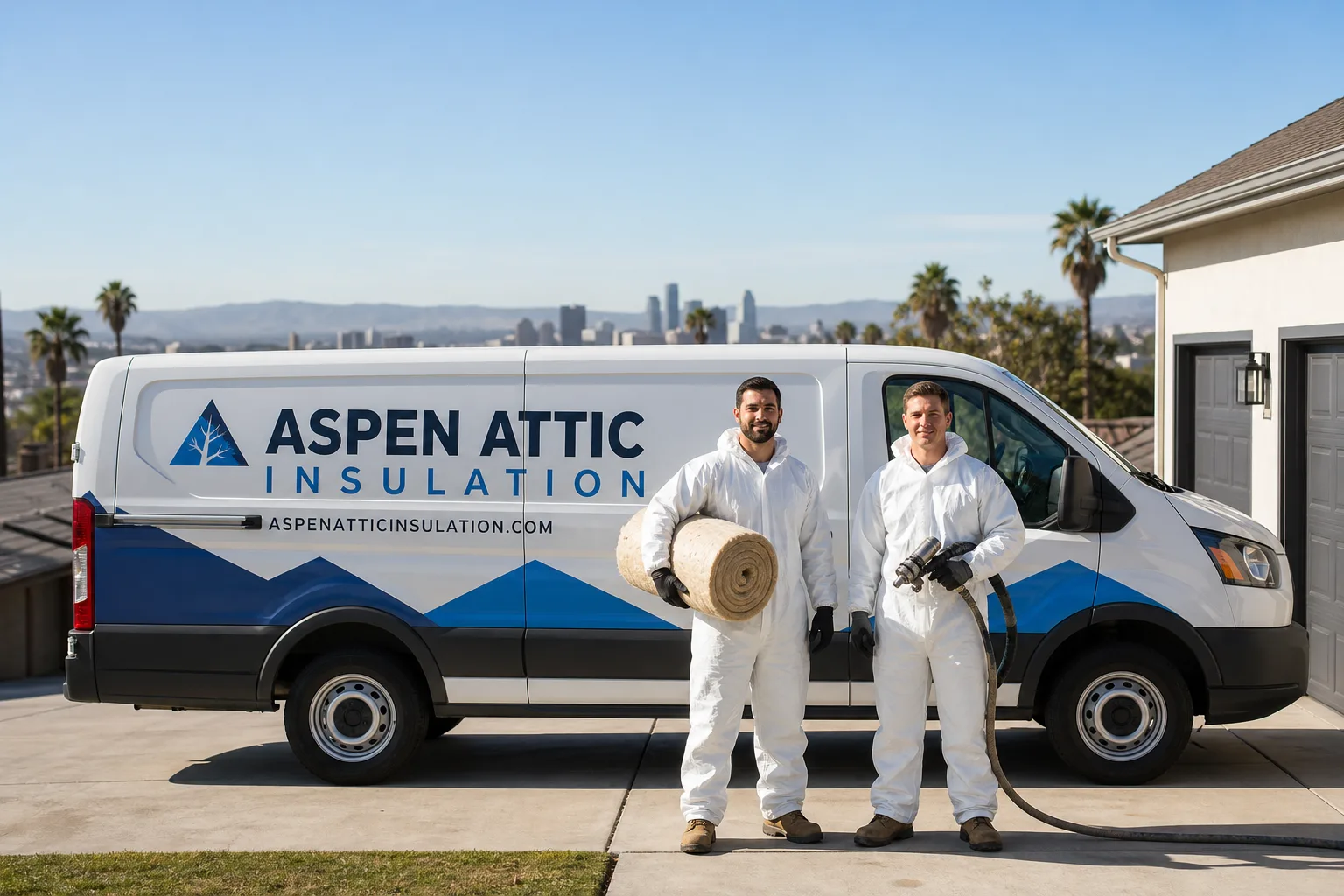
Fast, Reliable Attic Insulation Across Joshua Tree
Attic insulation in Joshua Tree typically runs $2,800 – $6,500 for a full retrofit, with most jobs completed in one to two days. We dispatch crews from our Inland Empire office and serve Joshua Tree properties directly, bringing materials suited to high-desert extremes. Call (864) 428-1615 for a written estimate before any work begins.
Joshua Tree sits at roughly 3,200 feet in the Mojave, where summer days crack 100°F and winter nights drop into the 20s. That 30 – 40°F swing between day and night is what destroys comfort and drives electric bills through the roof. Most homes here weren’t built for it. The 1950s – 60s homesteader cabins scattered through the north and west parts of town, the 1970s – 80s tract homes near the highway, and the newer short-term rental builds all present different problems. But they share one thing: attics that were either never insulated properly or have been cooked and compressed for decades.
Our Attic Insulation team knows the local building stock. We’ve worked on unpermitted cabins off Sunfair Road, retrofitted low-pitch roofs with zero soffit vents, and handled open-beam ceilings in modern desert builds. We don’t quote from a template. We inspect, photograph, and give you a written price that matches what your specific structure needs.
Why Aspen Attic Insulation Is Joshua Tree’s Preferred Attic Insulation Company
We’ve been part of the Threshold Group family since 2002, and every location operates to the same verified standard. In Joshua Tree, that means technicians who understand desert construction, not just insulation theory.
Our reviews from Joshua Tree customers consistently mention two things: the technician showed up exactly as promised, with name and photo sent ahead, and the price on the invoice matched the written estimate. No post-job surprises. No stranger at the door.
Response time to Joshua Tree is typically same-day or next-day for estimates, with most insulation work scheduled within a week. For attics with active mold or failed insulation causing immediate comfort problems, we prioritize the call.
Local knowledge matters here. A technician who doesn’t recognize a homesteader-era unvented roof assembly might stuff it with batts and create a condensation problem. Our crews are trained to spot what Joshua Tree buildings actually are before recommending what goes in them.
Attic Mold Removal in Joshua Tree
Attic Mold Removal in Joshua Tree addresses the black, gray, or white growth that appears on roof decking, rafters, and compressed insulation after monsoon-season leaks or years of trapped moisture in unvented spaces. We see it most often in older cabins near the national park boundary and in 1970s tract homes with original roofs that finally failed. The job involves containment, HEPA removal of contaminated materials, treatment of affected wood, and drying the assembly before any new insulation goes in. In Joshua Tree, Attic Mold Removal typically costs $1,800 – $4,200 depending on square footage and whether the roof deck needs sealing or replacement.
Why Mold Grows in Joshua Tree Attics
The combination of monsoon moisture in July and August with zero attic ventilation creates perfect conditions. Hot days drive humidity into the attic through ceiling penetrations. Nights cool fast. Without airflow, that moisture condenses on the underside of roof decking. Add compressed, rodent-soiled insulation holding water against wood, and you’ve got active growth.
Our Removal and Prevention Process
We don’t just scrape and leave. After removal, we diagnose why the moisture accumulated. Often that means cutting in ventilation where none existed, sealing can lights and top plates, and specifying insulation that doesn’t trap vapor against the deck. The 365-Day Done Right Promise covers our mold remediation work in writing.
Attic Insulation Removal in Joshua Tree
Attic Insulation Removal in Joshua Tree is the necessary first step when existing material is compressed, water-damaged, rodent-contaminated, or simply the wrong product for desert conditions. We pull out matted batts, vacuum out settled blown-in, and dispose of everything properly. In Joshua Tree, removal runs $1,200 – $2,800 for a typical 1,000-square-foot attic, with hazardous material (heavy rodent soiling, asbestos-suspect vermiculite) at the higher end. Every removal includes inspection of the roof deck, framing, and electrical for hidden damage.
When Removal Is Required
Compressed batts under shallow roofs have lost almost all R-value. Wet insulation from roof leaks won’t dry in an unvented space. Rodent nesting creates health hazards and air quality problems that new insulation layered on top won’t solve. We photograph everything and show you before quoting replacement.
Preparing for What’s Next
After removal, we assess whether your attic can accept standard batts or needs blown-in, spray foam, or a hybrid approach. Non-standard framing in self-built cabins often dictates the answer. We specify from our eight material brands, including Owens Corning and Johns Manville, based on what your structure can actually hold.
Trusted Brands We Service in Joshua Tree
We stock materials from eight industry-leading manufacturers: Owens Corning, Johns Manville, Knauf, Rockwool, CertainTeed, Icynene, Demilec, and GreenFiber. For Joshua Tree customers, this means no waiting on special orders for most jobs. We match the product to the building, not the other way around. A 1960s homesteader cabin with 2×3 rough-cut rafters might get Knauf blown-in fiberglass to fill irregular cavities. A 1980s tract home with standard framing gets Owens Corning R-38 batts with proper baffles. Modern open-beam builds might need Icynene open-cell spray foam for the tight envelope desert cooling demands. Having options on the truck keeps timelines short and results predictable.
Common Attic Insulation Problems We See in Joshua Tree Homes
- Compressed batts under low-pitch unvented roofs. Original homesteader cabins often had minimal insulation that has compressed to an inch or less over 60 years. It performs almost no thermal function and traps whatever moisture leaks through.
- Zero soffit vents with no vapor barrier. Unpermitted construction skipped ventilation entirely. Adding insulation without fixing this creates condensation on the roof deck, then mold, then rot. We engineer ventilation first.
- Monsoon water intrusion soaking insulation annually. Joshua Tree’s July – August storms find every roof weakness. Wet insulation doesn’t dry in a sealed attic. We remove it, fix the leak path, and specify moisture-tolerant materials.
- Non-standard framing that rejects standard products. Self-built cabins with rough-cut lumber or 2×3 rafters won’t accept R-30 batts. We measure on site and specify blown-in or spray foam that conforms to irregular spaces.
Pricing for Attic Insulation in Joshua Tree, CA
Here’s what attic insulation costs in Joshua Tree’s market:
- Attic Insulation Top-Up (adding over existing sound material): $1,400 – $2,600
- Attic Batt Insulation (new installation, standard framing): $2,800 – $4,500
- Blown-In Attic Insulation (full coverage, typical 1,000 sq ft): $3,200 – $5,200
- Attic Insulation Replacement (remove old, install new): $4,000 – $6,500
- Attic Baffles & Ventilation Prep (before insulation): $800 – $1,800
What moves the number: attic square footage, accessibility (crawl vs. walkable), whether removal is needed, ventilation modifications, and framing standard vs. non-standard. We inspect every Joshua Tree attic in person and deliver a written price before any work starts. Estimates are free. Call (864) 428-1615 to schedule.
We Also Serve Cities Near Joshua Tree
Our crews work throughout the high desert and Coachella Valley, including Attic Insulation in Joshua Tree and surrounding communities: Yucca Valley to the west, Twentynine Palms to the north, Desert Hot Springs to the southwest, and Thousand Palms to the south. Each area has different building eras and code histories, and we adjust our approach accordingly.
Serving Joshua Tree, CA - Our Local Coverage Area
We’re based in the Joshua Tree area and know this community well. Use the map below to see our service coverage - if you’re nearby, we can almost certainly help.
FAQs About Attic Insulation in Joshua Tree
Yes, but we engineer ventilation first or use closed-cell spray foam to create an unvented conditioned assembly. We won’t add batts to an unvented space, that guarantees condensation and mold. On a cabin off Sunfair Road, we cut in low-profile intake vents and a ridge vent before installing insulation. Call (864) 428-1615 and we’ll inspect your specific roof geometry.
R-38 to R-49 is the target for Joshua Tree’s climate zone, with R-38 as the practical minimum for cost-effective performance. The extreme diurnal swings mean insulation must resist heat gain all day and prevent rapid overnight loss. In shallow attics where R-49 won’t fit, we maximize what the cavity allows and prioritize air sealing. We specify the exact R-value in your written estimate.
If it’s clean, dry, and uncompressed, we can add blown-in on top. If it’s compressed, rodent-soiled, or wet, removal is necessary. Most Joshua Tree cabins we see need removal, the original material has been cooked and compressed for decades. We inspect and photograph so you can decide from facts, not guesses. Estimates are free.
Both, depending on the assembly. Open-beam ceilings with no attic cavity get Icynene or Demilec open-cell spray foam applied directly to the roof deck. Non-standard wall depths get blown-in fiberglass or cellulose that fills irregular cavities. We don’t force standard products into non-standard spaces. The right material goes in after we measure.
It makes every estimate site-specific. Unpermitted cabins may have rough-cut lumber, 2×3 rafters, or structural surprises that aren’t visible until we’re in the attic. We price after inspection, not from satellite photos. The written estimate includes what we found and exactly what we’ll do about it. No post-job surprises, guaranteed.
Written by Garrett Sloane, Owner at Aspen Attic Insulation, serving Joshua Tree as part of the Threshold Group family since 2002.