
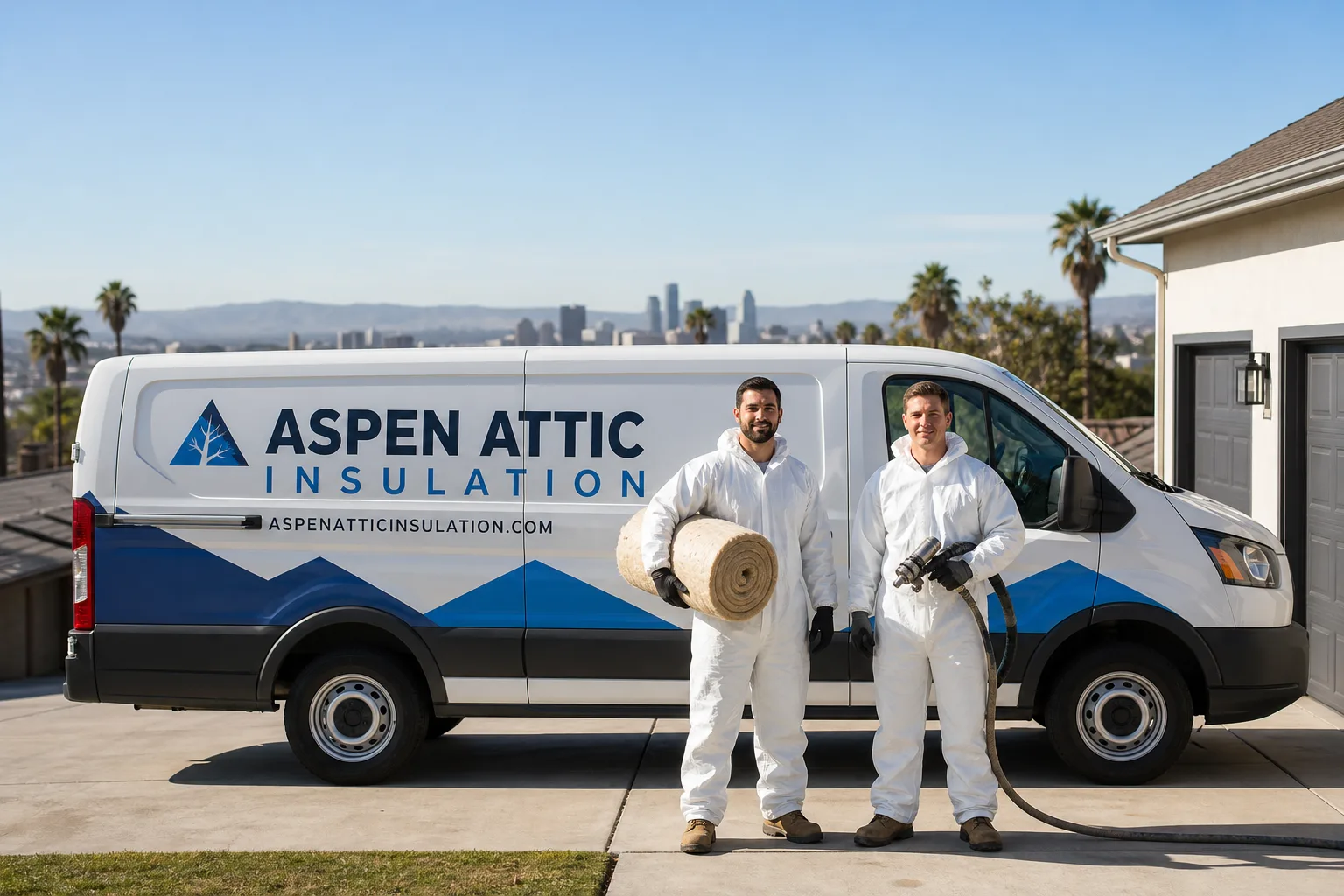
Fast, Reliable Blown In Insulation Across San Lorenzo
Blown In Insulation in San Lorenzo runs $1.80 to $3.20 per square foot for attic work and $2.50 to $4.50 per square foot for dense-packed wall cavities, with most ranch homes in the 94580 ZIP falling between $2,200 and $4,800 total depending on accessibility and whether existing saturated material needs removal first. We’re the Blown In Insulation team that serves San Lorenzo from our Bay Area dispatch office, and we know the fog belt here doesn’t behave like Livermore or Concord. Our crews are usually on-site in San Lorenzo within 24 to 48 hours of your call, sometimes same-day if the schedule allows. Call (864) 428-1615 and a live person will pick up, 24 hours a day.
San Lorenzo’s coastal position puts it under the marine layer more days than not. That cool, saturated air doesn’t just make summer afternoons feel chilly; it keeps attic sheathing and rafters perpetually damp. We’ve worked on enough post-war ranches off Lewelling Boulevard and Via Alamitos to know that standard insulation specs from inland contractors often fail here within a single fog season. Our estimates include moisture readings, ventilation assessment, and a written price before any work starts. No post-job surprises. No stranger at your door without a name and photo sent to your phone first.
Why Aspen Attic Insulation Is San Lorenzo’s Preferred Blown In Insulation Company
We’ve built our reputation in San Lorenzo by solving the problem other insulation companies miss: moisture management in fog-belt construction. Homeowners here aren’t looking for the cheapest quote; they’re looking for someone who understands why their hallway smells musty every October and why their PG&E bill climbs despite mild temperatures. Our reviews from San Lorenzo customers consistently mention two things: the technician showed up exactly as promised, with a photo ID and a clean uniform, and the house stopped feeling damp.
Our response time to San Lorenzo averages next-day availability, with emergency appointments for active moisture issues like dripping rafters or visible mold on attic sheathing. We coordinate dispatch from our Bay Area office, but the crew that arrives at your door lives and works in the East Bay, not shipped down from Sacramento or up from San Jose.
Every technician operates under The Threshold Standard: background-checked, identity-verified, photo-badged, and sent to you by name and photo before the visit. If anyone else arrives, the visit is free and we make it right. That protocol matters in San Lorenzo, where many of our customers are older homeowners who’ve lived in the same ranch since 1965 and aren’t accustomed to opening the door to unannounced contractors.
Blown In Attic Insulation in San Lorenzo
Blown In Attic Insulation in San Lorenzo typically involves removing moisture-damaged existing material, air-sealing penetrations and top plates, installing proper soffit baffles to prevent wind-washing, then blowing loose-fill fiberglass or cellulose to a uniform depth that accounts for the fog-belt’s drying requirements. Most San Lorenzo ranch homes need 12 to 16 inches of blown material to reach R-38 to R-49, but depth alone won’t solve the condensation problem here. The work usually costs $2,200 to $4,200 for a typical 1,200 to 1,800 square foot attic, including removal of saturated old batts if present.
Moisture Assessment Before Blow-In
We start every San Lorenzo attic job with a moisture meter and a ventilation calculation. If your rafters read above 18% moisture content, blowing new insulation over wet wood traps that water against the sheathing. We’ll specify active drying or ventilation upgrades before any material goes in. This step gets skipped by contractors who treat San Lorenzo like Walnut Creek.
Matching Material to Existing Conditions
For attics with adequate intake and exhaust ventilation already in place, we often specify Owens Corning blown fiberglass for its dimensional stability in humid conditions. Where ventilation is marginal or the roof geometry limits airflow, we may recommend Knauf’s moisture-resistant formulations or pair blown cellulose with dedicated baffle and vent installation. The choice depends on what your specific attic can dry, not what we have on the truck.
Blown In Cellulose Insulation in San Lorenzo
Blown In Cellulose Insulation in San Lorenzo is our preferred solution for wall cavities in the area’s 1945 – 1970 stucco-clad ranches, where original 2×4 framing leaves only 3.5 inches of depth and aluminum wiring complicates cavity access. Dense-packed cellulose, typically GreenFiber treated with borate for pest and fire resistance, fills irregular cavities and provides air-sealing benefits that loose fiberglass cannot match in thin walls. Wall work in San Lorenzo runs $2.50 to $4.50 per square foot of wall area, with whole-house projects on a modest ranch often falling between $3,500 and $6,500 depending on window count and wiring obstructions.
Dense-Pack Technique for 2×4 Walls
We drill access holes at stud bay intervals, typically from the exterior on stucco homes or from the interior if siding replacement isn’t planned, then blow cellulose at 3.5 to 4.0 pounds per cubic foot to achieve a dense pack that won’t settle. In San Lorenzo’s older homes, we map aluminum wiring locations first and coordinate with licensed electricians if knob-and-tube or overloaded branch circuits are present. We don’t bury active electrical problems in insulation.
Borate Treatment for Fog-Belt Durability
The borate flame retardant in GreenFiber cellulose also discourages mold growth if moisture does penetrate the assembly. That’s not a substitute for proper ventilation, but it’s an extra layer of protection in a climate where fog can roll in for two weeks straight and attic humidity never drops below 70%.
Trusted Brands We Service in San Lorenzo
We stock materials from eight industry-leading manufacturers: Owens Corning, Johns Manville, Knauf, Rockwool, CertainTeed, Icynene, Demilec, and GreenFiber. For San Lorenzo’s fog-belt conditions, we most often reach for Owens Corning’s moisture-resistant blown fiberglass for open attics with good ventilation, GreenFiber borate-treated cellulose for dense-pack wall work and moisture-prone cavities, and Knauf’s EcoSeal system when we need to establish an air barrier before blowing. Having multiple brands on hand means we’re not forcing your 1958 ranch off Hesperian Boulevard into a one-size-fits-all specification. We match the material to the assembly, and we keep common densities and hose sizes stocked so San Lorenzo customers don’t wait two weeks for a special order while their rafters keep dripping.
Common Blown In Insulation Problems We See in San Lorenzo Homes
- Saturated fiberglass batts slumped off joists. The marine layer keeps San Lorenzo attics humid enough that original fiberglass batts absorb moisture, lose their loft, and slide away from top plates and wall headers. What’s left is essentially an uninsulated attic with wet material compressing against drywall. We remove this material completely before blowing new insulation; topping off wet batts traps moisture against the ceiling.
- Wind-washed blown insulation from missing or blocked soffit vents. Many San Lorenzo ranches were built with minimal or painted-over soffit vents. Without intake airflow, any blown material near the eaves gets churned by convection currents and loaded with fog-belt moisture. We install proper baffles and clear soffit paths as part of every attic job.
- Condensation on rafters after foggy mornings. This is the telltale sign we look for first. If your attic smells musty or you see water beading on rafter bottoms in October, your existing insulation is already compromised. The condensation forms because warm, moist indoor air reaches cool, uninsulated structural elements. We air-seal first, then insulate.
- Insulation blown over aluminum wiring without air-sealing. San Lorenzo’s housing stock includes thousands of homes with original aluminum branch circuits. Blown insulation that channels warm air past these connections creates temperature cycling and potential fire hazards. We seal all electrical penetrations before blowing any material.
Pricing for Blown In Insulation in San Lorenzo, CA
Honest numbers for San Lorenzo’s market: attic blow-in with removal of existing saturated material runs $2,200 to $4,800 for most 1,200 to 2,000 square foot homes; wall dense-pack cellulose in original 2×4 construction runs $3,500 to $6,500 for whole-house coverage; and targeted spot repairs or top-offs where existing material is dry and adequate start around $1,200. What moves you within these ranges: attic accessibility (steep roof pitch or limited hatch size), presence of aluminum wiring requiring electrician coordination, extent of existing moisture damage, and whether ventilation upgrades are needed to protect the new material. Every homeowner receives a written price before any work begins. No exceptions. Estimates are free, and we encourage you to compare our written quote against anyone else’s. Call (864) 428-1615 to schedule.
We Also Serve Cities Near San Lorenzo
Our crews work throughout the East Bay, including San Lorenzo and neighboring Castro Valley, San Leandro, Union City, and Oakland. The same marine-layer conditions affect insulation performance across this corridor, though San Lorenzo’s position closer to the Bay sees more persistent fog than the inland hills of Castro Valley. We adjust material specifications and ventilation designs for each city’s specific microclimate.
Serving San Lorenzo, CA - Our Local Coverage Area
We’re based in the San Lorenzo area and know this community well. Use the map below to see our service coverage - if you’re nearby, we can almost certainly help.
FAQs About Blown In Insulation in San Lorenzo
San Lorenzo’s marine layer delivers 80%+ humidity on more than 200 days per year, and that moisture penetrates attic assemblies that inland contractors spec for dry heat. Insulation that performs fine in Livermore or Tracy fails here because the assembly can’t dry between wetting events. We specify moisture-tolerant materials and mandatory ventilation integration for every San Lorenzo job. Call (864) 428-1615 for a free moisture assessment.
Yes, with proper preparation. We map aluminum circuit locations, verify connections are in approved enclosures, and air-seal all electrical penetrations before dense-packing cellulose at 3.5 pounds per cubic foot. If wiring is damaged or overloaded, we flag it and coordinate with a licensed electrician before proceeding. The 2×4 cavities fill completely at that density without settling.
Musty smell near hallway registers, visible water beading on rafters after foggy mornings, or fiberglass batts that compress to less than half their labeled thickness when handled. If any of these are present, topping off traps moisture and accelerates mold growth. We remove compromised material completely, dry the assembly, then install new blown insulation with proper ventilation. Call (864) 428-1615 for an inspection.
We pair every installation with a ventilation design: soffit baffles for intake, ridge or gable vents for exhaust, and air-sealing to stop warm moist indoor air from entering the cavity. The insulation itself is specified for moisture tolerance, but the assembly only stays dry if it can ventilate. We calculate net free area and verify airflow before we leave.
We most often specify GreenFiber borate-treated cellulose for wall dense-pack and moisture-prone attics, Owens Corning blown fiberglass for well-ventilated open attics, and Knauf systems when integrated air-sealing is required. These brands offer the density control, moisture resistance, and fire safety ratings that San Lorenzo’s fog-belt construction demands. We don’t use whatever’s cheapest; we use what will still perform after five San Lorenzo winters.
Ready to stop the damp, musty cycles in your San Lorenzo home? Call (864) 428-1615 for a free estimate. A live person answers 24/7, and you’ll receive a written price before any work begins, backed by our 365-Day Done Right Promise covering labor and materials.
Written by Garrett Sloane, Owner at Aspen Attic Insulation, serving San Lorenzo and the East Bay.