
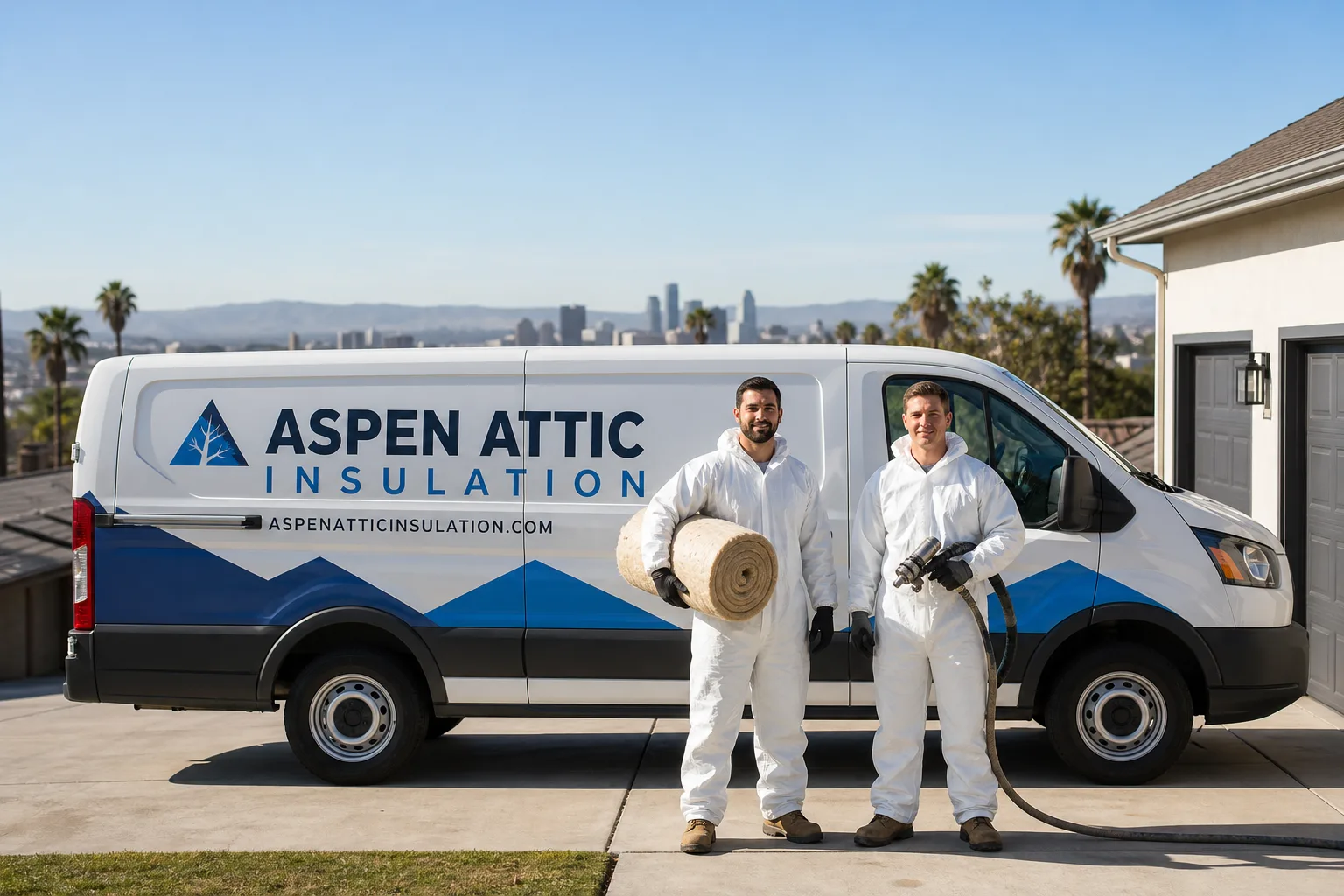
Fast, Reliable Blown In Insulation Across Castro Valley
Blown-in insulation in Castro Valley typically costs $1,800 – $3,800 for a standard attic, with most jobs completed in a single day. Our crews serve Castro Valley from our San Francisco Bay Area dispatch office, carrying enough material to finish the job without a return trip. Call (864) 428-1615 for a free estimate with a written price before any work starts.
We know Castro Valley’s homes. The 1950s-70s ranches along Castro Valley Boulevard, the split-levels up in Palomares Hills, the canyon properties off Crow Canyon Road and Cull Canyon Road. Each has its own insulation story, and most of them start with too little or the wrong kind. Our Blown In Insulation team arrives with your technician’s name and photo already sent to your phone, background-checked and uniformed, ready to measure, air-seal, and blow to the exact depth your attic needs.
Why Aspen Attic Insulation Is Castro Valley’s Preferred Blown In Insulation Company
We’ve built our reputation in Castro Valley by solving problems other crews miss. The Threshold Standard means every technician is identity-verified, photo-badged, and sent to you by name and photo before the visit. If anyone else shows up at your door, the visit is free and we make it right.
Our reviews from Castro Valley homeowners consistently mention the same things: the technician arrived when promised, explained the attic condition with photos, and delivered a written price before touching a tool. No post-job surprises. No “we found something else” add-ons.
Response time to Castro Valley is typically same-day or next-day, with calls answered by a live person 24/7. We don’t do voicemail loops or four-hour callback windows. When your upstairs bedrooms are hitting 85 degrees by mid-afternoon, you need a crew that understands why, not one that blows generic fiberglass and hopes for the best.
That local knowledge matters. Castro Valley’s extreme diurnal temperature swings, canyon morning frost, and afternoon valley heat in the 90s create thermal cycling that standard Bay Area insulation approaches aren’t built for. We are.
Blown In Insulation Contractors in Castro Valley
Spray Foam Insulation - Castro Valley contractors and blown-in crews alike need to understand more than how to operate a blower machine. The job involves measuring attic square footage and existing insulation depth, identifying air leaks at top plates and recessed can housings, sealing those leaks with caulk or foam, then blowing loose-fill cellulose or fiberglass to a calculated depth that achieves target R-value. In Castro Valley, a typical attic runs $1,800 – $3,800 depending on square footage, accessibility, and whether old material needs removal first.
Air Sealing Before Blowing
Skipping air sealing is the most common mistake we see in Castro Valley attics. Hot canyon air finds every gap around light fixtures, plumbing stacks, and partition walls. We seal first, then blow. Otherwise you’re paying for insulation that wind-washes and underperforms.
Material Load for One-Trip Completion
Our trucks carry enough GreenFiber cellulose and Owens Corning fiberglass to handle attics up to 2,500 square feet without resupply. That means no “we’ll come back tomorrow” delays. One trip, done right, backed by our 365-Day Done Right Promise in writing.
Cellulose Insulation in Castro Valley
Cellulose Insulation in Castro Valley is our recommended choice for most homes, especially the canyon properties with west-facing attics that bake in afternoon sun. Made from recycled paper fibers treated with borate fire retardant, cellulose settles less than fiberglass in high-heat conditions and maintains its R-value through rapid thermal cycling. A typical Castro Valley attic needs 12 – 15 inches blown to achieve R-49, at a cost of $2,200 – $3,800 for standard ranch homes up to 1,800 square feet.
Why Cellulose Handles Castro Valley’s Climate Better
West-facing canyon attics here can reach 140 degrees in July. Standard fiberglass batts sag and pull away from rafters within a few seasons. Cellulose, blown loose-fill to uniform depth, doesn’t have that problem. It fills around joists and penetrations completely.
Retrofit Over Existing Material
Many Castro Valley ranches have thin, degraded fiberglass from the 1970s. We can often blow cellulose directly over it after air sealing, saving removal cost. We test the existing material first. Wet, moldy, or pest-damaged insulation comes out. Everything else stays and gets topped.
Trusted Brands We Service in Castro Valley
We stock materials from eight industry-leading brands so we match the right product to your specific attic, not just what we have on the truck. For Castro Valley’s thermal cycling challenges, we typically reach for Owens Corning fiberglass loose-fill for flat, open attics with good ventilation, or GreenFiber cellulose for canyon homes with heat-loading issues. Johns Manville and Knauf products are on hand for specialized applications like high-density sidewall fills or sound-control upgrades between living levels. Because we carry local inventory for Castro Valley customers, we don’t wait on supplier deliveries. Your job starts when we arrive, not two weeks later.
Common Blown In Insulation Problems We See in Castro Valley Homes
- West-facing canyon batts sag and gap. In neighborhoods off Cull Canyon Road and Palomares Hills, afternoon attic temperatures cook standard fiberglass until it droops off rafters, leaving bare spots that pour heat into bedrooms by 2pm. We find this constantly. Cellulose blown to proper depth doesn’t sag.
- Unvented flatland attics trap heat. The 1960s-70s ranch and Eichler-inspired homes near Castro Valley Boulevard were built with no soffit vents and minimal ridge venting. Blown insulation installed without air sealing just sits on top of a convection oven. We ventilate what we can and seal what we can’t.
- Quirky additions create uneven envelopes. Hills and canyon homes often have a 1970s main house with a 1990s addition and a 2010s ADU, each with different joist depths and existing insulation. A crew that blows uniform depth wastes material on the over-insulated section and leaves the addition cold. We measure and map before blowing.
- Recessed can lights bypass insulation entirely. Older Castro Valley homes have non-IC-rated can housings that can’t be buried in insulation. We install proper covers and seal around them, or recommend LED retrofits that eliminate the heat source and allow full insulation contact.
Pricing for Blown In Insulation in Castro Valley, CA
| Service | Typical Range in Castro Valley |
|---|---|
| Blown cellulose to R-49, standard ranch attic (1,000 – 1,500 sq ft) | $1,800 – $2,800 |
| Blown cellulose to R-49, larger or complex attic (1,500 – 2,500 sq ft) | $2,800 – $3,800 |
| Existing insulation removal + disposal | $400 – $900 |
| Air sealing (top plates, penetrations, can lights) | $300 – $700 |
| Attic baffles / soffit venting upgrade | $200 – $500 |
What moves you within these ranges? Attic square footage is the biggest factor. Steep pitches and limited access add labor time. Removal of old, damaged material adds cost but improves performance. We measure everything during your free estimate and deliver a written price before any work begins. No post-job surprises. Call (864) 428-1615 to schedule.
We Also Serve Cities Near Castro Valley
Our crews work throughout the East Bay, including Blown In Insulation in Castro Valley and neighboring San Lorenzo, San Leandro, Union City, and Dublin. Same technician protocols, same written pricing, same 365-Day Done Right Promise apply across every city we serve.
Serving Castro Valley, CA - Our Local Coverage Area
We’re based in the Castro Valley area and know this community well. Use the map below to see our service coverage - if you’re nearby, we can almost certainly help.
FAQs About Blown In Insulation in Castro Valley
West-facing canyon attics experience rapid thermal cycling, with surface temperatures swinging from morning frost to 140-degree afternoon bake. Standard fiberglass batts sag and lose R-value within a few seasons under this stress. Cellulose loose-fill, properly air-sealed and blown to depth, handles the cycling without degrading. Call (864) 428-1615 for a free attic assessment.
Yes, often. We inspect existing material for moisture damage, pest activity, or mold. If it’s dry and structurally intact, we air-seal penetrations and blow cellulose directly over it to achieve R-49. Removal is only necessary when old material is compromised. We’ll tell you exactly what we find and give you a written price for either approach.
A standard 1,200-square-foot ranch attic in Castro Valley needs roughly 40 – 50 bags of GreenFiber cellulose blown to 12 – 15 inches depth, depending on joist spacing and existing material. We calculate exact bag count from our measurements, then carry enough for the full job in one trip. No return visits for resupply.
Yes. We map attic depths, joist heights, and existing insulation across each section of the house. A 1970s main house with a 1990s addition gets different treatment, not uniform blowing. The goal is even performance, not even depth. Every plan is custom to your specific home.
Morning frost in Castro Valley’s canyons means attics start cold and heat rapidly, creating condensation risk if warm interior air leaks into the cavity. Our air-sealing protocol prevents this by sealing top plates and penetrations before blowing insulation. Without that seal, you get moisture buildup and degraded performance regardless of insulation type. We don’t skip this step.
Written by Garrett Sloane, Owner at Aspen Attic Insulation, serving Castro Valley and the East Bay.