
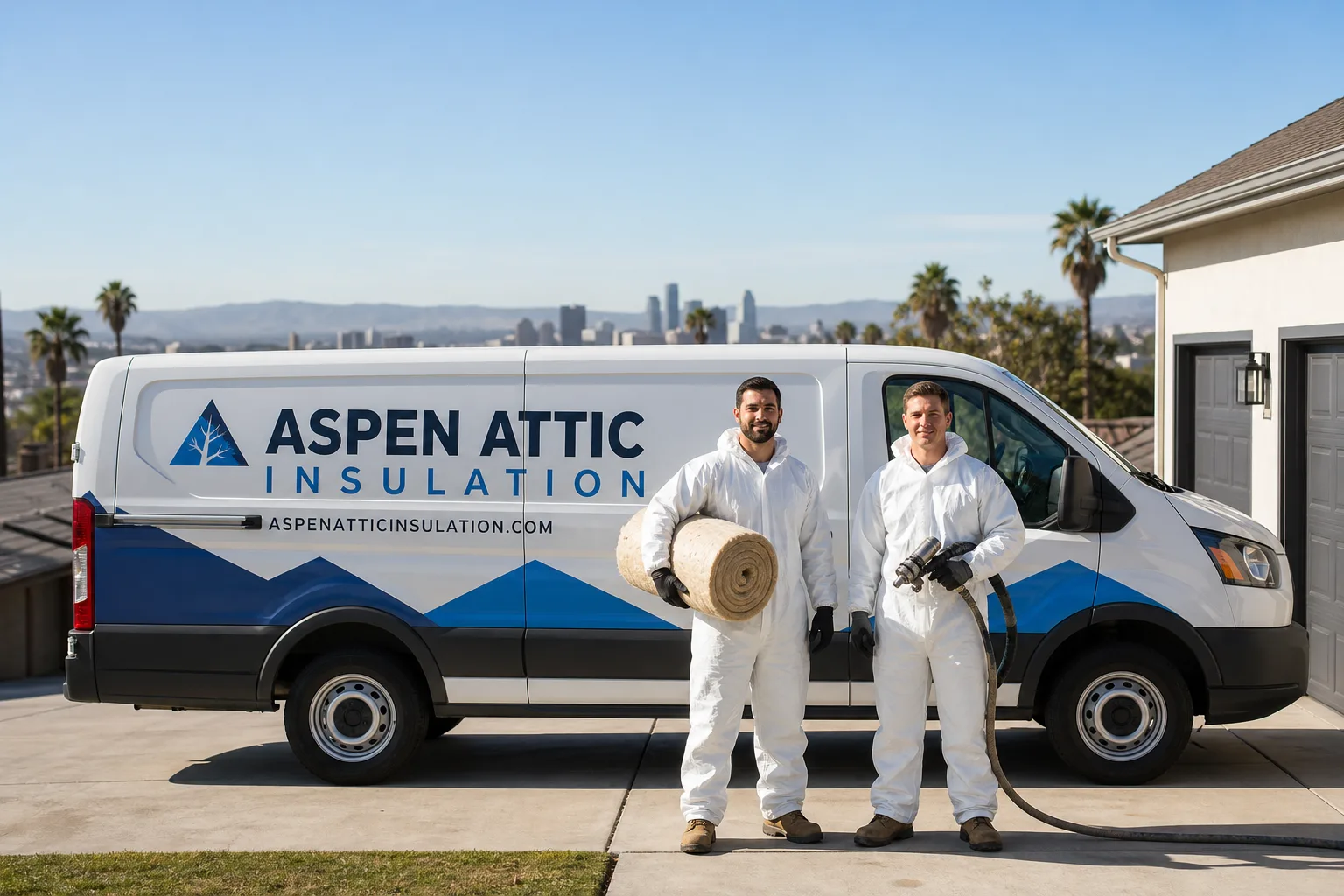
Fast, Reliable Blown In Insulation Across Compton
Blown-in insulation in Compton typically costs $1.80 to $3.50 per square foot for attic work and $2.50 to $4.50 per square foot for wall retrofits, with most jobs completed in one day. For Compton’s thousands of post-WWII wood-frame tract homes, blown-in cellulose or fiberglass is often the only practical way to insulate walls that were built empty. Our Blown In Insulation crews dispatch from our Los Angeles office and carry Owens Corning, Johns Manville, and GreenFiber materials matched to your specific home. Call (864) 428-1615 for a written estimate before any work begins.
We’ve worked on enough Compton homes to know the pattern: a stucco exterior that looks solid hides rock lath walls with zero insulation and, too often, original knob-and-tube wiring that has to be addressed first. That combination is routine here, almost unheard of in Gardena or Carson. Our techs show up with your name, photo, and price already in writing. No surprises. No strangers at your door.
Why Aspen Attic Insulation Is Compton’s Preferred Blown In Insulation Company
Compton homeowners choose us because we understand what we’re walking into. The Threshold Standard means every technician is background-checked, identity-verified, and sent to you by name and photo before the visit. If anyone else shows up, the visit is free and we make it right.
Our crews know Compton’s housing stock intimately. We’ve insulated homes from Richland Farms to the neighborhoods along Compton Boulevard, and we’ve handled the full range of retrofit challenges: stucco removal, rewiring, Title 24 compliance, and the specific ventilation problems that come with flat roofs in a heat island. Reviews from Compton customers consistently mention our upfront pricing and the 365-Day Done Right Promise covering labor and materials in writing.
Response time to Compton is same-day or next-day for most calls. Emergency situations, like failed insulation exposing live wiring or moisture damage during rainy periods, get priority scheduling. A live person answers our phone 24/7, no voicemail loops.
Local knowledge matters. A technician who doesn’t recognize knob-and-tube wiring behind stucco can create a fire hazard. One who doesn’t account for Compton’s urban heat island effect might recommend the wrong R-value or skip the radiant barrier your attic actually needs. We don’t guess. We inspect, photograph, and explain before quoting.
Cellulose Insulation in Compton
Cellulose Insulation in Compton is typically the right choice for wall retrofits in 1940s and 1950s tract homes with empty rock lath cavities. We blow GreenFiber or Owens Corning cellulose into wall cavities at $2.50 to $4.50 per square foot, depending on cavity depth, stucco condition, and whether we need to coordinate electrical upgrades first. The material is treated with borate fire retardant and pest resistance, critical in Compton’s older wood-frame construction.
When Wall Retrofit Makes Sense
Wall retrofit becomes necessary when your home has no wall insulation at all, which describes most Compton tract houses built before 1960. We remove stucco in sections, drill access holes into the rock lath, fill cavities with dense-packed cellulose, then seal and re-stucco. It’s labor-intensive. It’s also the only way to get meaningful R-value into walls that were never designed for it.
Moisture Management in Stucco Homes
Cellulose can clump and settle if moisture gets trapped between stucco and the original wall surface. We inspect for this before blowing, and we specify vapor-appropriate sealing based on what we find. In Compton’s climate, with hot dry summers and occasional winter rains, moisture management is specific to each home’s stucco condition and roof overhang design.
Blown In Attic Insulation in Compton
Blown In Attic Insulation in Compton runs $1.80 to $3.50 per square foot, with most single-story Compton homes needing 800 to 1,200 square feet of coverage. We typically recommend R-38 to R-49 for attics here, higher than the state minimum, because Compton’s urban heat island effect pushes summer attic temperatures well above what the basic code assumes. Our crews blow Owens Corning or Johns Manville fiberglass, or GreenFiber cellulose, depending on your attic’s existing conditions and ventilation.
Flat and Low-Pitch Roof Challenges
Many Compton homes have flat or low-pitch roofs that trap radiant heat and bake attic insulation from above. Standard cellulose degrades faster under these conditions. We often pair blown-in attic work with radiant barrier installation or improved ventilation to protect the insulation’s long-term performance. This isn’t upselling. It’s what the roof geometry demands.
Attic Inspection Protocol
Before we blow anything, we photograph your attic, check for active leaks, verify electrical safety, and measure existing insulation depth. Compton’s older homes often have partial or degraded insulation from decades past, plus the occasional abandoned knob-and-tube run that got pushed into the attic rather than properly removed. We find it. We flag it. We quote the full job, not just the easy part.
Trusted Brands We Service in Compton
We stock eight premium brands, but for Compton’s specific retrofit demands we most often reach for Owens Corning fiberglass for attic top-ups, GreenFiber cellulose for wall cavities, and Johns Manville where fire resistance and moisture tolerance both matter. Having multiple brands on hand means we match material to condition, not just grab what’s available. For Compton homeowners, that translates to faster turnaround, no special-order delays, and insulation that actually performs in your specific home’s conditions. Our Los Angeles warehouse keeps deep inventory of the products Compton’s older housing stock needs most.
Common Blown In Insulation Problems We See in Compton Homes
- Moisture-clumped cellulose behind stucco. Trapped moisture between stucco and rock lath causes cellulose to settle into dense, ineffective clumps. We see this most in homes near Compton Creek where drainage is poor, and we address it with proper cavity drying and vapor-sealing before re-insulating.
- Knob-and-tube wiring concealed during previous work. Original wiring hidden behind stucco gets damaged during insulation removal or installation, creating fire hazards. Our pre-installation inspection includes electrical assessment, and we coordinate licensed electricians when rewiring is needed before we proceed.
- Heat-degraded attic insulation under flat roofs. Compton’s flat and low-pitch roofs allow summer attic temperatures to exceed 150°F, accelerating cellulose breakdown and fiberglass compression. We recommend higher R-values and radiant barriers specifically for this roof type, not generic solutions.
- Title 24 compliance gaps in renovations. Many Compton homeowners discover their retrofit doesn’t meet current California energy code until they try to sell or refinance. Our written quotes specify code-compliant R-values and documentation, so you’re covered at closing.
Pricing for Blown In Insulation in Compton, CA
Attic blown-in insulation in Compton typically runs $1.80 to $3.50 per square foot, depending on material choice and whether we need to remove old insulation first. Wall retrofits run $2.50 to $4.50 per square foot, with the higher end reflecting stucco removal, electrical coordination, and re-sealing work. A typical single-story Compton tract home with 1,000 square feet of attic and no removal needed lands around $1,800 to $3,500 for attic work. Full wall retrofits on the same home, including stucco removal and replacement, can run $8,000 to $15,000.
What moves the price: material type (fiberglass vs. cellulose vs. mineral wool), cavity depth and accessibility, presence of old insulation requiring removal, electrical upgrades needed before installation, stucco condition and repair scope, and whether Title 24 documentation is required for a pending sale. We give you a written, itemized price before any work starts. Every time. No exceptions. Estimates are free. Call (864) 428-1615 to schedule.
We Also Serve Cities Near Compton
Our crews work throughout the Los Angeles Basin, including Compton and the surrounding communities of Gardena, Carson, Lynwood, and Paramount. Each city has its own housing stock patterns and insulation challenges, from Gardena’s mix of mid-century and newer construction to Carson’s industrial-adjacent air quality considerations. We bring the same Threshold Standard, upfront pricing, and named-technician protocol to every job.
Serving Compton, CA - Our Local Coverage Area
We’re based in the Compton area and know this community well. Use the map below to see our service coverage - if you’re nearby, we can almost certainly help.
FAQs About Blown In Insulation in Compton
Coastal salt air doesn’t directly degrade blown-in insulation materials, but it accelerates corrosion in attic ventilation components and fasteners, which can compromise the system that keeps insulation dry and effective. We inspect and replace corroded vents, baffles, and hangers as part of our installation protocol, particularly in homes west of the 710 freeway where salt exposure is highest. Call (864) 428-1615 and we’ll check your attic’s ventilation condition during the free estimate.
Compton’s housing stock is dominated by 1940s-1950s wood-frame tract homes built without wall insulation, while neighboring cities like Downey and Long Beach have more mixed-age construction including newer insulated walls. Stucco exteriors here make retrofit possible but labor-intensive, creating demand for blown-in methods that fill existing cavities without full reconstruction. The pattern is so common in Compton that wall retrofit represents a larger share of our work here than anywhere else we serve.
No, we cannot install blown-in insulation against active knob-and-tube wiring; it’s a fire hazard and violates California electrical code. We coordinate with licensed electricians to remove and replace the wiring first, then proceed with insulation. This sequence adds cost and time, but it’s non-negotiable for safety and code compliance. We’ll identify this condition during our pre-installation inspection and include electrical coordination in your written quote if needed.
We recommend R-38 to R-49 for Compton attics, above the state minimum of R-30, because the urban heat island effect raises local temperatures several degrees above what standard calculations assume. Higher R-value reduces cooling load and protects against the accelerated insulation degradation we see under flat and low-pitch roofs. We’ll measure your attic, check existing depth, and specify the exact R-value target in your written estimate.
Flat and low-pitch roofs trap radiant heat and limit natural ventilation, creating attic conditions that degrade cellulose faster and compress fiberglass more than steeper roofs with better airflow. We address this with higher R-value targets, radiant barrier installation where appropriate, and improved mechanical ventilation designed for the specific roof geometry. Our field experience with Compton’s roof types means we don’t install generic solutions and hope they work.
We were called to a 1952 wood-frame tract home near Compton Boulevard and Willowbrook Avenue where the stucco exterior was hiding original knob-and-tube wiring alongside uninsulated rock lath walls. After carefully removing the stucco and upgrading the wiring, our tech blew GreenFiber cellulose into the wall cavities and attic, then sealed the walls to meet Title 24 requirements. The homeowner immediately noticed a 10-degree temperature difference in the back bedrooms during that summer’s heat wave.
Ready to find out what your Compton home needs? Call (864) 428-1615 for a free estimate. We’ll send you the technician’s name and photo before anyone arrives, and you’ll have a written price in hand before any work starts. That’s the Threshold Standard, and it’s how we’ve worked since 2002.
Written by Garrett Sloane, Owner at Aspen Attic Insulation, serving Compton since 2002.