
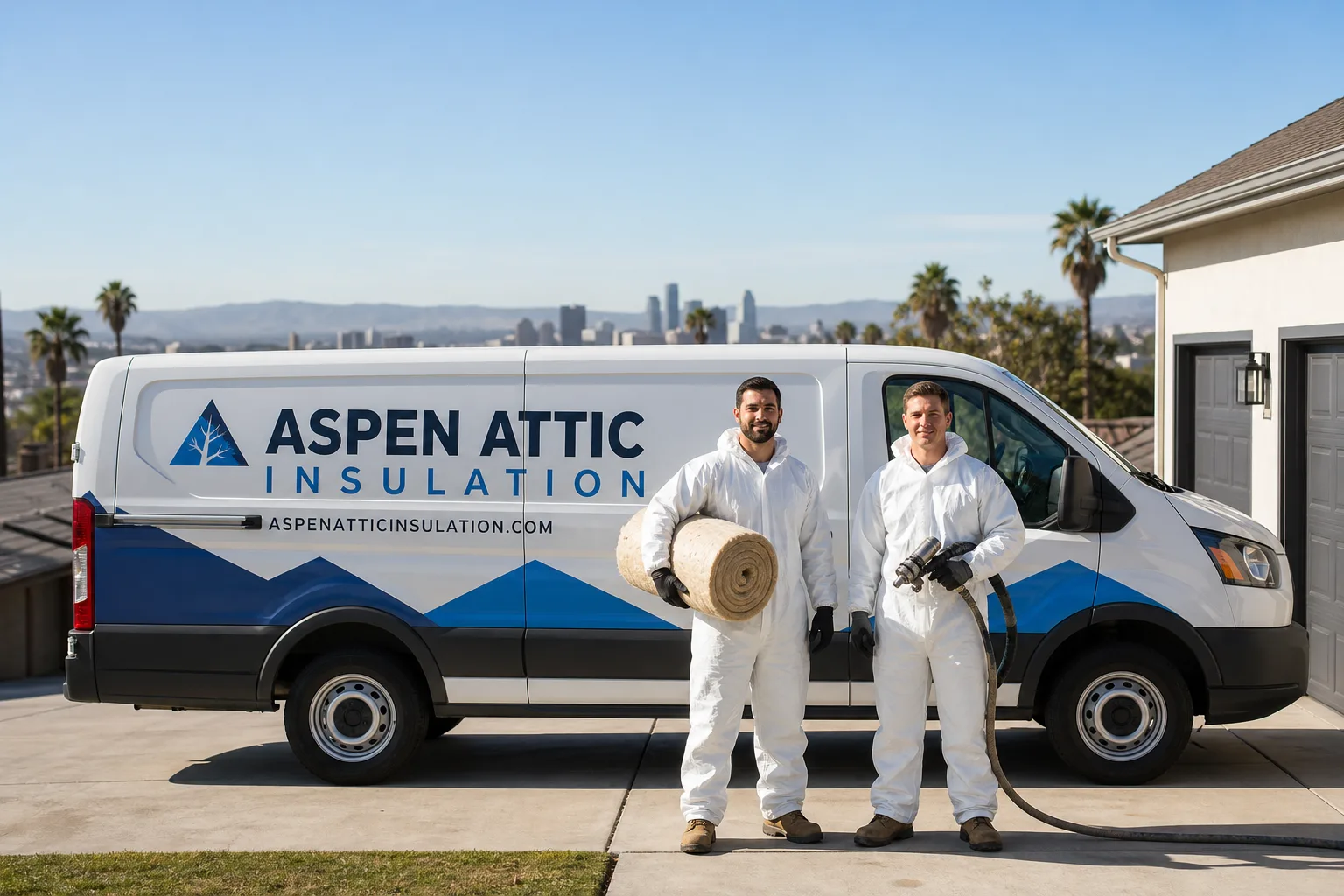
Fast, Reliable Blown In Insulation Across Gardena
Blown-in insulation in Gardena typically costs $1,800 – $3,800 for a standard attic and most jobs are completed in a single day. Our crews serve Gardena from our Los Angeles dispatch office, and we can usually schedule an inspection within 48 hours. Call (864) 428-1615 for a free written estimate.
We’ve worked in the stucco ranch homes off Gardena Boulevard, the older tracts near Vermont Avenue, and the county-pocket neighborhoods where original 1950s construction meets unpermitted additions. Gardena’s inland location in the South Bay creates a specific problem: morning marine layer fog gives way to 85 – 95°F afternoons, and west-facing roofs bake attics past 140°F while the original R-11 insulation, built for milder coastal expectations, does almost nothing to stop it. That’s why our Blown In Insulation team maps every thermal boundary before we blow a single bag.
Why Aspen Attic Insulation Is Gardena’s Preferred Blown In Insulation Company
Garrett Sloane built Aspen Attic Insulation on the Threshold Standard, and every Gardena job carries the same protocols: written price before work starts, 365-Day Done Right Promise in writing, and a technician whose name, photo, and ID badge you receive before anyone knocks. No voicemail loops, either. A live person answers our phones 24/7.
Gardena homeowners specifically choose us because we understand the unpermitted garage conversions common near Gardena Boulevard and the county pockets where no building plans exist. We’ve mapped hidden thermal bypasses in homes where the original stucco wall meets a decades-old addition, and we’ve solved the low-clearance, low-pitch roof problem that makes batt insulation impossible in many local ranches. Our reviews from Gardena customers consistently mention the pre-visit technician photo and the exact written price as the reasons they felt comfortable letting us into their homes.
When you book with Aspen, you know who is coming, what they will do, and what it will cost. If anything fails within 365 days, we come back free. That’s the Threshold Standard, and it’s how we work in Gardena, Lawndale, Hawthorne, and every city we serve.
Blown In Cellulose Insulation in Gardena
Blown In Cellulose Insulation in Gardena involves loose fibers of recycled paper treated with fire retardant, blown through a hose into your attic cavity to fill every gap around joists, pipes, and irregular framing. In Gardena’s pre-1980 ranch and Spanish-style homes, cellulose is often the only viable upgrade because original 2×4 rafters and low-pitch roofs leave too little clearance for batts or spray foam without re-roofing. A typical Gardena attic runs $2,000 – $3,200 for cellulose blown to R-38.
Mapping Thermal Boundaries First
We never blow cellulose until we’ve identified where the original structure ends and any additions begin. In Gardena’s older tracts near Gardena Boulevard, unpermitted garage conversions created hidden gaps between original stucco walls and new framing. Skip this step and the cellulose covers the ceiling while heat streams through the bypass. Our crew maps these boundaries with a thermal camera, seals the gaps with rigid foam and caulk, then blows.
Low-Pitch Roof Solutions
Gardena’s original ranch roofs often have pitches under 4:12 and rafters sized for 2x4s. That leaves six to eight inches of clearance at the eave. Blown cellulose conforms to that space, filling to consistent depth where batts would compress or leave voids. We’ve completed dozens of these jobs in Gardena where the homeowner was told re-roofing was the only option.
Blown In Fiberglass Insulation in Gardena
Blown In Fiberglass Insulation in Gardena uses fine glass fibers blown loose into the attic, creating a lighter, faster-drying thermal layer than cellulose. Fiberglass works well in Gardena homes with newer wiring, good attic ventilation, and no history of roof leaks. A typical Gardena attic runs $1,800 – $3,000 for fiberglass blown to R-38. It’s less dense than cellulose, so it won’t settle as heavily in low-pitch areas, though it requires more depth for the same R-value.
When Fiberglass Fits Best
Fiberglass excels in Gardena attics where the roof deck is in excellent condition and the homeowner wants minimal weight on aging 2×4 rafters. It doesn’t absorb moisture the way cellulose can, which matters in Gardena’s marine-influenced climate where morning fog can leave attic sheathing damp until afternoon sun burns it off. We often recommend fiberglass for homes near the western edge of Gardena closest to the coast.
Brand Matching to Your Home
We stock Owens Corning and Johns Manville fiberglass blends matched to Gardena’s specific climate zone. A home with original vented soffits and a west-facing roof gets a different product density than a home with sealed eaves and added gable vents. We choose after inspecting, not before.
Trusted Brands We Service in Gardena
We maintain inventory from eight industry-leading brands so Gardena homeowners aren’t limited to whatever truck happens to be in the neighborhood. For blown-in work, we regularly specify Knauf fiberglass for its consistent fiber length and low dust, Rockwool mineral wool for fire resistance in homes with aging electrical, and CertainTeed cellulose for its density and settling resistance in low-clearance attics. Because we stock locally and source through the Threshold Group network, we don’t delay your job waiting for a special order. Our technicians arrive with the right material already loaded, measured to your attic’s square footage and the R-value your Gardena home needs.
Common Blown In Insulation Problems We See in Gardena Homes
- Hidden thermal bypasses from unpermitted conversions. In Gardena’s older tracts near Gardena Boulevard, garage and room conversions often skipped permitting, especially in unincorporated county pockets. The original stucco wall meets new framing with no air seal, creating a gap that renders blown-in coverage useless until it’s mapped and sealed.
- Cellulose settling under low-pitch roofs. Original 2×4 rafters and pitches under 4:12 mean minimal clearance at the eaves. Blown insulation migrates downhill, leaving thin spots over west-facing rooms where Gardena’s summer solar gain already concentrates. We check depth at multiple points and add baffles where needed.
- Insulation installed over degraded wiring or unsealed cavities. Many Gardena homes still have knob-and-tube-era wiring or original vented attics that were never properly air-sealed. Blowing insulation over these conditions traps heat and creates fire risk. We inspect wiring condition and seal penetrations before we blow.
- Radiant heat dominating despite new insulation. Gardena’s 140°F attic peaks come from solar gain on dark shingles, not winter heat loss. Blown-in alone won’t stop radiant transfer. We often pair blown cellulose or fiberglass with a radiant barrier on the roof deck for homes with severe summer overheating.
Pricing for Blown In Insulation in Gardena, CA
A typical blown-in insulation job in Gardena runs $1,800 – $3,800 depending on attic size, existing insulation removal, and whether we need to map and seal unpermitted conversion gaps. Small attics under 800 square feet with open access and no removal needed start around $1,800. Larger homes with multiple attic zones, degraded insulation to remove, or thermal bypass sealing near Gardena Boulevard can reach $3,200 – $3,800. We give you a written price before any work starts. No post-job add-ons, no surprises. Call (864) 428-1615 for a free estimate.
We Also Serve Cities Near Gardena
Our crews work throughout the South Bay. We also provide Blown In Insulation in Gardena and surrounding areas including Lawndale, Hawthorne, Compton, and Torrance. Each job carries the same Threshold Standard: written price, verified technician, 365-day guarantee.
Serving Gardena, CA - Our Local Coverage Area
We’re based in the Gardena area and know this community well. Use the map below to see our service coverage - if you’re nearby, we can almost certainly help.
FAQs About Blown In Insulation in Gardena
The marine layer keeps Gardena mornings cool and damp, which means attic sheathing can hold moisture until afternoon sun burns it off. We inspect for active leaks or condensation stains before blowing any product, and we often recommend fiberglass or a vapor-permeable cellulose in homes with marginal ventilation. Call (864) 428-1615 and we’ll assess your specific roof and venting.
Yes, and blown-in is often the only practical upgrade for these homes. Batts compress in the minimal clearance of a 4:12 or lower pitch, losing R-value. Blown cellulose or fiberglass conforms to the space and maintains consistent depth where batts fail. We’ve completed this exact job dozens of times in Gardena’s 1950s – 1970s tracts.
It can help significantly, but only after we map the thermal boundary. Unpermitted conversions in Gardena frequently create hidden bypasses between the original stucco wall and new framing. We use thermal imaging to locate these gaps, seal them with rigid foam and caulk, then blow insulation only where it will actually perform. The visit to assess this is free.
Cellulose generally performs better for Gardena’s specific problem: dense-packed cellulose slows air movement and reduces the radiant heat transfer that dominates in west-facing attics. Fiberglass is lighter and dries faster but requires greater depth for equivalent R-value. For severe summer overheating, we often pair either product with a radiant barrier on the roof deck.
We verify with thermal imaging from the interior and depth probes at multiple attic locations. In a converted home near Gardena Boulevard, our crew couldn’t simply blow over the ceiling because the unpermitted garage created an unmapped thermal boundary. We traced the original stucco line with a thermal camera, sealed the gap, then blew GreenFiber cellulose to R-38 across the main attic only. The back-room temperature dropped noticeably the same week. For your home, we’ll show you the thermal images before and after. Call (864) 428-1615 to schedule.
Written by Garrett Sloane, Owner at Aspen Attic Insulation, serving Gardena and the South Bay since 2002.