
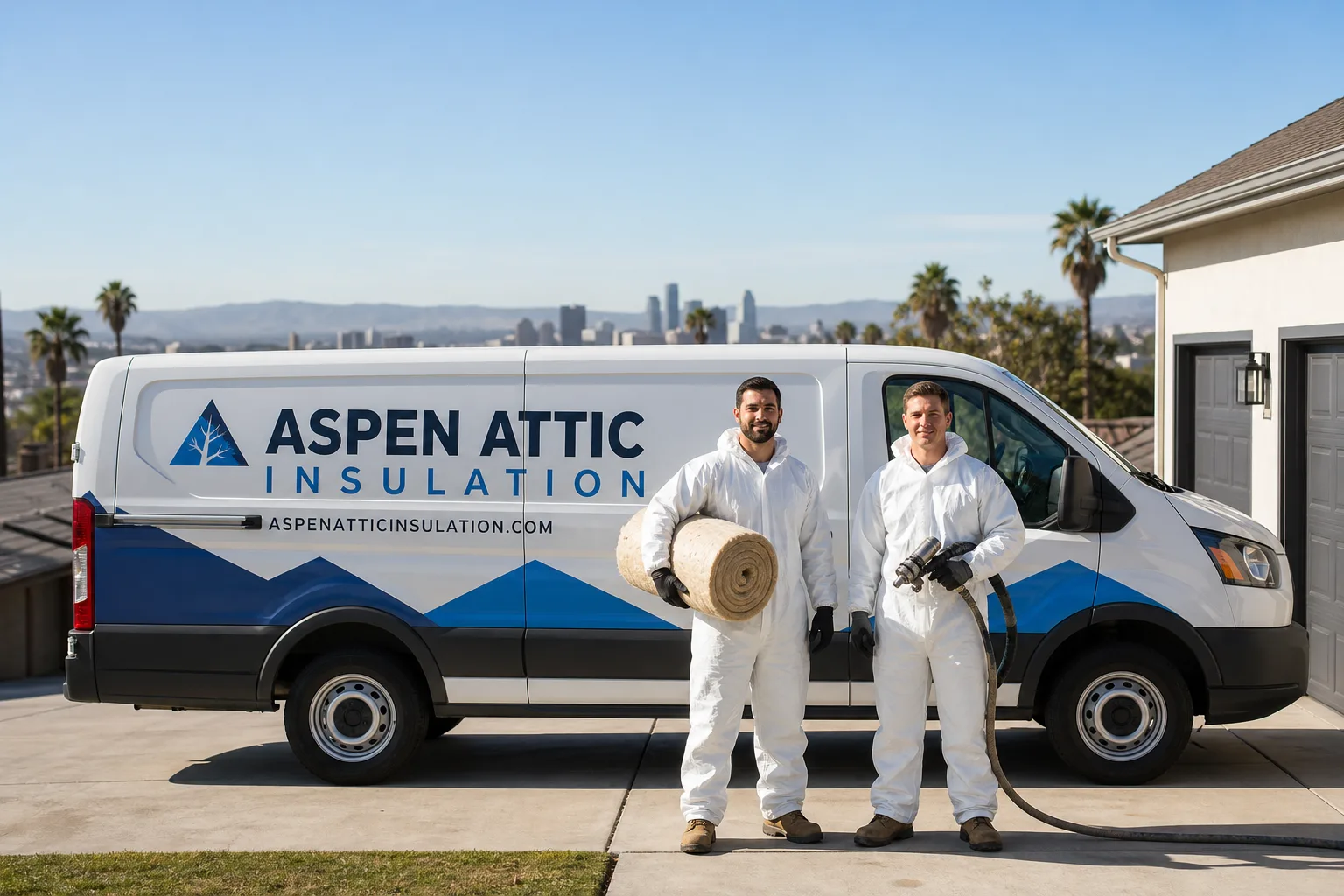
Fast, Reliable Spray Foam Insulation Across Saratoga
Spray foam insulation in Saratoga typically costs $2,800 – $6,500 for a standard attic or garage ceiling, with most projects completed in one to two days. Our crews serve Saratoga from our San Francisco Bay Area dispatch office, and we carry the full range of closed-cell and open-cell foams plus mineral wool cap layers needed for the Chapter 7A wildfire-hardening work that defines insulation projects here.
We know Saratoga’s housing stock intimately: the 1960s open-beam ranches off Big Basin Way, the hillside rebuilds near Montalvo with cathedralized ceilings, the original mid-century homes around Saratoga-Sunnyvale Road where attic insulation has collapsed or been disturbed by rodents. If your home sits in the wooded western hills, you’ve likely already been told your vents need ember-resistant mesh. We handle that integration, not as an afterthought, but as part of the insulation assembly itself. Call us at (864) 428-1615 for a written estimate before any work begins.
Why Aspen Attic Insulation Is Saratoga’s Preferred Spray Foam Insulation Company
We’ve built our reputation in Saratoga on two things other insulation companies skip: we send you the technician’s name and photo before anyone arrives at your door, and we put every price in writing before work starts. Every tech is background-checked, identity-verified, and arrives in a clean marked uniform with a photo ID badge. If someone else shows up, the visit is free and we make it right.
Our 365-Day Done Right Promise covers every job in writing. Labor and materials, a full year. If a repair fails, we come back free. That guarantee is backed by the Threshold Standard, the verification and conduct protocol we’ve operated under since joining the Threshold Group family in 2002.
Calls to our Saratoga line are answered by a live person, 24 hours a day. No voicemail loops, no callback windows. We dispatch crews who already understand that Saratoga’s combination of 130°F summer attics, wet winters, and Chapter 7A wildfire requirements means material selection here is not interchangeable with flatland Bay Area jobs.
Open Cell Spray Foam in Saratoga
Open Cell Spray Foam in Saratoga works best for interior wall cavities, sound-dampening between living spaces, and conditioned attic floors where the foam won’t face direct roof-deck heat. A typical open-cell application in Saratoga runs $2.80 – $3.50 per board foot installed, with whole-wall projects for a 2,400-square-foot home falling between $3,200 and $4,800. We source our open-cell products from Johns Manville and Knauf, selected for low-VOC formulations that perform well in Saratoga’s mild but occasionally humid winter conditions.
Here’s where open-cell fits and where it doesn’t in this market. Saratoga’s exposed-rafter and cathedralized assemblies, common in mid-century homes from the 1950s through 1970s, often see roof deck temperatures that push open-cell foam past its thermal stability threshold. The foam can off-gas, sag, and lose adhesion when surface temps exceed 130°F for extended periods, which happens regularly on western hillside lots with afternoon sun exposure. We flag this during inspection and specify closed-cell or a hybrid assembly when the application calls for it.
Sound Control and Interior Comfort
Open-cell’s natural density, roughly 0.5 pounds per cubic foot, absorbs sound transmission between rooms and from exterior walls facing Saratoga’s busier corridors like Saratoga-Sunnyvale Road or Highway 9. Homeowners in the Montalvo area and near Villa Montalvo have used open-cell specifically to quiet home offices and media rooms without the weight and rigidity of closed-cell alternatives.
Cost-Effective Air Sealing for Standard Framing
For conventional vented attics with adequate clearance and no wildfire-exposure complications, open-cell delivers excellent air-sealing at the lowest spray foam price point. We often pair it with baffle ventilation and proper soffit clearance to prevent moisture accumulation during Saratoga’s winter rains.
Spray Foam Insulation Contractors in Saratoga
Spray Foam Insulation Contractors in Saratoga need more than spray rigs and certification. They need to understand Chapter 7A of the California Building Code, the wildland-urban interface requirements that govern every insulation project in the foothills, and the specific failure modes that Saratoga’s climate and housing stock produce. Our Spray Foam Insulation team trains specifically on these intersections, not as a specialty add-on but as standard protocol.
A typical closed-cell spray foam project in Saratoga, the type we specify for roof decks, rim joists, and fire-hardened assemblies, runs $4.50 – $6.20 per board foot installed. Whole-attic retrofits for a 2,000-square-foot home with cathedralized ceiling generally fall between $5,500 and $8,500, with mineral wool cap layers adding $800 – $1,400 where exposed foam must be covered for code compliance.
We don’t send a salesperson who then subs out to an unknown crew. The technician who inspects your home, the one whose name and photo you receive by text or email before the visit, is the same person who specifies the foam chemistry and oversees the installation. That’s the Threshold Standard, and it’s how we’ve worked since 2002.
Chapter 7A Integration and Ember Resistance
Every contractor on our Saratoga crew carries ember-resistant mesh, 1/8-inch stainless, and knows how to integrate it with foam-sealed vents without compromising the air barrier. We document this with photos at rough inspection and final. It’s not optional; it’s part of the assembly.
Hot-Deck Chemistry Selection
Closed-cell foams for Saratoga’s western hills use blowing agents and catalyst packages rated for sustained 180°F surface temperatures, well above the 130°F ambient we measure in peak summer. We verify this with manufacturer data sheets, not assumptions, because a foam that sags or delaminates after two seasons is a complete loss for the homeowner.
Trusted Brands We Service in Saratoga
We stock materials from eight industry-leading brands, including Johns Manville, Knauf, Rockwool, and CertainTeed, at our Bay Area warehouse for Saratoga jobs. This isn’t about brand loyalty; it’s about having the right product on the truck when we arrive. A mid-century ranch off Titus Avenue with exposed rafters needs a different assembly than a new build off Quito Road with an unvented attic. Rockwool mineral wool, for instance, is non-combustible to 2,150°F and serves as our standard cap layer over closed-cell foam in any cathedralized or exposed assembly in Saratoga’s WUI zone. Knauf and Johns Manville supply our open-cell and closed-cell foams, with formulations selected for the specific temperature and moisture profile of each job. We don’t show up hoping we have what you need. We confirm the specification before we dispatch.
Common Spray Foam Insulation Problems We See in Saratoga Homes
- Open-cell foam sagging on hot exposed rafters. In Saratoga’s western hills, particularly on homes along Saratoga-Sunnyvale Road and the wooded slopes above, afternoon sun drives roof deck temperatures past 130°F. Open-cell foam applied directly to these surfaces can soften, off-gas, and pull away from the substrate within two to three summers. We find this most often in DIY or cut-rate installations where closed-cell or a hybrid assembly should have been specified.
- Ember entry through foam-sealed vents without mesh. Foam alone, however well-applied, does not satisfy Chapter 7A. Vents remain penetrations, and without 1/8-inch ember-resistant mesh, they become the path of least resistance for wind-driven embers during wildfire events. We treat vent sealing and mesh installation as a single assembly, not sequential afterthoughts.
- Moisture trapping under foam sprayed over old, disturbed fiberglass. Saratoga’s mid-century homes often contain decades-old fiberglass that’s compressed, rodent-contaminated, or water-stained. Spraying foam directly over this material seals moisture against the deck. After two or three wet winters, the OSB or plywood sheathing rots, and the foam delaminates. We remove old material, inspect and dry the deck, and only then apply foam.
- Exposed foam in cathedralized assemblies without ignition barrier. California code requires exposed spray foam in living spaces to be covered with an approved ignition barrier. In Saratoga’s many open-beam and vaulted-ceiling homes, we see foam left bare, particularly in garage conversions and second-story additions. We cap with Rockwool mineral wool or an intumescent coating to bring assemblies into compliance.
Pricing for Spray Foam Insulation in Saratoga, CA
| Application | Price Range |
|---|---|
| Open-cell spray foam (per board foot) | $2.80 – $3.50 |
| Closed-cell spray foam (per board foot) | $4.50 – $6.20 |
| Standard attic, open-cell (2,400 sq ft home) | $3,200 – $4,800 |
| Cathedralized ceiling, closed-cell + mineral wool cap | $5,500 – $8,500 |
| Garage ceiling, closed-cell | $2,800 – $4,200 |
| Rim joist spray foam (full basement perimeter) | $1,800 – $3,200 |
| Mineral wool ignition barrier (where required) | $800 – $1,400 |
What moves a project to the higher end of these ranges: access difficulty in tight attics or crawlspaces, removal of old contaminated insulation, deck repairs for moisture damage, Chapter 7A mesh and detailing at multiple vent locations, and mineral wool cap layers for exposed assemblies. What keeps costs down: clear access, clean substrates, and straightforward vented attics without wildfire-hardening requirements.
Every Saratoga homeowner receives a written price before any work starts. No post-job add-ons, no surprises. Estimates are free, and we encourage you to compare our written quote against anyone else’s. Call (864) 428-1615 to schedule.
We Also Serve Cities Near Saratoga
Our crews work throughout the South Bay, including Saratoga and neighboring Cupertino, Los Gatos, Campbell, and Santa Clara. Each community has distinct housing stock and code considerations, from Cupertino’s Eichler and ranch proliferation to Los Gatos’s hillside WUI zones, and we adjust specifications accordingly. Dispatch and scheduling are coordinated from our San Francisco Bay Area office.
Serving Saratoga, CA - Our Local Coverage Area
We’re based in the Saratoga area and know this community well. Use the map below to see our service coverage - if you’re nearby, we can almost certainly help.
FAQs About Spray Foam Insulation in Saratoga
No, open-cell spray foam is generally not appropriate for exposed-rafter and cathedralized assemblies in Saratoga because roof deck temperatures regularly exceed 130°F, causing the foam to off-gas, sag, and lose adhesion. We specify closed-cell foam with a mineral wool cap layer or hybrid assemblies for these applications, particularly in the western hills near Saratoga-Sunnyvale Road and Montalvo. Call (864) 428-1615 and we’ll inspect your specific assembly before recommending a product.
No, spray foam insulation alone does not satisfy Chapter 7A ember-intrusion requirements; foam-sealed vents still need 1/8-inch ember-resistant mesh to block wind-driven embers during wildfire events. We integrate mesh installation with foam air-sealing as a single assembly, documented with photos at inspection. The combination of closed-cell foam and mineral wool, both non-combustible or fire-resistant, provides the R-value and the wildfire hardening that Saratoga’s WUI location demands.
We can spray foam between exposed rafters, but California code requires an approved ignition barrier over any exposed foam in living spaces, so the rafters themselves remain visible while the foam between them must be capped. We typically use Rockwool mineral wool batts for this cap layer, which is non-combustible, maintains the aesthetic of exposed structural members, and satisfies Chapter 7A. On a recent job off Titus Avenue, we preserved the original redwood rafter exposure while bringing the assembly to full code compliance.
Saratoga’s extreme attic temperatures rule out standard open-cell formulations for roof-deck applications and require closed-cell foams with blowing agents rated for sustained 180°F surface temperatures. The Santa Cruz Mountain foothills create a hotter, drier microclimate than flatland Bay Area cities, and western hillside lots with afternoon sun exposure are the most demanding. We select chemistry based on manufacturer data sheets for thermal stability, not just R-value per inch, and we verify substrate temperature during inspection.
Yes, spray foam is typically the right call for unvented attics in Saratoga second-story additions, but the assembly must be designed for both thermal performance and Chapter 7A compliance from the start. Closed-cell foam at the roof deck, with proper moisture management and mineral wool where foam would be exposed, creates a conditioned attic that eliminates the venting problem entirely. We coordinate with your builder during rough framing to specify thickness, chemistry, and cap layers before drywall closes the cavity. Call (864) 428-1615 for a pre-construction consultation and written estimate.
Ready to get started? Call Aspen Attic Insulation at (864) 428-1615 for a free, written estimate on spray foam insulation in Saratoga. We’ll send you the technician’s name and photo before anyone arrives, and you’ll have our price in writing before any work begins. Every job carries our 365-Day Done Right Promise, backed in writing.
Written by Garrett Sloane, Owner at Aspen Attic Insulation, serving Saratoga and the greater South Bay.