
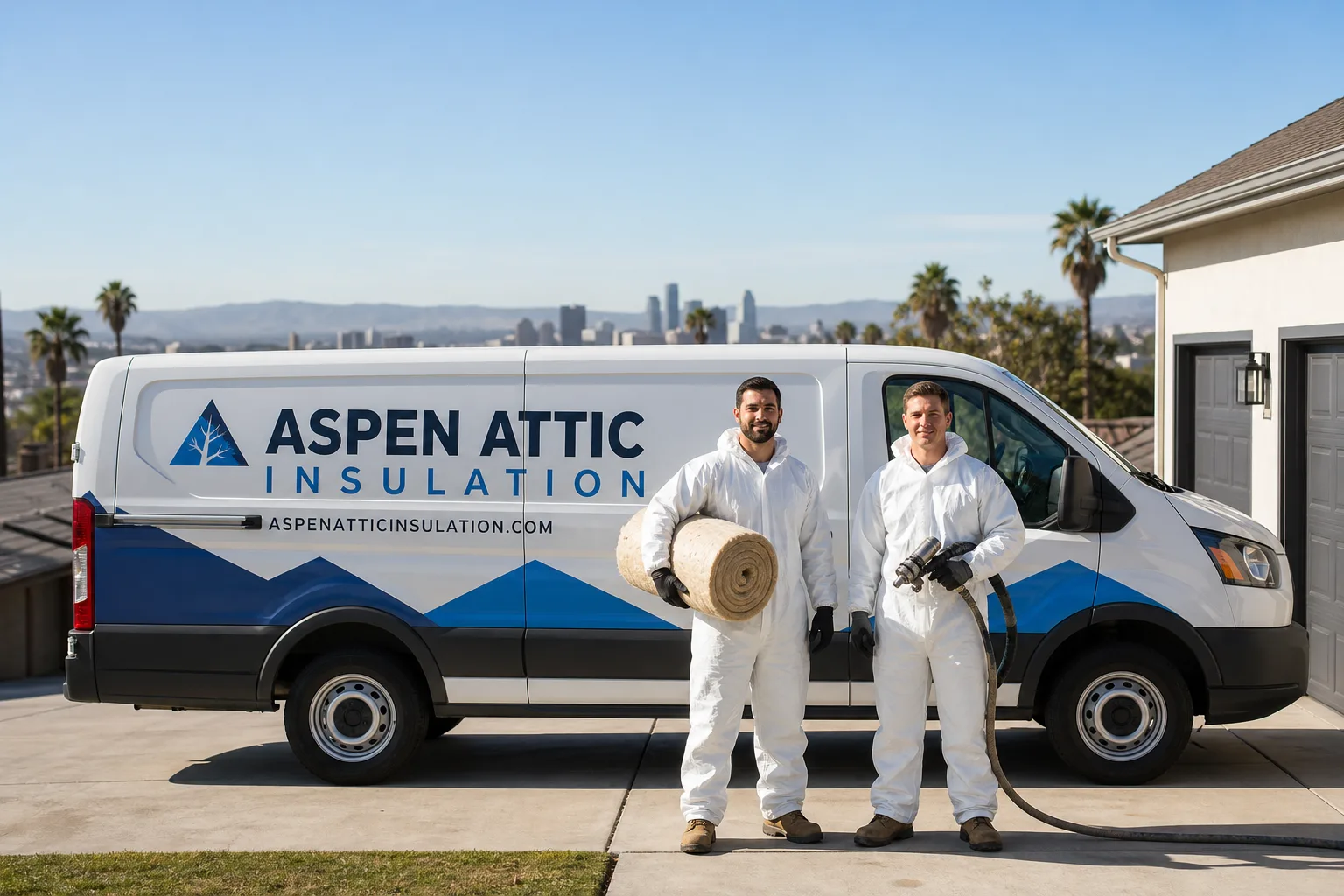
Fast, Reliable Blown In Insulation Across Sonoma
Blown-in insulation in Sonoma typically costs $1.80 to $3.20 per square foot installed, with most attic jobs running $2,400 to $5,800 depending on accessibility and whether existing material needs removal. We complete most Sonoma projects in a single day, and our crews are dispatched from the San Francisco Bay Area office with routes built around Sonoma Valley traffic patterns. Call (864) 428-1615 for a written estimate before any work begins.
We’ve worked on homes from the Plaza district out to the wine-country estates along Highway 12, and the pattern is always the same: Sonoma’s combination of historic building stock and extreme temperature swings creates insulation problems that standard approaches make worse. Our Blown In Insulation team starts every job by matching the material to the wall assembly, not just hitting an R-value number.
Why Aspen Attic Insulation Is Sonoma’s Preferred Blown In Insulation Company
We’ve earned our reputation in Sonoma by treating the house as a system, not a cavity to fill. Our reviews from Sonoma homeowners consistently mention two things: the technician showed up exactly as promised, and the written price matched the final invoice. That’s the Threshold Standard in action.
Response time to Sonoma is typically same-day or next-day for assessments, with crews already routing through the Valley for jobs in Glen Ellen and Boyes Hot Springs. We know which Sonoma streets have the narrow driveways that require our smaller blower truck, and which historic districts need permit coordination with the Sonoma Historic Preservation Commission before work starts.
Every technician sent to Sonoma is background-checked, identity-verified, and arrives in a clean marked uniform with a photo ID badge. You’ll receive their name and photo before they arrive. If anyone else shows up, the visit is free and we make it right. That’s been our protocol since 2002, and it’s non-negotiable.
Blown In Insulation Contractors in Sonoma
Blown In Insulation Contractors serving Sonoma need to understand more than blower machine calibration; they need to read a wall assembly built before vapor barriers existed and know whether blowing cellulose into it will help the structure or accelerate its decay. Our crews assess every Sonoma attic for existing moisture damage, knob-and-tube wiring proximity, and the condition of original redwood or adobe walls before the first hose enters the space.
A typical blown-in attic job in Sonoma runs $2,400 to $4,200 for a 1,200-square-foot attic with good access and no removal. Jobs requiring old fiberglass batt removal, air-sealing at top plates, or working around historic preservation requirements can reach $5,800. We put that range in writing before you decide.
Vapor-Permeability Assessment First
Every Sonoma job starts with a moisture meter reading and a visual inspection of the wall or attic assembly. In historic homes near the Plaza, we frequently find fiberglass batts packed against adobe or redwood that have trapped marine-layer moisture. We won’t blow new material over that. The wall needs to breathe before it gets filled.
Air Sealing Before Blowing
Blown-in cellulose without air sealing is just a filter. In Sonoma’s 130°F daytime attics, unsealed top plates let hot air press into wall cavities where it meets the overnight drop below 40°F. That temperature swing creates condensation inside the wall. We seal first, then blow, then verify.
Cellulose Insulation in Sonoma
Cellulose Insulation is our most specified product for Sonoma’s historic housing stock because it manages the Valley’s extreme diurnal temperature swings better than fiberglass batts or Spray Foam Insulation - Sonoma in certain assemblies. Made from recycled paper fibers treated with borate for fire and pest resistance, dense-pack cellulose fills irregular cavities in adobe and redwood-frame walls without trapping moisture against the original material.
For Sonoma homeowners, cellulose attic jobs typically run $2,200 to $4,000, with wall-cavity dense-pack work ranging $3,500 to $6,500 depending on access method and whether interior plaster needs repair afterward. We source our cellulose from GreenFiber and Owens Corning, matched to the specific assembly after our assessment.
Dense-Pack for Adobe and Redwood
Standard loose-fill cellulose won’t stay put in a vertical wall cavity. We use dense-pack application, blowing at higher pressure to achieve 3.2 to 3.5 pounds per cubic foot density. In a 1912 redwood-frame off East Napa Street, this created a vapor-open thermal barrier that stopped the daytime attic heat from cooking the wall cavity while letting residual moisture escape.
Borate Treatment for Sonoma’s Climate
Sonoma’s wet winters and valley fog create conditions where untreated cellulose could support mold. The borate treatment in our GreenFiber and Owens Corning cellulose products prevents that. It’s also unappealing to the rodents and insects that sometimes find their way into older Valley attics.
Trusted Brands We Service in Sonoma
We stock materials from eight industry-leading brands, and for Sonoma jobs we most frequently pull from Owens Corning, Johns Manville, Knauf, and GreenFiber. Owens Corning’s AttiCat system works well for newer wine-country estates with standard truss attics. GreenFiber’s borate-treated cellulose is our go-to for historic homes near the Plaza where vapor permeability matters more than R-value alone. We keep these products on hand at our Bay Area warehouse, so Sonoma customers aren’t waiting on a special order when the marine layer is already pressing moisture against their walls.
Common Blown In Insulation Problems We See in Sonoma Homes
- Fiberglass batts trapping moisture in historic adobe. Near the Plaza, we regularly find adobe walls retrofitted with fiberglass batts that act like a sponge for marine-layer moisture. The adobe softens and deteriorates behind the plaster. The fix is removal, drying, and replacement with vapor-open blown-in cellulose.
- Unsealed top plates letting attic heat press into walls. In knob-and-tube-era homes throughout the Sonoma Valley, missing or failed air sealing at the top plate means 130°F attic air drives directly into wall cavities. When overnight temps drop below 40°F, that warm moist air condenses inside the wall. We air-seal with foam and tape before blowing insulation.
- Standard vapor retarders specified for wine-country additions. Newer estates along Highway 12 sometimes get specified with kraft-faced batts or closed-cell spray foam right against original redwood framing. That traps year-round moisture from valley fog and winter rains. We specify vapor-permeable blown-in products that let the redwood breathe.
- Cellulose installed without moisture verification. Even good material fails if the substrate is already wet. We moisture-meter every surface before blowing, and we schedule follow-up readings after the first rainy season. On that East Napa Street job, the meter pass confirmed the wall had dried and stabilized.
Pricing for Blown In Insulation in Sonoma, CA
Here’s what blown-in insulation costs in Sonoma’s current market:
| Service | Typical Range |
|---|---|
| Attic blow-in (new construction, open attic) | $1.80 – $2.40/sq ft |
| Attic blow-in with old insulation removal | $2.60 – $3.50/sq ft |
| Attic blow-in with air sealing | $2.80 – $3.80/sq ft |
| Dense-pack wall cavities (historic home) | $3.20 – $4.50/sq ft |
| Full historic home: removal, assessment, install | $4,500 – $8,200 total |
What moves you within these ranges: attic accessibility (crawl vs. walk-in), whether we’re working around knob-and-tube wiring, the condition of existing material, and whether Historic Preservation Commission coordination is needed. Every homeowner receives a written price before any work starts. No post-job surprises, no exceptions. Estimates are free. Call (864) 428-1615 to schedule.
We Also Serve Cities Near Sonoma
Our crews route daily through the Sonoma Valley and surrounding communities. We also provide Blown In Insulation in Sonoma area coverage extending to Boyes Hot Springs, Petaluma, Novato, and Cotati. The same Threshold Standard applies: written price, verified technician, 365-day guarantee.
Serving Sonoma, CA - Our Local Coverage Area
We’re based in the Sonoma area and know this community well. Use the map below to see our service coverage - if you’re nearby, we can almost certainly help.
FAQs About Blown In Insulation in Sonoma
Yes, cellulose can be blown into most Sonoma adobe homes, and the Historic Preservation Commission typically approves it when the application is vapor-permeable and reversible. We coordinate directly with the Commission on Plaza-district jobs and provide the moisture-management documentation they require. Call (864) 428-1615 and we’ll walk you through the specific process for your property.
Sonoma’s 130°F-to-40°F daily attic temperature swing is more extreme than Santa Rosa’s inland climate, and Sonoma’s older housing stock often has original adobe or redwood assemblies that weren’t designed for modern insulation. The thermal cycling breaks down fiberglass batts faster and creates condensation issues that Santa Rosa’s newer, more consistent construction doesn’t face. We specify materials rated for that cycling.
The extreme swing creates expansion and contraction in the wall assembly that can settle loose-fill insulation and drive air movement through unsealed cavities. Blown-in cellulose performs better than fiberglass in this environment because it fills irregular spaces completely and, when dense-packed, resists settling. The critical factor is air sealing at top plates and penetrations to stop the pressure differential that drives moisture.
Yes, moisture assessment is mandatory on every Sonoma job. We moisture-meter all visible surfaces, inspect for staining or softened adobe, and remove any existing wet or mold-affected material before installation. On historic homes, we also schedule a follow-up meter pass after the first rainy season to confirm the assembly has dried properly.
For historic homes near the Plaza with adobe or redwood walls, we typically specify GreenFiber borate-treated cellulose for its vapor permeability and moisture management. For newer wine-country estates with standard truss construction and modern moisture barriers, Owens Corning AttiCat fiberglass or Johns Manville blown-in systems offer higher R-value per inch and faster installation. We match the brand to the assembly after our assessment, not before.
Written by Garrett Sloane, Owner at Aspen Attic Insulation, serving Sonoma since 2002.