
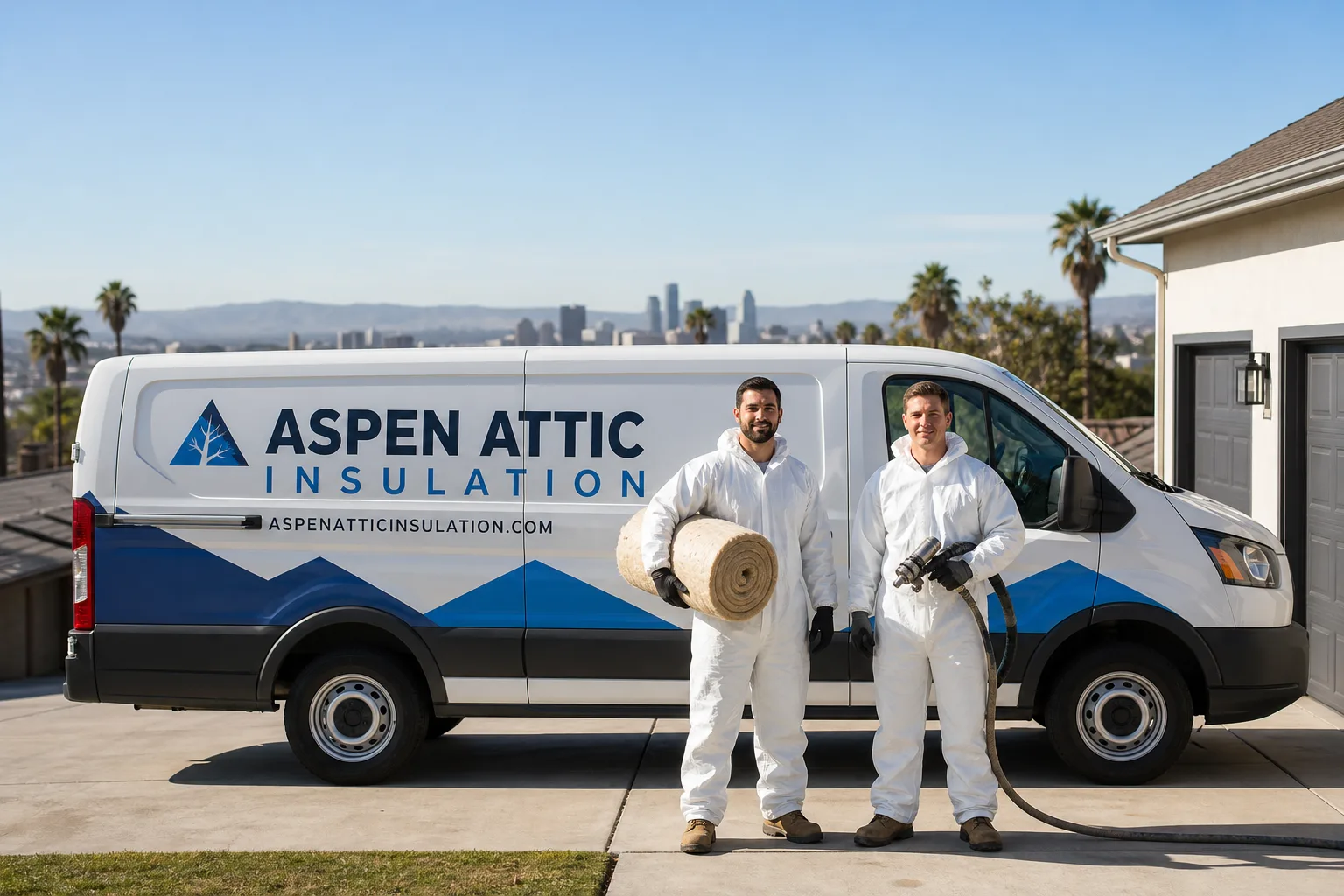
Fast, Reliable Blown In Insulation Across Piedmont
Blown in insulation in Piedmont typically costs $2.50 to $5.50 per square foot for attic work and $4.00 to $7.50 per square foot for dense-packed wall cavities, with most jobs completed in one to two days. We’re Aspen Attic Insulation, and our crews work Piedmont’s hills regularly, from the Crocker Highlands to the Upper Piedmont neighborhoods near Moraga Avenue. If you’re tired of uneven heat, high PG&E bills, or cold drafts in a home built before 1940, we can help. Call (864) 428-1615 anytime, day or night, a live person answers.
Our Blown In Insulation team knows Piedmont’s specific challenges: original lath-and-plaster walls, redwood framing, strict design review, and tree protection ordinances that make every job a custom puzzle. We don’t do cookie-cutter work because Piedmont homes don’t allow it. Garrett Sloane built this company on the idea that homeowners deserve to know who’s coming, what they’ll pay, and that the work is guaranteed before anyone touches their house.
Why Aspen Attic Insulation Is Piedmont’s Preferred Blown In Insulation Company
Piedmont homeowners choose us because we solve a problem most insulation companies ignore: how to retrofit historic homes without damaging what makes them valuable. Our technicians are background-checked, identity-verified, and sent to you by name and photo before the visit. If someone else shows up, the visit is free and we make it right. That’s The Threshold Standard, and it’s how we’ve operated since 2002.
We carry eight premium material brands, including Johns Manville, Knauf, and Rockwool, so we match the product to your home’s specific needs rather than using whatever’s on the truck. Our 365-Day Done Right Promise covers every job in writing. If the repair fails, we come back free. Every homeowner gets a written price before any work starts, with no post-job surprises.
Calls from Piedmont are answered by a live person 24/7. No voicemail loops. No call-back windows. Dispatch and scheduling are coordinated from our San Francisco Bay Area office, and crews serve Piedmont locally with same-day and next-day availability for most projects.
Cellulose Insulation in Piedmont
Cellulose Insulation in Piedmont is most often used for dense-packing the wall cavities of pre-1940s homes where exterior alterations are restricted by city ordinance. Made from recycled paper fibers treated with borate for fire and pest resistance, cellulose is blown at high density into existing walls to eliminate air movement and thermal bypasses. In Piedmont, a typical cellulose dense-pack job runs $4.00 to $7.50 per square foot of wall area, depending on cavity depth, access difficulty, and whether we need to snake hoses through narrow side yards around protected oaks.
When Cellulose Makes Sense for Your Home
Cellulose works best in Piedmont’s original wood-frame homes with uninsulated walls and intact lath-and-plaster interiors. If you’re experiencing cold spots, high heating bills, or drafts near exterior walls, dense-packed cellulose fills gaps that fiberglass batts miss. We often recommend it for Tudors, Mediterraneans, and Craftsmans built between 1910 and 1940, which describes most of Piedmont’s housing stock.
Access Challenges in Tight Piedmont Lots
Many Piedmont homes sit on narrow hillside lots with mature oak canopies protected by city tree ordinances. Our crews use specialized hose extensions and protective sheathing to route equipment through side-yard clearances as narrow as 36 inches. We protect root zones and never trench or grade near protected trees. This is standard practice for us, not an afterthought.
Blown In Attic Insulation in Piedmont
Blown In Attic Insulation in Piedmont addresses the unfinished attics common in homes built on raised foundations between 1910 and 1940. Loose-fill fiberglass or cellulose is blown across the attic floor to achieve consistent R-value, typically R-38 to R-49 for this climate zone. Attic jobs in Piedmont generally run $2.50 to $5.50 per square foot, with costs varying based on existing insulation removal, air sealing needs, and attic accessibility.
Attic Prep for Older Piedmont Homes
Before blowing new insulation, we inspect for knob-and-tube wiring, bathroom exhaust fans venting into attic spaces, and recessed light fixtures that require fire-rated covers. These are common in Piedmont’s legacy housing and must be addressed to meet current safety standards. We don’t bury problems under new material.
Ventilation Balance in Fog-Prone Hills
Piedmont’s morning fog and coastal air intrusion create condensation risk if attics are over-sealed without proper ventilation. We calculate soffit and ridge vent ratios specific to your roof geometry, ensuring moisture can escape while heat stays in. This is critical. We’ve seen mold develop in attics where insulation was added without ventilation review.
Trusted Brands We Service in Piedmont
We stock materials from eight industry-leading manufacturers, including CertainTeed, Johns Manville, and Rockwool, so Piedmont homeowners get the right product for their specific assembly, not just what’s available. For cellulose dense-packing, we often use GreenFiber for its consistent density and low dust. For attic loose-fill, Knauf and Owens Corning fiberglass offer reliable thermal performance. Rockwool provides fire resistance and sound dampening where those properties matter. Because we maintain local inventory, most Piedmont jobs don’t face material delays. Our technicians are trained on each brand’s installation requirements, and we specify exactly what we’re using in your written estimate.
Common Blown In Insulation Problems We See in Piedmont Homes
- Settling and thermal bypasses in unsealed wall cavities. Loose-fill cellulose installed without dense-pack technique settles over time, leaving top plates and rim joists exposed. In Piedmont’s pre-1940s homes, this creates visible cold stripes on exterior walls and drives up heating bills.
- Condensation and mold from fog-driven air infiltration. Coastal air pushes through unsealed lath-and-plaster cavities and meets insulation without proper air sealing or ventilation. We’ve found mold in walls where previous contractors blew material without addressing the pressure boundary.
- Cracked plaster from careless drilling and patching. Blowing insulation through lath-and-plaster requires specialized drill bits, controlled pressure, and skilled patching. Rushed work leaves spiderweb cracks and visible holes that are expensive to repair in historic interiors.
- Inadequate attic ventilation trapping moisture. Piedmont’s fog and temperature swings mean attics need calculated intake and exhaust airflow. Blocking soffit vents with blown insulation, a common error, causes condensation on roof sheathing and eventual rot.
Pricing for Blown In Insulation in Piedmont, CA
Here’s what Piedmont homeowners can expect:
- Blown in attic insulation: $2.50 – $5.50 per square foot
- Dense-packed wall cellulose: $4.00 – $7.50 per square foot
- Attic air sealing (before insulation): $1.50 – $3.00 per square foot
- Existing insulation removal: $1.00 – $2.50 per square foot
Final cost depends on cavity depth, access difficulty, whether we navigate narrow side yards around protected oaks, and if existing material must be removed. Homes with original knob-and-tube wiring may need electrical evaluation before wall work. We provide a written, itemized price before any work begins. Estimates are free. Call (864) 428-1615 to schedule.
We Also Serve Cities Near Piedmont
Our crews work throughout the East Bay, including Piedmont and neighboring Emeryville, Oakland, Alameda, and Berkeley. Each city has distinct housing stock and code requirements, and we adjust our approach accordingly. If you live near the Piedmont border, we’ll confirm your specific location during scheduling.
Serving Piedmont, CA - Our Local Coverage Area
We’re based in the Piedmont area and know this community well. Use the map below to see our service coverage - if you’re nearby, we can almost certainly help.
FAQs About Blown In Insulation in Piedmont
Yes, we dense-pack wall cavities through carefully drilled holes that are patched and textured to match existing plaster. We use low-pressure delivery, specialized drill bits that minimize vibration, and experienced technicians who’ve worked on dozens of Piedmont’s historic homes. Call (864) 428-1615 for a free assessment of your specific walls.
Dense-packing fills the entire cavity at 3.5 to 4.0 pounds per cubic foot, eliminating settling and air movement that simple blow-in allows. In Piedmont’s uninsulated, un-sheathed wall assemblies, loose material would settle within months, leaving thermal bypasses at the top of every stud bay. Dense-packing is the only method that performs long-term in these homes.
Piedmont’s tree ordinance protects mature oaks and other species, often preventing exterior access or equipment placement near root zones. Our crews snake hoses through narrow side-yard clearances and use protective sheathing to prevent soil compaction. This adds complexity but protects both your trees and your home’s historic character. We account for access constraints in your written estimate.
Not if installed with proper air sealing and ventilation. Piedmont’s fog and coastal air intrusion can condense in unsealed cavities, so we always address the pressure boundary before adding insulation. In attics, we verify soffit and ridge vent ratios. In walls, we seal top plates, bottom plates, and electrical penetrations. Moisture problems result from skipping these steps, not from insulation itself.
We select from eight premium brands based on your specific assembly and performance goals. For Piedmont wall dense-packing, we often use GreenFiber cellulose for its density and low dust. For attic loose-fill, Knauf and Johns Manville fiberglass are common choices. Rockwool provides fire resistance where required. Your written estimate specifies exactly which material we’re using and why.
We were called to a 1920s Tudor in the Crocker Highlands neighborhood where the homeowner complained of cold drafts and high heating bills. After inspecting the original redwood-framed walls, we used GreenFiber cellulose to dense-pack the lath-and-plaster cavities from the interior, carefully snaking hoses through a narrow side yard and around a protected oak. The result was a noticeably warmer home and lower energy use without touching the historic exterior.
Written by Garrett Sloane, Owner at Aspen Attic Insulation, serving Piedmont and the East Bay since 2002.