
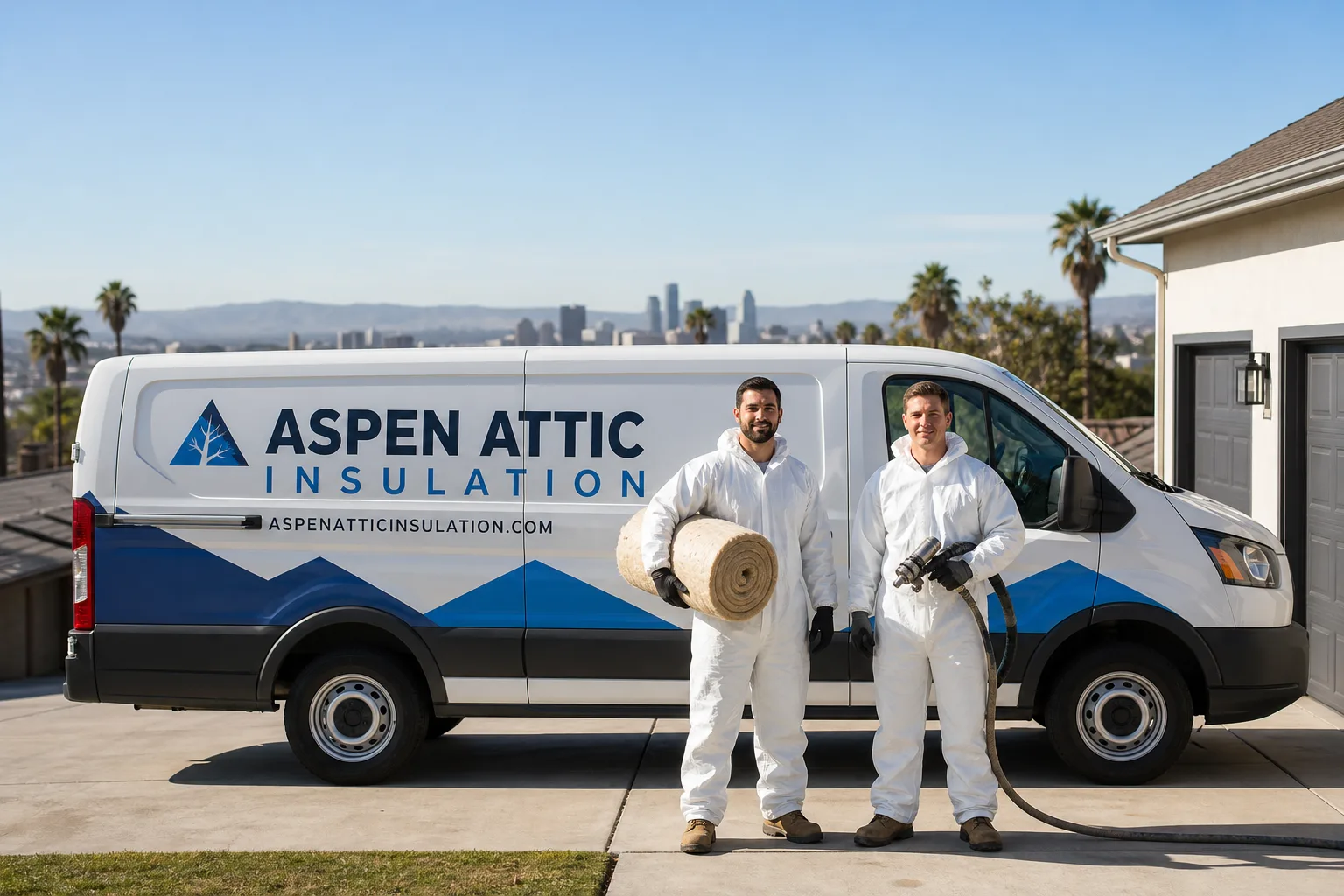
Fast, Reliable Blown In Insulation Across Highland
Blown-in insulation in Highland, CA typically costs $1.80 – $3.20 per square foot for attic applications, with most residential jobs running $2,400 – $5,800 depending on attic size and existing conditions. Our crews are dispatched from the Inland Empire office and can usually reach Highland properties within 45 minutes to an hour. We know the difference between a 1970s stucco tract off Base Line and a newer build near Highland Grove, and we know what each demands for real thermal performance in 100°F-plus summers.
Call (864) 428-1615 to speak with a live person now. Estimates are free, written, and delivered before any work starts.
Why Aspen Attic Insulation Is Highland’s Preferred Blown In Insulation Company
Garrett Sloane built Aspen Attic Insulation on a simple standard: the Threshold Verified protocol. Every technician who steps onto your Highland property is background-checked, identity-verified, and sent to you by name and photo before the visit. You’ll see their face, know their name, and watch them show a photo ID badge at your door in a clean marked uniform. If anyone else arrives, the visit is free and we make it right.
We’ve earned strong local reputation across the Inland Empire since 2002, with Highland homeowners specifically calling us back after seeing how we handle the unique challenges here. Our 365-Day Done Right Promise covers every job in writing: if the repair fails, we return free. No voicemail loops, no call-back windows. A live person answers our phone 24/7.
Our Blown In Insulation team carries eight premium brands on every truck, so we match material to need rather than forcing whatever’s available. In Highland, that often means specifying fire-retardant cellulose or mineral wool where wildfire exposure matters.
Blown In Attic Insulation in Highland
Blown In Attic Insulation in Highland fills your attic cavity with loose fibers blown through a hose, creating a seamless thermal blanket that conforms around joists, wiring, and irregular spaces. For Highland’s mix of mid-century tracts and 1970s – 80s stucco homes, this method is often the only practical way to upgrade attics with minimal existing insulation, R-11 or less, without tearing into finished ceilings. A typical Highland attic retrofit runs $2,400 – $4,800 for 1,200 – 2,000 square feet, including air sealing of top plates and recessed lights.
What Highland Attics Actually Need
Most east-side Highland homes we inspect have unsealed top plates and can lights. Blown-in insulation settles unevenly around these gaps, creating thermal bypasses that let conditioned air escape. We seal first, then blow. The difference shows up in the first utility bill.
Wind-Wash Barriers for Gable and Knee-Wall Vents
Highland’s exposure through the Cajon Pass means high winds can displace loose-fill near vents. We install proper baffles and wind-wash barriers so your insulation stays put and performs as rated. Skipping this step is common. We don’t skip it.
Blown In Cellulose Insulation in Highland
Blown In Cellulose Insulation in Highland offers a denser, more fire-resistant option than fiberglass, critical in a city where wildfire ember exposure and Santa Ana wind events are annual realities. Made from recycled paper treated with borate fire retardant, cellulose packs tighter at R-3.2 – R-3.8 per inch and slows flame spread. For Highland’s older east-side neighborhoods and newer developments alike, cellulose typically runs $2.00 – $3.50 per square foot installed, with whole-attic jobs averaging $2,800 – $5,800 depending on prep work and removal needs.
Fire Hardening for Wildfire Zones
Highland sits in a high wildfire hazard severity zone. Mineral wool and borate-treated cellulose earn Class A fire ratings. When we specify materials for Highland, fire performance weighs as heavily as thermal performance. Your attic shouldn’t carry extra risk.
Post-Santa Ana Contamination Response
After wind events, we’ve found cellulose easier to fully extract and replace than degraded fiberglass. The density helps it hold position for removal, and the borate treatment resists mold if moisture follows ash intrusion. We document everything for insurance.
Trusted Brands We Service in Highland
We stock Johns Manville, Knauf, Rockwool, and CertainTeed materials on Highland-area trucks, plus GreenFiber cellulose with borate treatment. No waiting on special orders. If your attic needs mineral wool for fire rating or Knauf’s loose-fill fiberglass for cost-effective R-value, we install it same visit. Our Inland Empire warehouse turns orders fast, so Highland homeowners aren’t left waiting while summer heat builds.
Common Blown In Insulation Problems We See in Highland Homes
- Santa Ana ash contamination in east-side attics. Wind-blown dust and wildfire ash driven through soffit and gable vents saturate existing blown-in insulation. After major events, we’ve pulled out material in Highland’s older neighborhoods that looked more like fireplace residue than insulation. Top-offs don’t fix this. Full removal and replacement does.
- Uneven settling around unsealed bypasses. Highland’s 1960s – 80s housing stock often has recessed can lights and open top plates. Blown-in insulation drifts away from these heat highways, leaving the attic looking full while the house stays hot. We find 20°F temperature differences between rooms in homes with this problem.
- Wind displacement near gable vents. Without proper baffles, Highland’s sustained 40+ mph Santa Ana gusts redistribute loose-fill toward vent openings. The attic ends up bare in spots, overfull in others, and the homeowner pays for R-value they aren’t getting.
- Undersized original insulation in mid-century tracts. Many Highland homes were built with R-11 or less, adequate for 1960s energy costs but not for modern AC loads in 100°F summers. The attic looks insulated. It isn’t insulated enough.
Pricing for Blown In Insulation in Highland, CA
Here’s what blown-in insulation costs in Highland’s current market:
- Attic top-off over existing insulation: $1.80 – $2.50 per sq ft
- Attic removal + replacement (standard): $2.50 – $3.50 per sq ft
- Attic removal + replacement (ash-contaminated, HEPA protocol): $3.00 – $4.20 per sq ft
- Wall cavity dense-pack cellulose: $3.50 – $5.50 per sq ft
- Air sealing (top plates, can lights, penetrations): $400 – $900 typical
Most Highland attic jobs fall between $2,400 and $5,800 total. Ash-contaminated removals push toward the higher end. We give you a written price before any work starts. No post-job surprises. Call (864) 428-1615 for your free estimate.
We Also Serve Cities Near Highland
Our Blown In Insulation in Highland crews regularly work across the Inland Empire, including San Bernardino, Loma Linda, Redlands, and Mentone. Same Threshold Verified standards, same written pricing, same 365-Day Done Right Promise at every address.
Serving Highland, CA - Our Local Coverage Area
We’re based in the Highland area and know this community well. Use the map below to see our service coverage - if you’re nearby, we can almost certainly help.
FAQs About Blown In Insulation in Highland
Yes, fire-rated insulation is strongly recommended for Highland homes due to the city’s placement in a high wildfire hazard severity zone and annual Santa Ana wind exposure. We typically specify borate-treated cellulose or mineral wool with Class A fire ratings. Call (864) 428-1615 to discuss which material matches your home’s specific exposure.
The Cajon Pass funnels Santa Ana winds directly toward Highland’s east-side neighborhoods, carrying fine dust, pollen, and wildfire ash through soffit and gable vents. Older homes with minimal or degraded attic seals see the worst contamination. We inspect vent screening and install ember-resistant vent covers as part of our remediation work. If your attic looks dusty after wind events, call us for an assessment.
Only if the existing material is clean, dry, and uncompressed. In Highland’s older east-side neighborhoods, we often find the original R-11 contaminated by prior Santa Ana events or unevenly settled around unsealed top plates. Adding new insulation over dirty or bypassed old material traps problems and wastes money. We test and inspect before recommending top-off versus removal. Call (864) 428-1615 for an honest evaluation.
Highland’s extreme summer heat and mild winters mean cooling dominates energy use, so we target R-38 to R-49 in attics, per California Title 24 recommendations for the inland climate zone. Many Highland homes start at R-11 or less, so the upgrade is substantial. We calculate exact requirements based on your attic dimensions and access conditions, then put the number in writing.
Insulation alone doesn’t stop embers, but the right fire-rated material combined with proper air sealing and vent protection significantly hardens your home. Mineral wool won’t ignite at typical wildfire temperatures. Sealed top plates and ember-resistant vents stop the wind-driven intrusion that makes attics vulnerable. We address thermal performance and fire hardening together, not as separate concerns. Call (864) 428-1615 to schedule a Highland-specific assessment.
We were called to a 1970s stucco home off Fifth Street in east Highland after a spring Santa Ana event had pushed a visible layer of fine ash across the attic floor, settling into the existing R-11 fiberglass. Our techs suited up, HEPA-vacuumed the contaminated material out, sealed the top plates and can lights, then blew in GreenFiber cellulose with a fire-retardant borate treatment to bring the attic to a modern R-value. The homeowner noticed the AC cycling less within the first hot week, and we were able to document the ash removal for their insurance claim.
After Santa Ana wind events, blown-in insulation in Highland’s older east-side neighborhoods is often so contaminated with wind-blown dust and ash that it must be fully removed and replaced rather than topped off, unlike neighboring cities less exposed to the Cajon Pass wind funnel. This isn’t a maintenance preference. It’s a material reality we document on every post-wind inspection. Homeowners in Redlands or Loma Linda, shielded by geography, rarely face the same decision. In Highland, especially east of State Route 330, the question isn’t whether to add insulation. It’s whether the old insulation is still installable at all.
Written by Garrett Sloane, Owner at Aspen Attic Insulation, serving Highland since 2002.