
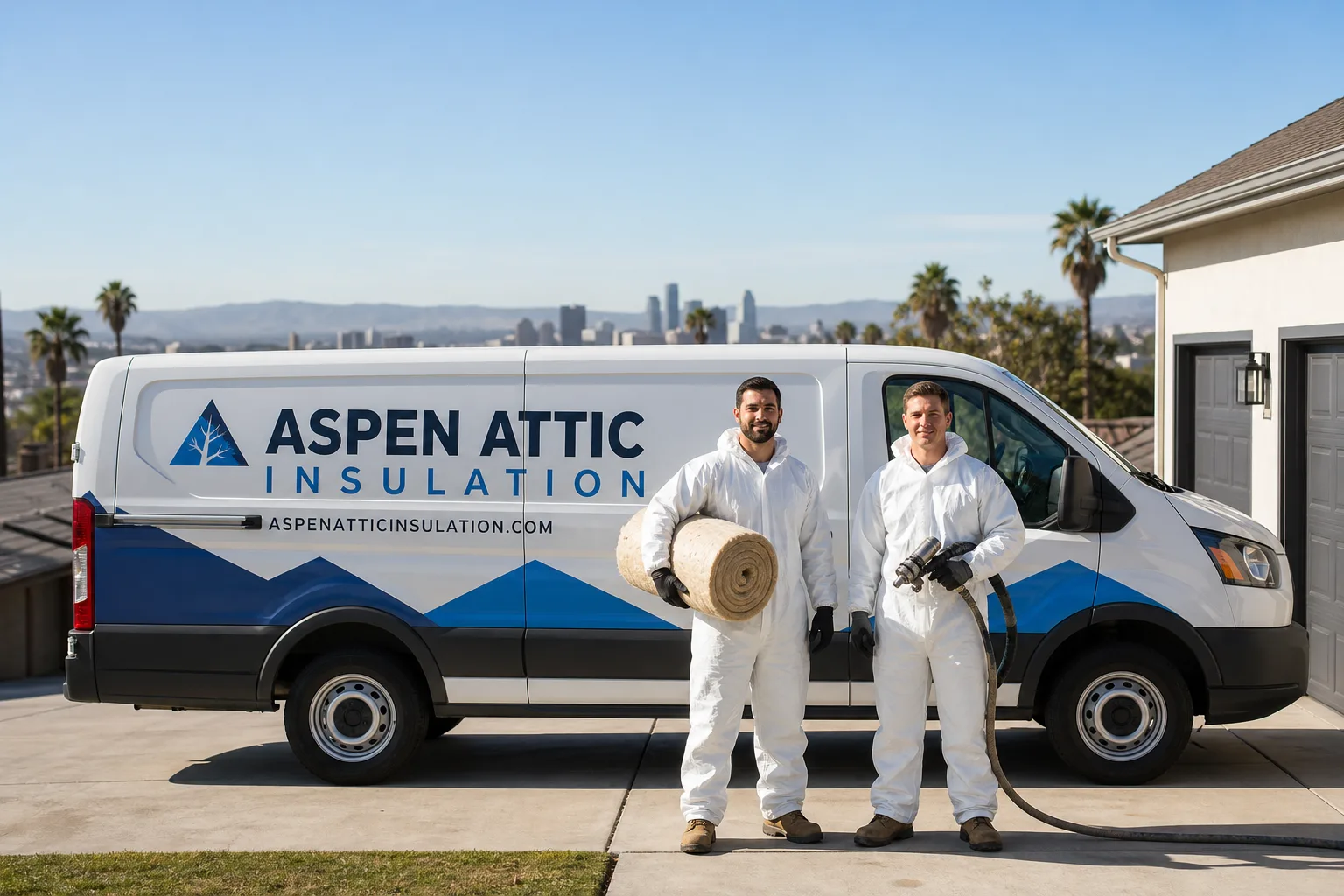
Fast, Reliable Blown In Insulation Across Colton
Blown in insulation in Colton typically costs $1.20 – $2.80 per square foot installed, with most attic jobs running $1,800 – $4,500 depending on accessibility, existing conditions, and whether knob-and-tube wiring must be addressed first. Most Colton homes need R-38 to R-49 in the attic to handle our Inland Empire heat, and our crews complete standard jobs in one day. Call (864) 428-1615 for a free written estimate.
We know Colton’s housing stock because we work in it weekly. From the early-20th-century bungalows near the historic downtown to the 1950s – 70s tract homes off Valley Boulevard and the newer developments edging toward Reche Canyon, each attic tells a different story. Our Inland Empire office dispatches crews directly to Colton, and we carry materials from Johns Manville, Knauf, and CertainTeed on our trucks so we’re not waiting on deliveries. That matters when your attic is hitting 140°F in July and every day of delay means more strain on your AC.
Colton’s climate isn’t forgiving. Summer highs crack 100°F regularly, winter nights dip near freezing, and the Santa Ana winds drive dust through every gap in your roofline. Blown-in insulation fills those gaps better than batts, but only if it’s specified, installed, and paired with proper ventilation for conditions here. That’s the difference between a generic insulation quote and one built for Colton.
Why Aspen Attic Insulation Is Colton’s Preferred Blown In Insulation Company
We’ve built our reputation in Colton on showing up as promised and putting every price in writing before any work starts. The Threshold Standard means every technician is background-checked, identity-verified, and sent to your door with their name, photo, and ID badge visible. You’ll know exactly who’s arriving before they knock. If anyone else shows up, the visit is free and we make it right.
Our 365-Day Done Right Promise covers every job in writing. Labor and materials, a full year. If a repair fails, we come back free. No call-back windows, no voicemail loops. A live person answers our phone 24/7 because insulation emergencies don’t wait for business hours, especially when a Santa Ana wind event is driving 100°F heat into your attic.
We source from eight industry-leading brands – Owens Corning, Johns Manville, Knauf, Rockwool, CertainTeed, Icynene, Demilec, and GreenFiber – so we match the material to your specific attic, not just whatever’s on the truck. In Colton, that often means fiberglass loose fill for thermal performance plus a radiant barrier to reflect roof-deck heat, because standard insulation alone struggles against our 140°F+ peak attic temperatures. For homeowners considering a higher-performance alternative, we also offer Spray Foam Insulation - Colton solutions that air-seal and insulate in one step.
Our Blown In Insulation in Colton crews understand the local permit environment and the specific challenges of older Colton homes, including the knob-and-tube wiring that’s still present in many downtown-area properties. That local knowledge saves time and prevents costly surprises mid-job.
Blown In Fiberglass Insulation in Colton
Blown In Fiberglass Insulation in Colton involves pneumatically spraying loose fiberglass fibers into your attic cavity to achieve a uniform thermal blanket, typically targeting R-38 to R-49 for Inland Empire code compliance and real-world performance against our extreme heat. A typical Colton attic runs $1,800 – $3,800 for fiberglass blown-in, with costs rising if we need to remove degraded existing material, air-seal penetrations, or address legacy wiring before installation. Colton homeowners need this service when their current insulation has settled below R-19, shows visible degradation from heat exposure, or when energy bills spike during summer months despite normal AC operation.
How Fiberglass Performs in Colton’s Heat
Fiberglass doesn’t absorb moisture and won’t support mold growth, which matters in Colton’s dry but occasionally humid winter periods. The material maintains its R-value better than cellulose when attic temperatures spike above 140°F, though it still requires proper depth and density to perform. We specify Owens Corning or CertainTeed fiberglass for most Colton attics because their blown products achieve consistent coverage in irregular joist cavities common in pre-1980 construction.
When We Recommend Fiberglass Over Other Materials
We steer Colton homeowners toward blown fiberglass when the attic has active knob-and-tube wiring that must remain accessible, since fiberglass is non-combustible and won’t create the same fire hazard as cellulose near aging electrical. It’s also our choice for homes where dust infiltration from Santa Ana winds has degraded previous insulation, as new fiberglass with proper air sealing creates a more resilient barrier.
Loose Fill Insulation in Colton
Loose Fill Insulation in Colton refers to any blown-in material, fiberglass or cellulose, installed as a free-flowing layer that conforms to irregular attic spaces and fills around obstructions that batts cannot cover properly. Typical loose fill jobs in Colton run $1,500 – $4,200 depending on square footage, existing removal needs, and whether radiant barrier or ventilation upgrades are paired with the installation. Colton homeowners with 1950s – 70s tract homes, older downtown bungalows, or any property with uneven existing insulation, recessed lighting penetrations, or complex rooflines benefit most from loose fill’s ability to seal thermal bypasses.
Addressing Colton’s Legacy Wiring First
Colton’s older downtown bungalows and 1950s – 70s tract homes often still have original knob-and-tube wiring buried under degraded insulation, so adding loose fill means we routinely have to identify and address that legacy wiring first – a step that’s far less common in newer Inland Empire edge developments or neighboring cities with newer housing stock. We’ll inspect accessible runs, document their condition, and either coordinate a licensed electrician for active circuits or install code-compliant barriers before blowing any new material. Skipping this step isn’t an option for us. The fire risk is real, and our written guarantee wouldn’t be worth the paper it’s on if we ignored it.
Settlement and Dust Infiltration Challenges
Loose fill settles and compacts unevenly in Colton’s 140°F+ attics, losing R-value fastest at the eaves where Santa Ana wind-driven dust infiltrates the top layer. We combat this by specifying higher initial density, installing proper baffles at eaves to maintain airflow and prevent wind washing, and recommending inspection every 3 – 5 years rather than the standard 7 – 10. In Colton’s climate, maintenance isn’t optional if you want the performance you paid for.
Trusted Brands We Service in Colton
We stock Johns Manville, Knauf, and CertainTeed materials on our Inland Empire trucks for Colton jobs, with Rockwool available for specific fire-resistance or sound-dampening applications. Having multiple brands on hand means we’re not forcing a one-size-fits-all product into your attic. A 1920s bungalow near Mt. Vernon Avenue with knob-and-tube and a 1970s tract home off Washington Street need different approaches, and our ability to match Johns Manville’s density characteristics or CertainTeed’s coverage rates to the specific job keeps turnaround fast and results predictable. No waiting on special orders, no substitutions you didn’t agree to.
Common Blown In Insulation Problems We See in Colton Homes
- Heat-cooked existing insulation. In Colton’s older neighborhoods, attics regularly reach 140°F+, baking mineral wool or early fiberglass into brittle, dusty mats that barely register R-4. We remove this degraded material before installing new loose fill, because blowing over it traps the problem and wastes your money.
- Knob-and-tube wiring hazards. Original wiring in Colton bungalows becomes a fire hazard when buried under blown insulation, forcing a partial rewire or barrier installation before filling. We identify this during our pre-installation inspection and won’t proceed until it’s resolved.
- Inadequate ventilation destroying new insulation. Radiant barriers and blown fill degrade prematurely when paired with insufficient attic ventilation in aging roofs, trapping heat and shortening insulation life. We assess ridge vents, soffit airflow, and gable venting before recommending any material.
- Santa Ana wind dust infiltration at eaves. Seasonal winds drive fine dust through gaps in roof decking and eave construction, settling on insulation surfaces and reducing effective R-value over time. Our air-sealing protocol addresses this before blowing begins.
Pricing for Blown In Insulation in Colton, CA
Most Colton blown in insulation projects fall between $1,500 and $4,500, with specific ranges depending on what your attic needs:
- Basic blown fiberglass to R-38, open attic, no removal: $1.20 – $1.80/sq ft ($1,800 – $3,200 typical)
- Blown fiberglass with existing degraded removal and disposal: $1.80 – $2.40/sq ft ($2,800 – $4,200 typical)
- Loose fill with air sealing and eave baffling: $2.00 – $2.60/sq ft ($3,200 – $4,500 typical)
- Radiant barrier addition (stapled under rafters): $0.80 – $1.40/sq ft additional
- Knob-and-tube assessment and barrier installation (before insulation): $400 – $900
What moves you within these ranges? Attic square footage is obvious, but Colton-specific factors matter too. Crawl-space access through a small hatch in a 1920s bungalow adds labor. Active knob-and-tube requiring electrical coordination adds time and cost. Roof pitch above 8/12 slows installation and requires safety protocols. We put every line item in writing before work starts, and that written price doesn’t change. Call (864) 428-1615 for your free estimate.
We Also Serve Cities Near Colton
Our Inland Empire crews work throughout the region, including Colton and neighboring Grand Terrace, Loma Linda, Riverside, and San Bernardino. Each community has distinct housing stock and climate exposures, and we adjust our specifications accordingly. Whether you’re in a Grand Terrace hillside home dealing with temperature inversions or a San Bernardino mid-century tract with original insulation, our Blown In Insulation team brings the same Threshold Standard protocols and written pricing.
Serving Colton, CA - Our Local Coverage Area
We’re based in the Colton area and know this community well. Use the map below to see our service coverage - if you’re nearby, we can almost certainly help.
FAQs About Blown In Insulation in Colton
Active or abandoned knob-and-tube must be identified and properly addressed before any blown-in insulation goes in, because burying this legacy wiring creates a significant fire hazard and violates modern electrical codes. We inspect accessible runs during our pre-installation assessment, coordinate with licensed electricians for any needed remediation, and install code-compliant barriers before blowing material. Call (864) 428-1615 and we’ll evaluate your specific situation during a free estimate.
Colton’s peak attic temperatures regularly exceed 140°F, and standard insulation alone cannot block radiant heat transfer from the roof deck; a radiant barrier reflects that heat back toward the roof, reducing the thermal load on your blown-in layer and cutting afternoon AC runtime significantly. We were called to a 1920s bungalow off Mt. Vernon Avenue near the historic downtown, where the homeowner’s attic hit 142°F on an August afternoon and the original roof deck had cooked the existing mineral wool into a dusty, R-4 mat. After confirming the knob-and-tube runs were isolated and safe, we air-sealed the top plates, baffled the eaves, and blew in Owens Corning fiberglass to R-38 while adding a radiant barrier stapled under the rafters. The homeowner reported their afternoon AC runtime dropped noticeably, and the attic temperature fell about 25°F below the unshielded roof deck. Call (864) 428-1615 to discuss whether your attic would benefit from this combination.
Colton homes need R-38 minimum in attics for current California Title 24 compliance, and we typically recommend R-49 for performance that holds up against our 100°F+ summers and the heat loss that occurs during cold Santa Ana wind nights. The higher R-value provides buffer against settling, dust infiltration, and the thermal cycling that degrades insulation faster here than in milder coastal climates. We’ll measure your existing depth and specify the exact target for your home during our free estimate.
We generally do not recommend blowing new insulation over heat-degraded existing material in Colton, because cooked mineral wool or compacted fiberglass creates an uneven base that reduces coverage, traps moisture risks, and hides underlying problems like wiring issues or roof leaks. Our standard practice is removal and disposal of degraded material, inspection of the deck and penetrations, air sealing, then new blown-in installation to specified depth. The extra step costs more upfront but delivers the performance and warranty coverage you’re paying for. Call (864) 428-1615 for an assessment of your specific attic.
Colton homeowners with structurally sound attics, adequate ventilation that can be improved with baffles or minor upgrades, and insulation that’s simply underperforming due to age or settling are ideal candidates for blown-in; those with chronic roof leaks, severe structural sagging, extensive active knob-and-tube throughout, or HVAC equipment located in the attic may need a full retrofit that addresses multiple systems simultaneously. We evaluate this during every estimate and won’t sell you blown-in if your situation calls for more comprehensive work. Our written price reflects exactly what we recommend, with no pressure to upgrade beyond what’s necessary. Call (864) 428-1615 to schedule your free assessment.
Ready to stop losing money to a 140°F attic? Call Aspen Attic Insulation at (864) 428-1615 for your free written estimate. We’ll send you your technician’s name and photo before they arrive, put every cost in writing before any work begins, and back the job with our 365-Day Done Right Promise. That’s how we work in Colton, and that’s what you can expect every time.
Written by Garrett Sloane, Owner at Aspen Attic Insulation, serving Colton and the Inland Empire since 2002.