
Icynene Attic Insulation in Los Angeles: A Homeowner’s Guide
Icynene attic insulation in Los Angeles typically costs $1.20 to $3.80 per board foot installed, with most LA attics landing between $2,800 and $6,900 depending on square footage and foam depth. The bigger question isn’t price though. It’s whether open-cell Icynene is even the right choice for your specific LA neighborhood, because a home in Santa Monica and a home in Woodland Hills face completely different moisture and fire-hardening conditions. If you’d rather skip the research and just talk to someone who installs this stuff daily, call Aspen Attic Insulation at (864) 428-1615.
What Icynene Actually Is, and Why Los Angeles Marketing Doesn’t Tell You the Whole Story
Icynene is a spray-applied polyurethane foam insulation. It comes in two forms: open-cell (Icynene Classic and ProSeal) and closed-cell (Icynene ProSeal Eco and MD-R-200). The brand built its reputation on being water-blown instead of chemical-blown, which means fewer volatile organic compounds during installation and lower off-gassing in the first 24 to 48 hours. That’s the story you’ll hear from every Icynene dealer in Los Angeles.
What most dealers skip is that open-cell Icynene is vapor-permeable. In a coastal climate like Venice or Playa del Rey, that permeability can actually work in your favor: moisture that finds its way into the attic has a path out instead of getting trapped against roof sheathing. But in the San Fernando Valley heat corridor, where summer temperatures routinely hit 105°F and the air is bone-dry, that same permeability matters far less, and you’re paying open-cell prices for a product whose main environmental advantage is mostly irrelevant to your conditions.
The real decision point for Los Angeles homeowners isn’t “Icynene vs. other brands.” It’s open-cell vs. closed-cell, and what your attic’s ventilation system is designed to do. More on that below.
- Open-cell Icynene: R-value around 3.6 to 3.9 per inch, softer, more forgiving, expands aggressively to seal gaps, allows vapor to pass through.
- Closed-cell Icynene: R-value around 6.0 to 6.5 per inch, rigid, structurally reinforcing, acts as a vapor barrier, costs more per board foot.
When Open-Cell Icynene Makes Sense in LA (and When It Doesn’t)
Let’s talk specifics by zone, because Los Angeles isn’t one climate. It’s three or four climates stacked on top of each other.
In the coastal strip, from San Pedro up through Long Beach, Redondo Beach, Santa Monica, and Malibu, open-cell Icynene performs well. The marine layer deposits moisture into attics regularly, and open-cell’s vapor permeability lets that moisture move through the assembly rather than condensing behind an impermeable barrier. If you’re within three miles of the coast and your attic is vented, open-cell Icynene is a defensible, code-aligned choice.
Inland, particularly east of the 405 and into the Valley, the calculus shifts. In Sherman Oaks, Encino, Tarzana, Woodland Hills, and Northridge, summer attics hit 140°F to 160°F. Open-cell foam still insulates, but it doesn’t provide the same thermal break per inch that closed-cell does, and in an unvented attic assembly it can contribute to moisture buildup if the home has interior humidity sources like a poorly-vented bathroom fan dumping into the attic. We’ve pulled open-cell out of a garage conversion in Sylmar where the homeowner had been told it was “the green choice” and nobody mentioned that the attic had no ventilation at all. The foam was fine. The application was wrong.
Icynene and LA Wildfire Ember Zones: What Chapter 7A Actually Requires
Here’s the thing almost no insulation marketing mentions: if your home is in a Los Angeles wildfire ember zone and you’re doing a remodel that triggers California Building Code Chapter 7A, your attic ventilation openings need to be screened or baffled to resist ember intrusion. That requirement interacts directly with foam insulation choices.
Chapter 7A applies to new construction, additions, and certain remodels in designated Wildland-Urban Interface (WUI) zones, which cover huge swaths of the Santa Monica Mountains, the Verdugos, the San Gabriels, and communities like Topanga, Calabasas, Porter Ranch, La Cañada Flintridge, and parts of Pacific Palisades. In these zones, eave and gable vents need ember-resistant coverings with maximum mesh openings of 1/8 inch. Soffit ventilation can’t be blocked or reduced by foam expansion.
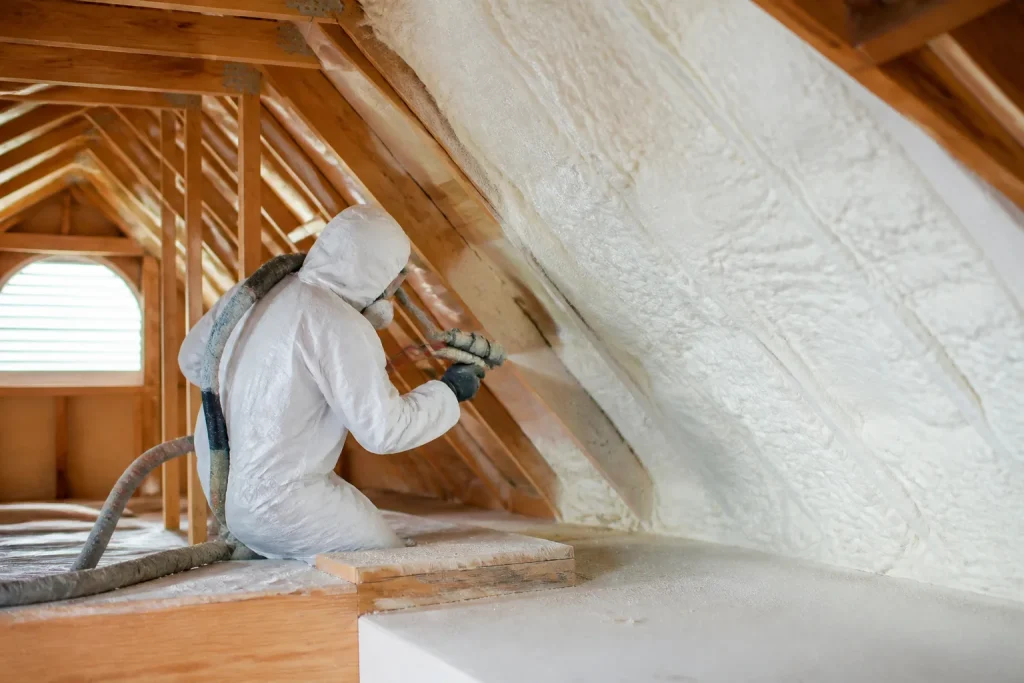
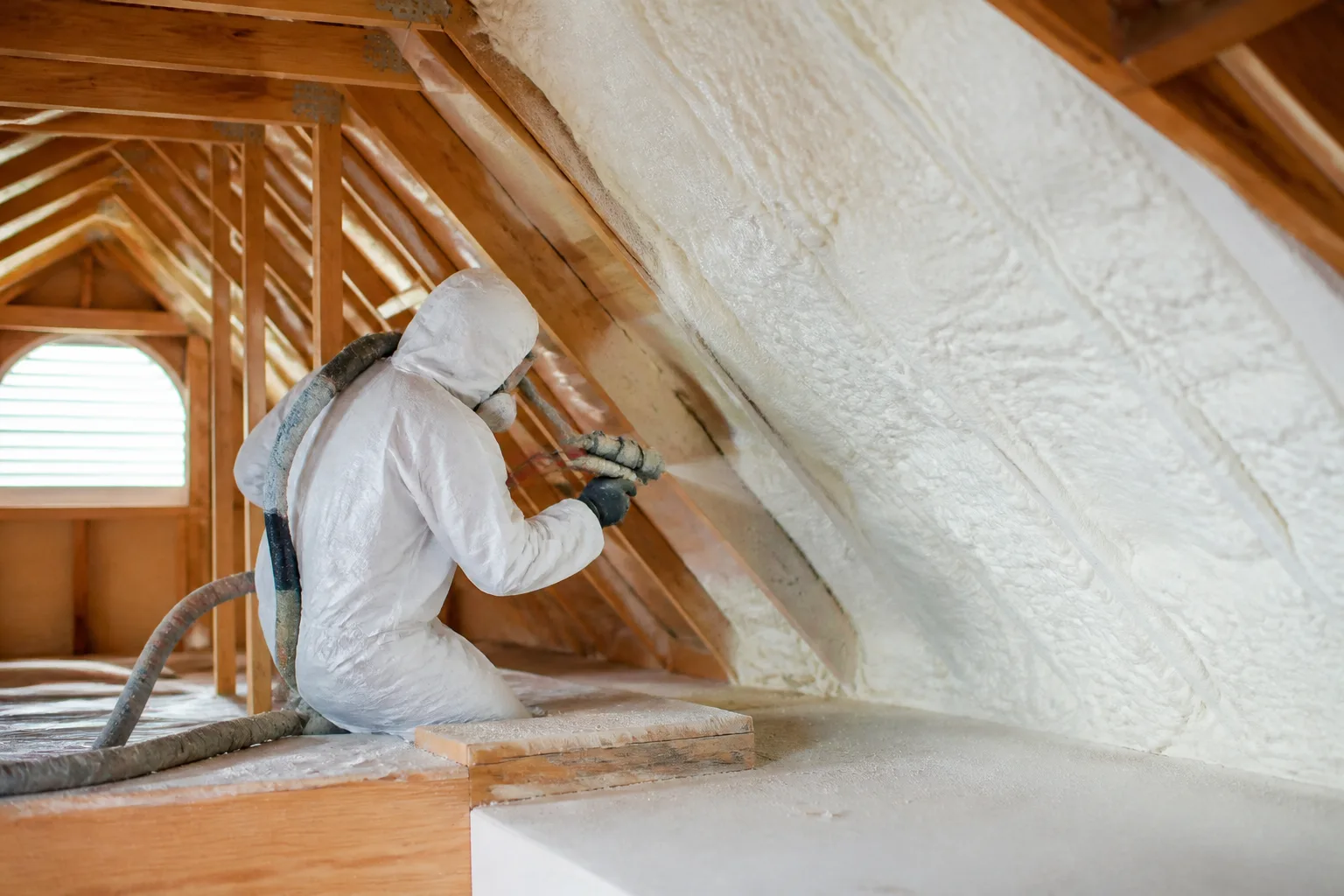
Open-cell Icynene expands aggressively. In a vented WUI attic, that expansion can inadvertently seal off soffit ventilation channels if the installer doesn’t place baffles correctly. That creates two problems at once: you lose the ventilation your attic was designed to have, and you potentially violate the ember-resistance requirements by altering vent flow. A certified installer knows to place rigid baffles before spraying and to verify vent airflow after the foam sets. This is exactly the kind of thing that separates a real Icynene-certified contractor from a crew that bought a spray rig last month.
Closed-cell Icynene, by contrast, is often used in unvented attic assemblies where the roof deck itself is insulated. In WUI zones, an unvented assembly eliminates the ember-intrusion path at the vents entirely, which is a legitimate fire-hardening strategy. But it requires careful detailing at the roof-to-wall transition, and it’s more expensive.
What a Legitimate Icynene Quote in Los Angeles Should Include
Here’s what we tell anyone shopping Icynene in Los Angeles: if your quote is just a square-footage number with no line items, ask more questions. A real quote breaks down like this:
- Surface prep: clearing old insulation, sealing air gaps, addressing any existing rodent or moisture issues. In LA, that means dealing with whatever’s already in the attic, because very few 1960s ranch homes in Lakewood or Torrance are starting from a clean deck. Expect $400 to $900 for removal of old fiberglass or cellulose.
- Baffle and vent work: rigid baffles at eave vents, ember-resistant vent covers if you’re in a WUI zone. $8 to $18 per baffle installed, plus covers at $25 to $60 per vent.
- Spray foam itself: open-cell Icynene at $1.20 to $2.10 per board foot for an attic job (material plus labor), closed-cell at $2.40 to $3.80 per board foot. For a typical 1,200-square-foot attic at R-38 open-cell, you’re looking at roughly 10 to 11 inches of foam, which lands around $4,800 to $6,300 before any prep work.
- Air sealing: foam sealant around top plates, plumbing penetrations, recessed light housings. $350 to $700 depending on attic size. In older Los Angeles homes with knob-and-tube wiring still in place, you’ll also need an electrician’s sign-off before any foam touches the wires.
If anyone quotes you Icynene installed at under $1.00 per board foot in Los Angeles, be skeptical. That’s the price point where corners get cut, and the corner that usually gets cut in LA attics is baffle work and air sealing.
How to Verify an Icynene-Certified Installer (and What Certification Actually Requires)
Icynene, now under the Lapolla-Huntsman umbrella, maintains a contractor network with specific training requirements. A legitimate Icynene-certified contractor in Los Angeles has completed the manufacturer’s application training, uses only Icynene-branded foam and equipment calibrated to the manufacturer’s specs, and is subject to periodic quality audits.
You can verify certification by asking for the contractor’s Icynene dealer number and checking it with the manufacturer directly. It takes one phone call. What certification means in practice: the installer has demonstrated pass/fail spray technique on test panels, knows the substrate preparation requirements, and understands the foam’s expansion characteristics well enough not to blow out drywall or bow roof decking.
We’re one of the Los Angeles contractors that installs Icynene alongside alternatives like CertainTeed and Rockwool, because not every attic calls for spray foam. Sometimes blown-in insulation is genuinely the better answer. The point of this guide isn’t to sell you on one product, it’s to make sure you know what you’re being quoted and why.
One question we hear constantly: do I need to leave my house during installation? Short answer: for open-cell Icynene, most manufacturers recommend vacating for 24 hours, longer if you have respiratory sensitivities, small children, or pets. For closed-cell, the re-entry window is shorter, usually 2 to 4 hours. Any installer who tells you it’s fine to sleep in the house the same night an open-cell application was sprayed isn’t following the manufacturer’s re-occupancy guidance.
Related services in Los Angeles: Attic Insulation in Los Angeles, Spray Foam Insulation in Los Angeles, and Blown In Insulation in Los Angeles.
The Bottom Line
Icynene is a quality foam. It’s not the right foam for every Los Angeles attic, and the brand’s “cleaner” marketing story doesn’t address the two factors that matter most locally: coastal moisture dynamics and wildfire ember code compliance. Open-cell Icynene performs well in vented attics within a few miles of the coast. Closed-cell earns its higher price in Valley homes that want maximum R-value, in unvented assemblies, or in WUI zones where eliminating vent openings is part of a fire-hardening plan. Whatever you choose, get a written quote with line items, verify the installer’s certification, and confirm your attic ventilation will work as designed after the foam sets. If you’re in Los Angeles and want a straightforward assessment of whether Icynene makes sense for your specific attic, Aspen Attic Insulation offers free estimates. Call (864) 428-1615 and we’ll send someone out who can explain it in plain English.
Frequently Asked Questions
Installed cost for a typical Los Angeles attic runs $2,800 to $6,900, with open-cell Icynene at $1.20 to $2.10 per board foot and closed-cell at $2.40 to $3.80 per board foot. Prep work like old insulation removal and baffle installation adds $400 to $1,600 depending on attic condition. Call (864) 428-1615 for an exact quote, estimates are free.
Icynene’s water-blown formulation produces fewer VOCs during installation than most chemical-blown spray foams, but the manufacturer still recommends vacating during application and for a re-entry window afterward, typically 24 hours for open-cell. If anyone in the house has asthma, chemical sensitivities, or is under age two, extend that window and ventilate the attic before anyone sleeps under it.
Yes, but the version matters. Closed-cell Icynene is the standard choice for unvented attic assemblies because it acts as a vapor barrier and doesn’t trap moisture against the roof deck the way open-cell can. In Los Angeles WUI zones, an unvented assembly also eliminates ember-intrusion paths. This is not a DIY-friendly configuration; the detailing at the roof-to-wall transition determines whether it works or rots your sheathing.
Spray foam is not a DIY product. The equipment costs thousands, the foam expands unpredictably in untrained hands, and application errors can bow roof decking, block soffit vents, or void your roof shingle warranty. In Los Angeles, any attic work also needs to respect local ventilation code, and in WUI zones, Chapter 7A ember-resistance requirements. This is one to hire out. Call (864) 428-1615 and we’ll walk you through what your attic actually needs.
Written by the team at Aspen Attic Insulation.
Need Insulation Help?
Call Aspen Attic Insulation - licensed & insured, here with fast after-hours help in Los Angeles.
(864) 428-1615