
Attic Insulation: Repair or Replace? How Los Angeles Homeowners Decide
Most Los Angeles attics need a targeted repair or top-off, not a full replacement. The honest answer depends on three measurements: your current R-value against Title 24 minimums, where the damage sits, and what kind of damage you’re dealing with. If you’d rather skip the measuring tape and get a straight answer, call (864) 428-1615 and we’ll inspect it for free.
Here’s the uncomfortable truth about this question: a contractor who replaces your entire attic earns roughly four times what they’d earn repairing it. That’s not a conspiracy, it’s arithmetic. And in Los Angeles, where blown-in fiberglass settles predictably over the years, “replace everything” has become the default recommendation even when a targeted top-off would restore most of the performance at a fraction of the cost. This guide gives you a framework to make that call yourself, before anyone steps through the hatch.
Key Takeaways
- Most LA attics need a top-off (repair), not full replacement, especially if insulation was installed before 2010 and has simply settled.
- Measure your existing R-value with a ruler and compare it to LA County’s Title 24 minimum: R-30 for most attics, R-38 for new construction.
- Three conditions always warrant full replacement: rodent nesting throughout, water saturation with mold, or vermiculite/asbestos-era material.
- Partial replacement, removing only damaged zones and blending new material, is a legitimate middle option most contractors don’t offer because it’s labor-intensive to scope correctly.
- Ask every contractor for a repair bid and a replacement bid simultaneously. The ratio between them tells you more about their honesty than any review does.
The Two-Zone Inspection Method: What You Can Diagnose Yourself
Before any contractor quotes you, you can gather evidence that tells you which direction the answer leans. Los Angeles attics are generally accessible enough for a basic two-zone assessment, and knowing what to look for keeps the conversation honest from the start.
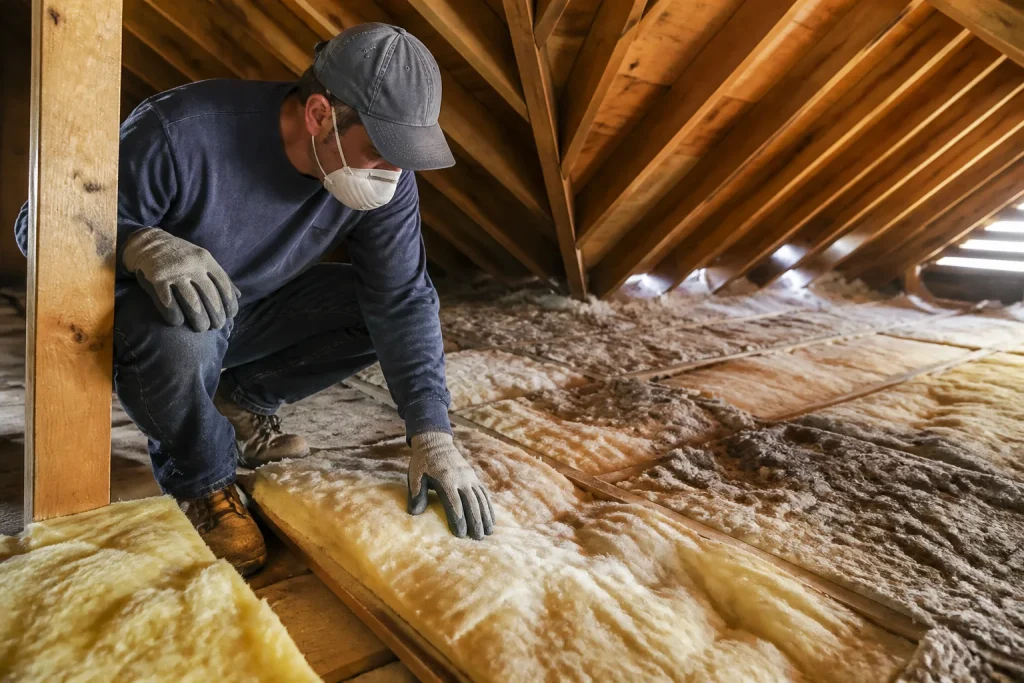
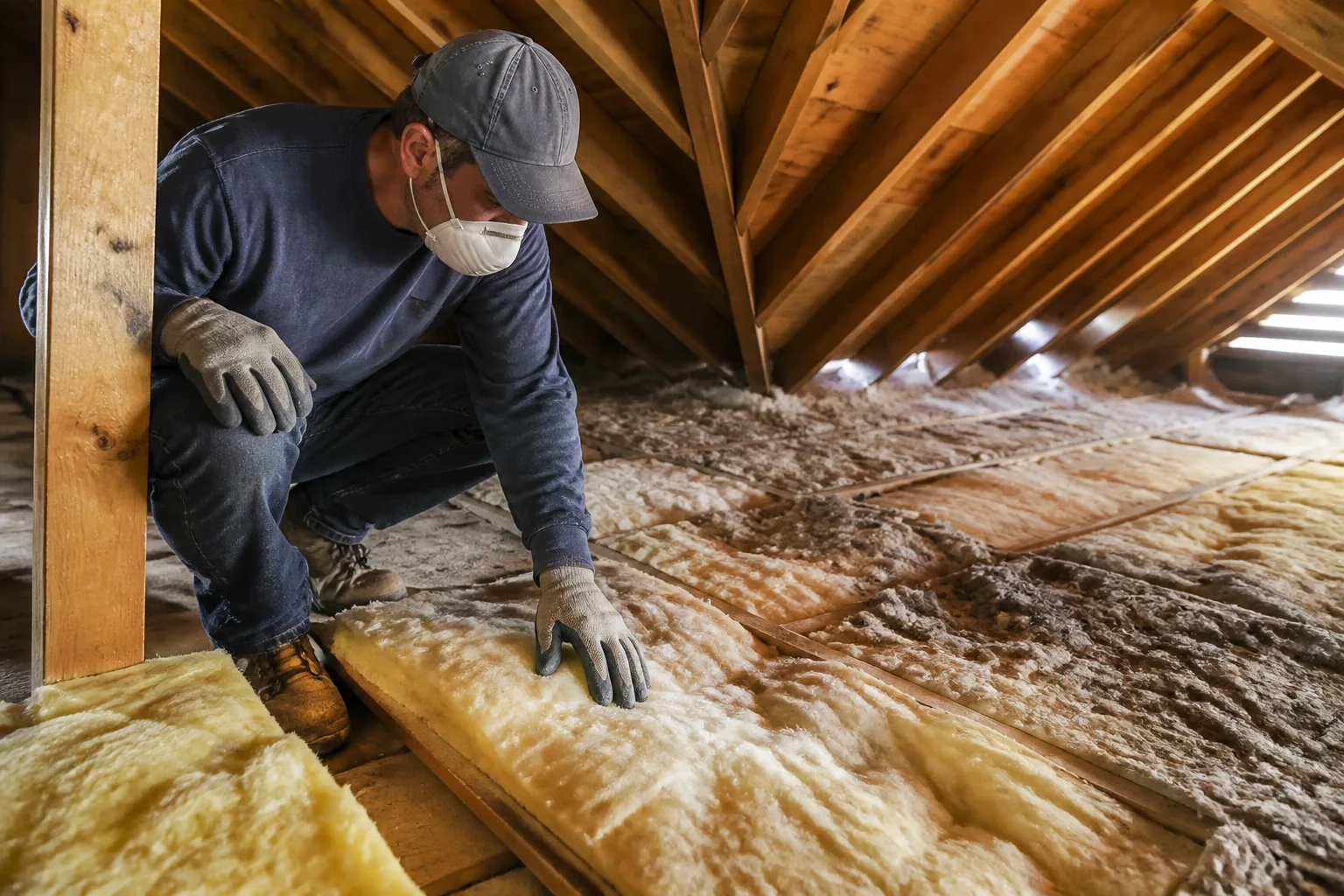
Zone one: the field area. This is the main, open expanse of your attic floor between the trusses. In most Los Angeles homes, this zone holds the bulk of your insulation and takes the least physical stress. Problems here tend to be simple: material has settled, shifted, or thinned over time. Blown-in fiberglass compresses under its own weight, especially in older installations. If the field area is uniformly low but the material looks clean and dry, you’re almost certainly looking at a repairable top-off, not a replacement. We pulled through an attic in Silver Lake a few months back where the homeowner had been quoted $8,400 for full removal and re-blow. The field area was fine. The material just measured R-11 where it should have been R-30. A top-off fixed it in an afternoon for less than a third of that quote.
Zone two: eave edges and penetration points. This is where real damage concentrates. The edges of your attic, around vents, recessed lights, chimney chases, plumbing penetrations, and the hatch itself, are where moisture enters, rodents chew, and insulation gets disturbed. In Los Angeles, the marine layer and seasonal Santa Anas both drive moisture into these weak points. If the damage you find is concentrated at the edges and around openings while the field area looks healthy, a partial repair makes the most sense. Remove and replace only what’s compromised, then blend the transition zones.
How to Measure R-Value With a Ruler and Know Where You Stand Against Title 24
This is the step that changes the entire conversation. When you can walk into the attic knowing your current R-value, you’re comparing bids from a position of information instead of trusting a sales pitch. And in Los Angeles, Title 24 gives you a concrete benchmark to hit.
Here’s the method. Take a ruler into the attic. Measure the depth of the insulation in several spots across the field area. Multiply the depth in inches by the material’s R-value per inch:
- Blown-in fiberglass: roughly R-2.2 to R-2.7 per inch
- Blown-in cellulose: roughly R-3.2 to R-3.8 per inch
- Batt fiberglass: roughly R-3.0 to R-3.7 per inch depending on compression
If you measure 6 inches of settled blown fiberglass, you have somewhere around R-14 to R-16. Current Title 24 requirements for Los Angeles County call for R-30 in most existing attics when you’re adding material, with R-38 required for new construction and major remodels. That gap, 6 inches versus the 12 to 14 inches needed for R-30, tells you whether the fix is a simple top-off or something more involved. Most Los Angeles attics we measure sit between R-11 and R-19 because the insulation was installed decades ago under older codes and has settled since.
One nuance worth knowing: if your existing insulation is clean and dry but just too thin, a top-off with blown-in material gets you to code without removing anything. If the material is compressed, stained, or mixed with debris from a roof repair, that’s when you start considering how much needs to come out.
Three Damage Types That Always Require Full Replacement, No Exceptions
Some conditions make the repair-or-replace decision for you. These aren’t edge cases, they’re hard stops. Every Los Angeles homeowner should know what they look like before spending a dollar on diagnostics.
1. Rodent nesting throughout the attic. If rodents have nested across multiple zones, not just one corner, the insulation is contaminated with urine, feces, and dander. This isn’t a cosmetic problem. The material becomes a respiratory hazard, especially with the dust that blows through ductwork into living spaces. We’re not talking about a single mouse. We’re talking about evidence of extended habitation: tunnels through the material, droppings spread across several areas, chewed vapor barrier, nests in multiple locations. Full removal, sanitization, and re-insulation is the only responsible answer. In neighborhoods like Sherman Oaks and Studio City, where older homes meet overgrown landscaping, we see this scene more than you’d think.
2. Water saturation with visible mold. Los Angeles gets almost all its rain in a short winter window. Roof leaks may be small, but the damage they cause in insulation compounds silently. Insulation that’s been repeatedly wetted loses its loft and its R-value. If mold has colonized the material, the correct scope is total removal. You can’t clean mold out of fiberglass or cellulose insulation. You remove it, address the source of the water, and start clean.
3. Vermiculite or asbestos-era materials. Homes in Los Angeles built before roughly 1990 may contain vermiculite insulation, especially if it was installed as a loose fill with a pebbly, mica-like texture. Much of the vermiculite mined in the U.S. came from a source contaminated with asbestos. If you see this material, do not disturb it. Do not dig around in it. Leave the attic and call a professional who is trained in asbestos identification and abatement protocols. Testing is relatively inexpensive and the answer tells you whether you need standard removal or specialized abatement before any new insulation goes in.
Partial Replacement: The Middle Option Most LA Contractors Won’t Offer
You should know this option exists because it frequently serves Los Angeles homeowners better than either extreme. Partial replacement means removing only the compromised zones, membrane and all where needed, and blending new material into the surrounding area so the thermal boundary stays continuous.
The challenge is that partial replacement is genuinely harder to scope than a full tear-out. You have to identify where the damaged zones end, confirm the transition areas are clean and dry, and account for how the old and new materials will settle together over time. That takes more time in the attic, more careful documentation, and more skill than simply vacuuming everything out and starting fresh. It’s labor-intensive to quote correctly, which is exactly why many Los Angeles contractors skip it and default to full replacement.
But the savings can be significant. If a third of your attic is compromised while the remaining two-thirds tests clean and measures reasonable R-value, removing only the damaged third and blending new blown-in material around it can restore full performance for roughly 40 to 50 percent of the cost of a complete replacement. That’s real money. This is also where having eight material brands matters. We can match the existing insulation profile using material from GreenFiber for blown cellulose or Owens Corning for fiberglass, and the blend won’t create thermal gaps. A contractor limited to one brand may not be able to match what’s already in your attic, and that mismatch becomes the excuse for pushing you toward full replacement.
How to Run the Repair Bid vs. Replacement Bid Test
When you bring contractors in to quote, here’s the structure that protects you. Ask for two written bids on every visit: one for the repair or top-off scenario, one for full replacement. You’re not asking for a general estimate. You’re asking for two scoped proposals, in writing, with material specifications and labor broken out separately.
Now look at the ratio between them. If the replacement bid is three to four times the repair bid, that’s exactly what you’d expect given the math of material and labor costs. It’s the normal spread. But if the replacement bid is eight, ten, or twelve times the repair number, something is off. A quote structured that way often reflects a contractor who is inflating the replacement number to make the repair look unattractive, or discounting the repair to get a foot in the door before “discovering” problems later. Neither is a position you want to be negotiating from.
Also pay attention to how the contractor reacts to the repair bid request itself. A straight answer, even if it takes a day to write up, is a good sign. Reluctance, defensiveness, or a lecture about how repair is “throwing money away” is information. It tells you the contractor isn’t interested in the smaller job, and you should be equally uninterested in giving them the larger one.
One last thing: this test works best when run with at least two or three contractors. If you’re in Los Angeles and want a second opinion, Aspen Attic Insulation home has been doing this and we’ll give you both bids on the same visit, in writing, before any work starts.
When to Call a Pro: The Safety Line
Here’s the straightforward guidance. The inspections and measurements in this post are safe to do on your own if your attic has a stable floor or walkable trusses. But if your attic has no flooring, narrow joists, low clearance, or you’re not comfortable working around electrical wiring and ductwork, don’t push it. Disturbing old insulation also kicks up dust and whatever else has been living in it. A proper respirator, not just a dust mask, matters if you have asthma, allergies, or a compromised immune system.
Same goes for any material you suspect might be vermiculite or asbestos-era. Do not disturb it. If you have any doubt, a professional inspection is the right call. Our techs at Aspen Attic Insulation are background-checked, uniformed, photo-badged, and we send you their name and picture before the visit. You’ll know exactly who’s walking through your door.
If you’re looking at our broader insulation services while you’re thinking through this decision, we also handle Spray Foam Insulation in Los Angeles for air-sealing the attic floor and roofline, and Blown In Insulation in Los Angeles for top-offs and new installations. For the full picture of what a repair or replacement involves in your specific LA neighborhood, start with Attic Insulation in Los Angeles.
The Bottom Line
The repair-or-replace decision should be driven by evidence, not by the incentive structure of whoever is holding the quote pad. Measure your R-value. Check the field area separately from the edges. Know which damage types force replacement and which ones can be scoped as a partial. And always get both bids in writing. In most Los Angeles attics, the right answer is a repair or a top-off, not a full tear-out. If you need help getting to the answer, we offer free inspections and written pricing before any work begins. Call (864) 428-1615 and we’ll send a technician you can identify from the photo we send before they arrive.
Frequently Asked Questions
A top-off in Los Angeles typically runs between $1,200 and $2,800 depending on attic size, current R-value, and access. For a typical 1,500 square foot attic needing several inches of blown-in material to reach R-30, expect the lower to middle end of that range. Call (864) 428-1615 for a written quote specific to your attic, free of charge.
Repair is almost always cheaper, often by half to two-thirds. The real question is whether repair will actually solve your problem. If the material is clean, dry, and simply settled or thinned, repair is the smart money. If you have rodent contamination, mold, or vermiculite, replacement isn’t a cost decision, it’s a health decision. A written inspection tells you which camp you’re in.
Measure the depth and check the condition. Clean, dry material that’s slightly compressed is usually fine to keep and top off. Stained, matted, or foul-smelling material has been compromised and needs attention. In Los Angeles, insulation that was installed before the early 2000s is typically under current code minimums and likely due for at least a top-off.
In most cases, yes. A typical top-off or localized repair in Los Angeles is completed in a single visit, usually three to five hours from setup to cleanup. Larger partial replacements may take a full day. We’ll give you a written time estimate with your quote, and the Done Right Promise means if something isn’t right, we come back and make it right at no charge.
Written by the team at Aspen Attic Insulation.
Need Insulation Help?
Call Aspen Attic Insulation - licensed & insured, here with fast after-hours help in Los Angeles.
(864) 428-1615