
5 Mistakes to Avoid With Blown In Insulation
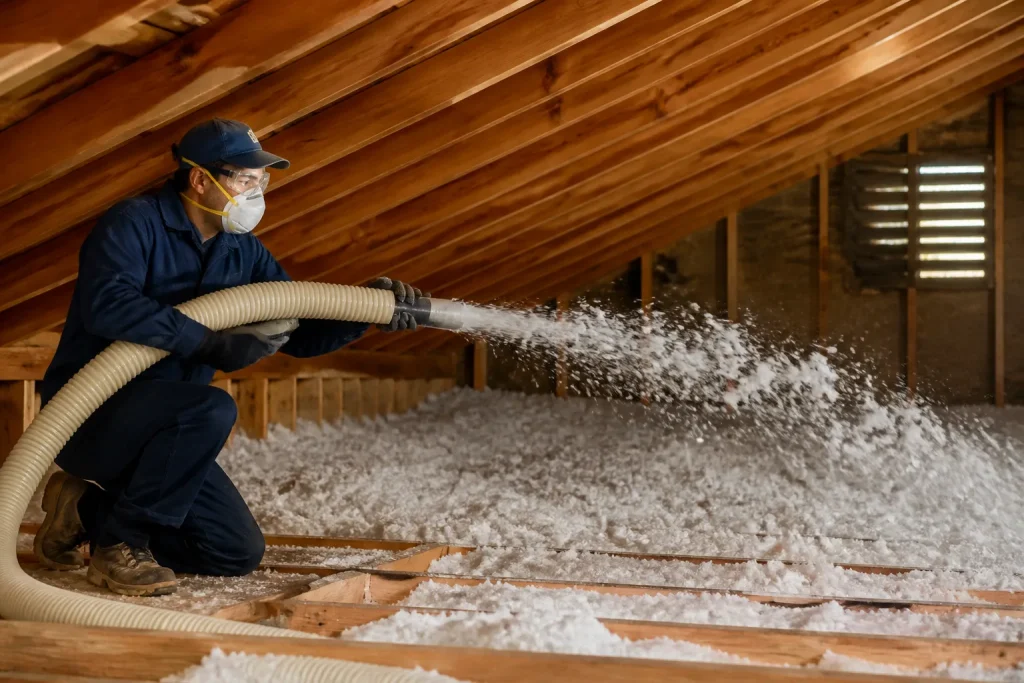
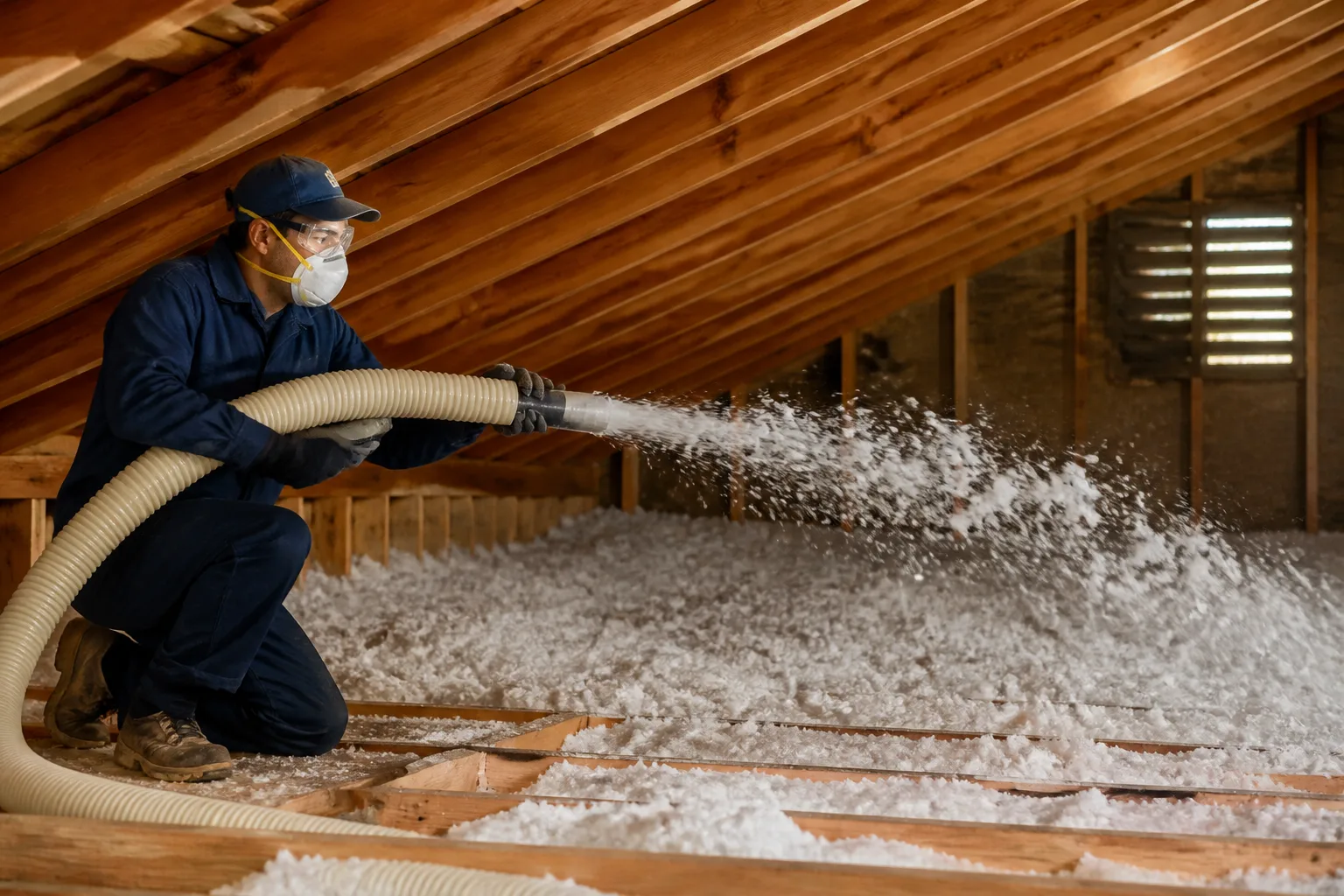
Blown-in insulation fails quietly. The attic hatch closes, the job looks done, and the real problems only surface months later on a utility bill or a water-stained ceiling. In our twenty-plus years of pulling insulation out of Los Angeles attics, we’ve learned the five mistakes that actually cost homeowners money, and none of them are visible from the hatch.
If you’d rather not gamble on invisible details, call (864) 428-1615 and we’ll inspect what’s already up there, free.
1. Skipping Air Sealing Before Blowing
Adding R-value on top of air leaks is like putting a heavier coat on over a ripped shirt. The gaps are still there, and the cold air doesn’t care how thick the coat is. Before any blown-in material goes down, the attic floor needs to be air-sealed: can lights, plumbing penetrations, electrical boxes, top plates, flue chases, and the attic hatch itself.
Here’s what happens when you skip it. Heated air rises out of the living space through those openings, hits the cold underside of the roof, and creates condensation. In Los Angeles neighborhoods near the coast like Playa del Rey and Mar Vista, that condensation feeds mold during marine layer months when the air sits damp for weeks. We’ve pulled out insulation in Santa Monica where the top three inches of fiberglass looked fine, but the underside against the drywall was black and matted, growing things that had no business being there.
How to confirm air sealing was done: ask your installer to show you photos, not just tell you. A reputable crew will shoot pictures of the sealed penetrations before the insulation goes down. If they can’t show you that documentation, they probably didn’t do the work. At Aspen Attic Insulation, every job includes before-and-after photos of what we sealed, sent to you before you pay.
2. Depth Ruler Placement Fraud
This one makes us angry because it’s deliberate. Fiberglass and cellulose settle over time, so a correct blown-in job means over-blowing to a depth that accounts for settlement. The old rule of thumb was to blow R-38 fiberglass to about 10 inches, then watch it settle to 8. The dishonest shortcut is to place the depth rulers, the little cardboard strips that show target height, in the easiest center areas of the attic, and then blow to that height only near the rulers.
The corners, the eave edges, the areas behind roof bracing: those get less material because nobody’s crawling out there to check. And here’s the thing, those exact corners are where a house loses the most heat. Attic insulation underperforming by 30% is common, and the homeowner will never know unless someone gets in there with a ruler and measure points across the entire floor.
Ask your installer this one question: Where did you place the rulers, and what was the lowest depth reading you recorded? If they can’t answer both, you have your answer. We record depth readings at minimum six points in every attic, including the two most inaccessible corners, and write those numbers on the certificate we hand you before we leave.
3. Blocking Attic Ventilation Channels at the Eaves
Blown-in material has to stay out of the soffit vents. Soffit vents pull outside air into the attic, where it flows up and out the roof vents. That airflow is what keeps a Los Angeles attic from becoming a kiln in August and a mold factory in June. The problem is that blown insulation, especially light fiberglass, drifts. It flows sideways and settles into the eave cavities, plugging the very channel that should stay open.
The correct method is to install baffles, thin plastic or foam channels that staple to the underside of the roof deck and keep a clear path from the soffit vent into the attic. We see attics in Silver Lake and Echo Park where someone blew fiberglass right over the vents because skipping the baffle work saves an installer a couple of hours. The result shows up months later: trapped moisture, peeling paint on exterior walls, rusted roof nails, and on the hottest days, an attic that stays 20 degrees hotter than it should.
If you already have blown-in insulation and want to check this, a quick way is to look for any eave areas where the material has drifted flush against the underside of the roof deck. That’s a blocked vent. Removing the material and installing baffles is a straightforward repair, and it’s one we do as part of our Attic Insulation in Los Angeles service calls all the time.
4. Using the Wrong Material Density for the Application
Two materials dominate blown-in insulation: loose-fill fiberglass and cellulose. They behave differently, and choosing the wrong one, or installing either at the wrong density, shows up in specific ways in Los Angeles homes.
Loose-fill fiberglass, the kind we carry from Owens Corning, is light and airy. It’s great for open attics where nothing will ever touch it. But it loses R-value as it settles, and it’s sensitive to airflow. If the attic has any significant air movement, especially in older homes with open soffits or gaps at the roofline, fiberglass gradually loses its numbers. Cellulose, like the GreenFiber product we install, packs denser. It resists airflow better and actually performs better in windier conditions because the fibers lock together. But cellulose is heavier, and in Los Angeles, that matters because of seismic activity. An attic floor rated for light fiberglass may not be rated for dense-packed cellulose, particularly in a 1920s bungalow in Highland Park or an older Craftsman in Pasadena where the ceiling joists are genuine 2x4s spanning 16 inches.
Here’s the rule of thumb we give homeowners: match the material to the attic’s real conditions, not to what the installer has on hand. Go light for simple open attics with good air sealing and baffles already in place. Go dense-cellulose for attics with minor air movement where you want the added air resistance. For sealed assemblies where spray foam is the right call, the Spray Foam Insulation in Los Angeles approach handles that. The bottom line is that anyone who tells you one product works for every attic is selling inventory, not insulation.
5. No Post-Installation Documentation
Here’s the test of a legitimate installer: will they give you, in writing, what they installed? Not a receipt that says “attic insulation.” We mean an actual certificate listing the installed square footage, the depth readings across multiple points, the settled R-value, and the material used. If the answer is no, ask yourself what you’re really paying for.
A proper blown-in job is measurable. Fiberglass manufacturers publish charts that translate blown depth to R-value, and those charts are specific to the product and the application. Cellulose has its own chart. There is a big difference between R-38 and R-30, and the only way anyone knows which one you got is if someone measured it. The energy savings difference between those two numbers over ten years in a Los Angeles attic is real money.
Our policy is simple: every job, including Blown In Insulation in Los Angeles, concludes with a written certificate that lists the material, the depth measurements, and the final R-value. If we say you got R-38, you get a piece of paper proving it. If the insulation settles too much in year one, our Done Right Promise covers a return visit to re-balance, re-blow, or fix whatever went wrong, in writing, for labor and materials. No invoice games, no “that’s normal wear.”
When to Call a Pro
If you’re reading through these five mistakes and realizing you can’t tell whether your current insulation was installed correctly, that’s not a failure on your part. The whole problem with blown-in insulation is that the errors are invisible by design. What you need is someone willing to put eyes on the actual conditions and tell you what’s there. We do free inspection walk-throughs in Los Angeles every week. No pressure, no obligation, just a straight answer about what’s in your attic and whether it’s doing its job.
Also worth knowing: Aspen Attic Insulation home services include new blown-in installation, removal of damaged or mold-contaminated material, air sealing, and baffle repair. If your project involves any of those pieces, we’ll write you a printed price before any work starts, and you’ll know the name and face of the technician who shows up before they arrive.
The Bottom Line
Blown-in insulation is forgiving to install but merciless when installed wrong. Air sealing comes first. Depth measurements must be taken where the material is thinnest, not where it’s thickest. Ventilation channels stay open or the attic rots. Material density has to match the attic’s real structure, especially in seismic Los Angeles. And no documentation means you paid for a story instead of an R-value.
If you already have insulation and you’re not sure what’s up there, get it checked. If you’re planning to add blown-in insulation and want a crew that documents everything, measures corners not just center squares, and stands behind it for 365 days, we’d be glad to help. Call (864) 428-1615 and we’ll give you a free estimate, in writing, before you commit to anything.
Frequently Asked Questions
You know by checking three things: whether air sealing was done before the material went down, whether depth measurements exist for the corners and eave areas, not just the center, and whether the installer gave you a written certificate showing the material, depth, and R-value. If any of those three are missing, the install was incomplete.
Not usually, but it often needs to be re-balanced or added to in Los Angeles attics where it has settled below its target R-value, gotten wet from a roof leak, or been contaminated by rodent activity. Fiberglass that has been sitting wet needs to come out completely because the R-value collapses when the material mats down.
It depends on the attic’s construction and age. For open attics with proper air sealing and baffles, loose-fill fiberglass works well. For older Los Angeles homes with minor air movement and older framing, dense cellulose often holds its R-value better and resists airflow. The right choice depends on measuring the actual attic, not on a one-size-fits-all recommendation.
Yes. The most common fixes are pulling back material from blocked soffit vents and installing baffles, adding material where depth came up short in corners, and removing contaminated sections and re-blowing them. Most repairs in Los Angeles attics take less than a day, and a good installer will show you before-and-after measurements.
Written by the team at Aspen Attic Insulation.
Need Insulation Help?
Call Aspen Attic Insulation - licensed & insured, here with fast after-hours help in Los Angeles.
(864) 428-1615