
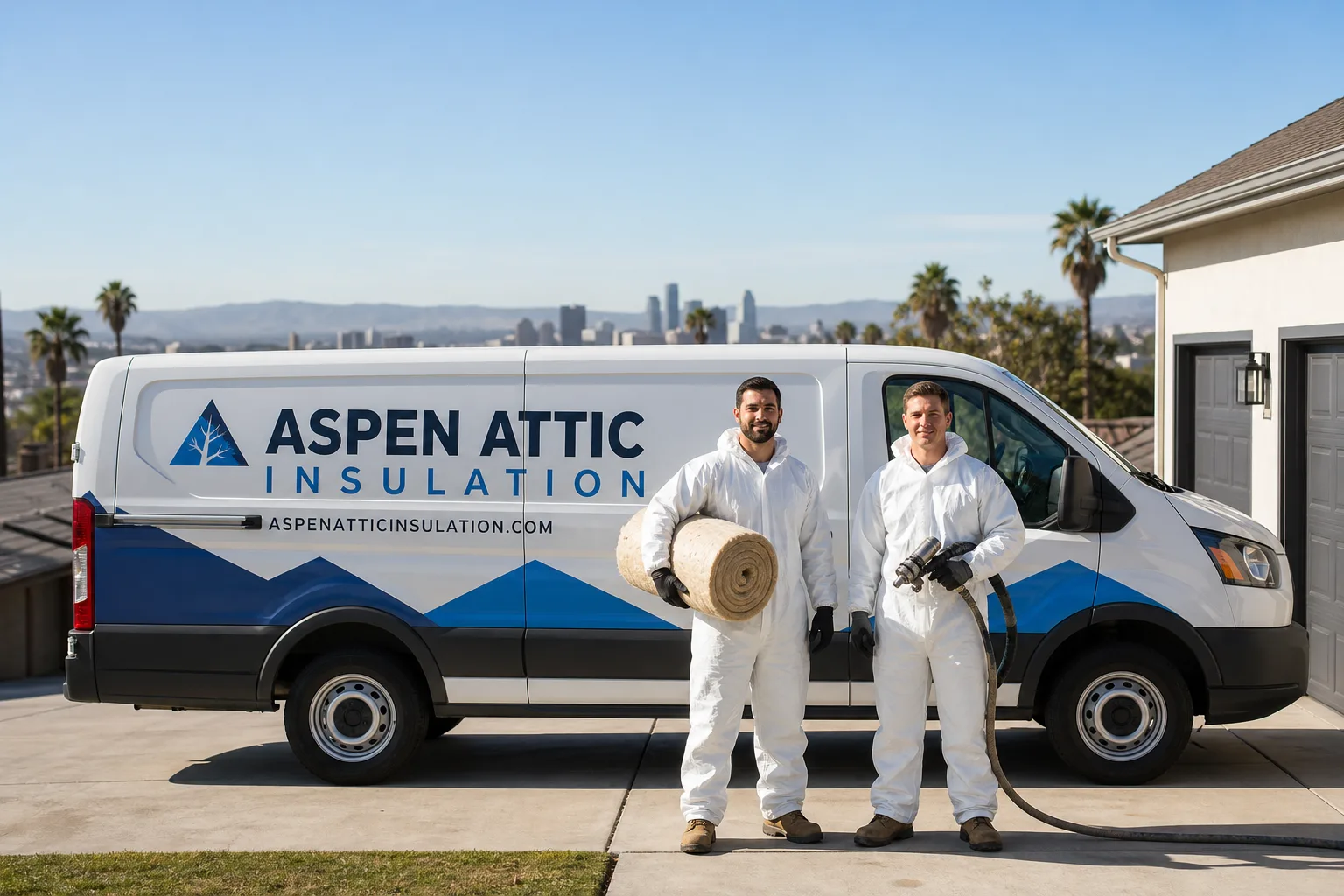
Fast, Reliable Attic Insulation Across Strawberry
Attic insulation in Strawberry, CA typically costs $1,800 – $4,500 for a full retrofit and $900 – $2,200 for a top-up or targeted repair, with most jobs scheduled within 48 hours. We’re familiar with the tight 2×4 rafter bays in the A-frames off Lake Forest Road and the ice-dam headaches that follow every heavy snow year. Our Attic Insulation crews load trucks specifically for Strawberry’s older cabin stock so we don’t waste a trip back to the Bay Area for forgotten materials. Call (864) 428-1615 and a live person will pick up, day or night.
Strawberry sits at 6,200 feet on Lake Tahoe’s north shore, where winter design temperatures drop far below what California’s Title 24 prescriptive code assumes. Most homes here were never built for year-round living. They’re 1950s – 70s seasonal retreats with shallow wall cavities, minimal insulation, and unoccupied stretches through January cold snaps when attic bypasses frost over unseen. That context changes everything about how insulation gets specified, installed, and ventilated.
Our dispatch runs from the San Francisco Bay Area, but crews serve Strawberry locally with trucks pre-loaded for the specific failures this mountain climate produces.
Why Aspen Attic Insulation Is Strawberry’s Preferred Attic Insulation Company
We’ve worked on enough Strawberry cabins to know the difference between a standard retrofit and a Tahoe retrofit. The Threshold Standard means every technician is background-checked, identity-verified, and sent to your door by name and photo before the visit. You’ll see the face of whoever knocks. If someone else shows up, the visit is free and we make it right.
Our 365-Day Done Right Promise covers every job in writing. Labor and materials, 365 days. If a repair fails, we come back free.
Before any work starts, you get a written price. No post-job surprises, no “we found something else” add-ons after the fact. That matters especially in Strawberry, where many homeowners are remote landlords or second-home owners who can’t be on-site to approve change orders.
Calls are answered by a live person 24/7. No voicemail loops, no “we’ll call you back tomorrow” when your rim joists are frosting over in a January vacancy.
Attic Ventilation in Strawberry
Attic Ventilation in Strawberry is not an afterthought; it’s the difference between a dry roof deck and spring ice-dam repairs. At 6,200 feet with 200+ inches of annual snow, a poorly vented attic traps warm, moist air against the underside of the roof sheathing. That warmth melts snow from below, water runs to the cold eave, and freezes into dams that back up under shingles. We’ve seen it on cabins off Highway 28 and in the older chalets near the Strawberry Lodge.
A proper venting strategy pairs soffit intake with ridge exhaust, plus baffles that keep insulation from blocking airflow. In Strawberry’s shallow 2×4 rafter bays, there’s rarely room for both full-depth insulation and a clear vent channel without careful planning.
Soffit-to-Ridge Baffle Installation
We install rigid vent baffles between rafters before dense-packing insulation, preserving a 1-inch minimum air channel from eave to peak. On a 1968 A-frame above the north shore near Lake Forest Road, our crew found a previous owner had stuffed fiberglass batts between shallow 2×4 rafters, leaving a 1-inch air channel that fed ice dams every spring. We air-sealed the top plates, dense-packed the cathedral bays with GreenFiber cellulose, and added soffit-to-ridge ventilation baffles so the roof deck could breathe under 200+ inches of snow. The homeowner was on a tight pre-rental schedule, so we loaded all insulation, ventilation, and radiant barrier materials onto one truck and finished the retrofit in a single trip.
Exhaust Vent Upgrades
Many Strawberry cabins still run static box vents or under-powered turbine vents that stall under heavy snow load. We upgrade to continuous ridge vent systems where the roof geometry allows, or install high-capacity exhaust vents with snow guards to maintain airflow through March and April melt cycles.
Radiant Barrier in Strawberry
Radiant Barrier in Strawberry addresses a problem most mountain homeowners don’t expect: summer overheating in A-frame and chalet designs with large south- and west-facing roof planes. Strawberry’s elevation means intense UV exposure, and summer days in the 80s turn poorly insulated attics into convection ovens that radiate heat downward through thin ceiling assemblies. A radiant barrier, typically a reflective foil or metallized membrane, blocks that radiant transfer and can reduce cooling loads by 5 – 15% in cabins with significant roof glass or cathedral ceilings.
For seasonal rentals that sit vacant through hot August weeks, radiant barriers also slow heat buildup that stresses any remaining HVAC equipment.
Cathedral Ceiling Retrofits
In Strawberry’s 1950s – 70s A-frames, cathedral ceilings often have no attic space at all, just a narrow cavity between roof deck and interior finish. We install radiant barrier foil directly against the underside of the roof sheathing during dense-pack or spray-foam retrofits, reflecting summer heat before it penetrates the living space. This pairs especially well with closed-cell foam, which provides both air sealing and vapor control in one application.
Attic Floor Applications
Where a traditional attic floor exists, we lay radiant barrier sheathing or foil across joists before blowing in new insulation. This dual approach targets both winter heat loss (through the insulation layer) and summer heat gain (reflected at the barrier). In cabins near the lake that see mixed seasonal use, it’s the most cost-effective upgrade we recommend.
Trusted Brands We Service in Strawberry
We stock materials from eight industry-leading brands, matched to the specific condition of your home rather than whatever’s on the truck. For Strawberry’s dense-pack and spray-foam retrofits, we regularly specify GreenFiber cellulose for its ability to conform to irregular 2×4 bays, and Rockwool for fire-resistant applications in chalets with wood stoves or older chimney penetrations. Owens Corning and Johns Manville batts are available when standard framing allows. Every product is on hand or quickly sourced, so we don’t leave your cabin half-finished through a cold snap.
Common Attic Insulation Problems We See in Strawberry Homes
- Ice dams from unsealed top plates. Warm indoor air leaks through gaps at the top of exterior walls, hits the cold roof deck above, and melts snow from underneath. In Strawberry’s 200+ inch snowpack, that water refreezes at the eave and backs under shingles. We find this on nearly every 1960s A-frame we open up.
- Blocked soffit vents turning attics into dead-air zones. Previous owners or handymen stuff insulation tight to the eave, cutting off intake airflow. Without that ventilation, moist air stagnates and frost accumulates on uninsulated rim joists during January cold snaps, often in unoccupied cabins where nobody notices until spring damage appears.
- Title 24 assumptions failing at 6,200 feet. Standard California prescriptive insulation requirements don’t account for Strawberry’s winter design temperatures or snow load. A retrofit designed to “meet code” can still leave a cabin uncomfortable and vulnerable to ice damming.
- Shallow, irregular bays defeating standard batt installation. The 2×4 rafters in Strawberry’s mid-century stock are often unevenly spaced, bowed, or interrupted by collar ties. Fiberglass batts leave gaps, settle, or compress. Dense-pack cellulose or closed-cell spray foam is usually the only way to fill every void.
Pricing for Attic Insulation in Strawberry, CA
A typical blown-in attic insulation top-up in Strawberry runs $900 – $2,200, depending on existing depth and square footage. Full attic insulation replacement with air sealing and baffles usually falls between $1,800 – $4,500. Attic insulation replacement in deeper or more complex cathedral ceilings ranges $3,200 – $6,800. Radiant barrier installation adds $1,100 – $2,400 when done as a standalone service, or $600 – $1,500 when combined with a full insulation retrofit.
What moves the number: accessibility (steep A-frame roofs require rigging), cavity depth (shallow 2×4 bays need more labor-intensive dense-pack work), existing damage from ice dams or moisture, and whether ventilation upgrades are included. Every homeowner receives a written price before any work starts. Estimates are free. Call (864) 428-1615 to schedule.
We Also Serve Cities Near Strawberry
Our crews travel throughout the Sierra foothills and Central Valley for Attic Insulation in Strawberry and surrounding communities. We also work in Oakhurst, Chowchilla, Madera, and Discovery Bay. Each job carries the same Threshold Standard protocols, written pricing, and 365-Day Done Right Promise.
Serving Strawberry, CA - Our Local Coverage Area
We’re based in the Strawberry area and know this community well. Use the map below to see our service coverage - if you’re nearby, we can almost certainly help.
FAQs About Attic Insulation in Strawberry
Ice dams form when warm air reaches the roof deck and melts snow from below, not from too little insulation alone. In Strawberry, the usual culprit is unsealed top plates or attic bypasses that let heated indoor air leak past the insulation layer. We air-seal first, then insulate, then verify ventilation. Call (864) 428-1615 for an inspection – estimates are free.
Yes, dense-pack cellulose or closed-cell spray foam is specifically designed for shallow, irregular cavities that defeat standard batts. We install vent baffles first to preserve airflow, then pack the bay at the correct density so the material won’t settle or slump. Call (864) 428-1615 to discuss your specific framing.
A radiant barrier reduces summer heat gain through roof planes by 5 – 15%, which matters in south-facing A-frames that overheat between rentals. If your cabin has cathedral ceilings or large roof glass, it’s worth including. For traditional attic floors with good existing insulation, the payback is longer. We’ll give you a written price for both options so you can decide.
Strawberry’s 200+ inch annual snowpack means roof ventilation must function even when exhaust vents are partially buried, and insulation must prevent any heat loss that could melt snow from below. We specify continuous ridge vents with snow guards, rigid baffles that won’t collapse under dense-pack pressure, and insulation strategies that prioritize air sealing over raw R-value alone. Call (864) 428-1615 for a snow-load-specific assessment.
Yes. We pre-inspect, pre-measure, and pre-load all materials for Strawberry jobs so the crew arrives with everything needed for insulation, ventilation, and radiant barrier work in one truck. The 1968 A-frame near Lake Forest Road we retrofitted was completed in a single day, start to finish. Call (864) 428-1615 to schedule – we’ll confirm your job is fully kitted before we head up the mountain.
Written by Garrett Sloane, Owner at Aspen Attic Insulation, serving Strawberry since 2002.