
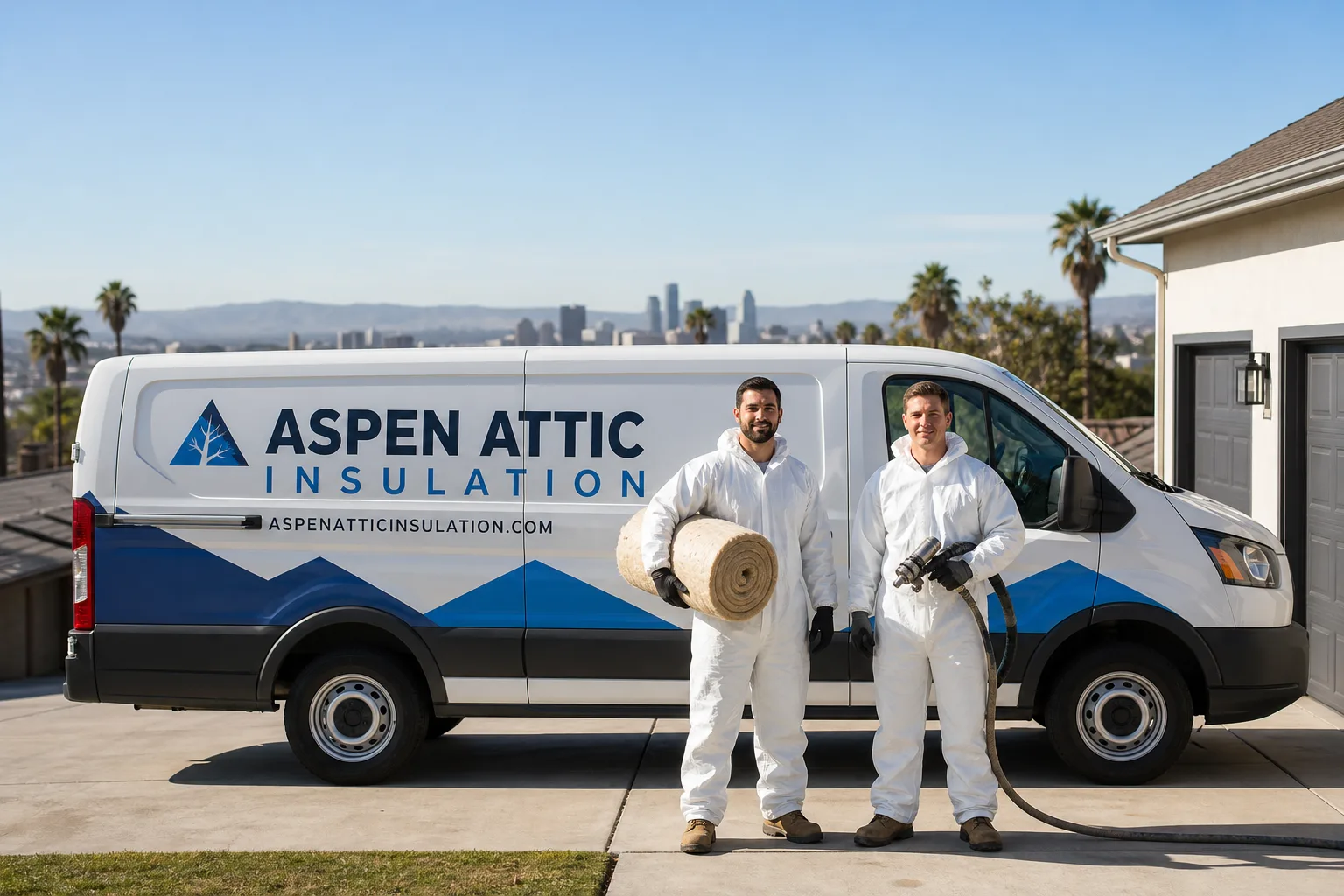
Fast, Reliable Attic Insulation Across Lucerne Valley
Attic insulation in Lucerne Valley typically costs $1,800 – $4,500 for a full retrofit and $900 – $2,200 for a top-up or manufactured-home roof-cavity job, with most assessments scheduled within 24 hours. We dispatch crews from our Inland Empire office and carry the full Threshold Verified standard to every home in the valley, from Old Woman Springs Road to the Rabbit Springs area. Call (864) 428-1615 and a live person will answer, day or night.
We’ve worked on enough Lucerne Valley homes to know the pattern before we pull the attic hatch. Most of the housing stock out here, owner-built or manufactured, was never insulated to any code cycle. That means compressed R-7 batts in roof cavities, missing belly boards, and attics that hit 140°F in July while the living room drops to 55°F in January. Our Attic Insulation team treats every job as a two-season retrofit, not a cooling-only fix.
Why Aspen Attic Insulation Is Lucerne Valley’s Preferred Attic Insulation Company
Garrett Sloane built this operation on a simple standard: the homeowner knows exactly who is coming, exactly what it will cost, and exactly what happens if something goes wrong. Every technician is background-checked, identity-verified, and sent to you by name and photo before the visit. If anyone else shows up at your door, the visit is free and we make it right. That matters in a rural spread-out community like Lucerne Valley, where you’re often home alone and your nearest neighbor might be half a mile down a dirt road.
We answer the phone 24/7 with a live person, never a voicemail loop. Our 365-Day Done Right Promise covers every job in writing, labor and materials included, with a free second visit if the repair fails. We’ve earned a strong local reputation across the high desert by showing up when we say we will and putting the price in writing before any work starts. No post-job surprises. No exceptions.
Attic Ventilation in Lucerne Valley
Attic Ventilation in Lucerne Valley is not an afterthought, it’s a structural requirement. The valley’s 40-degree day-night temperature swing means an unvented attic becomes a convection oven by 3 p.m. in July and a condensation trap by 6 a.m. in January. Without airflow, heat stacks under the roof deck all summer, accelerating the compression and breakdown of whatever insulation is present. In winter, that same trapped cold air meets warm ceiling leaks at unsealed top plates and single-pane windows, producing moisture that rots roof sheathing and breeds mold. We install ridge vents, soffit vents, and low-profile turbine or static vents matched to your roof geometry and the specific airflow needs of manufactured versus site-built homes.
Breaking the Condensation Cycle
On a typical Lucerne Valley retrofit, we find attics with zero intake or exhaust ventilation. We calculate net free area based on the 1:300 rule, then add baffles at the eaves to keep insulation from blocking soffit airflow. For manufactured homes with shallow roof cavities, we often use low-profile box vents or powered attic ventilators sized to the cubic volume.
Seasonal Load Balancing
Proper ventilation reduces the delta between attic temperature and outdoor ambient. In Lucerne Valley, that means your insulation works with the weather instead of fighting it. Summer peak attic temps can drop 25 – 35°F with correct venting, which directly extends the effective life of blown-in or batt materials.
Radiant Barrier in Lucerne Valley
Radiant Barrier in Lucerne Valley addresses the specific problem of solar heat gain through the roof deck, which is more intense here than at lower desert elevations due to thinner atmosphere and higher UV exposure at 3,000 feet. A radiant barrier is a reflective foil or metallized film installed on the underside of the roof deck or across the attic floor, reflecting radiant heat rather than absorbing it. In Lucerne Valley’s unshaded, high-desert environment, this can reduce cooling loads by 5 – 15% when paired with adequate insulation and ventilation. We install stapled foil, spray-applied radiant barrier paint, or hybrid systems depending on roof pitch, existing insulation depth, and whether the home is site-built or manufactured.
Manufactured-Home Roof-Cavity Applications
Manufactured homes in Lucerne Valley often have shallow 4 – 6 inch roof cavities with no room for deep insulation. A radiant barrier applied to the roof deck interior can provide meaningful heat rejection without sacrificing the limited cavity space available for batt or blown-in material.
Hybrid Systems for Site-Built Homes
For older site-built homes off Old Woman Springs Road or near the valley floor, we frequently combine radiant barrier with blown-in Owens Corning Fiberglas to R-38. The barrier handles the 100°F+ radiant load; the insulation handles the below-freezing winter retention. Two-season protection, one coordinated install.
Trusted Brands We Service in Lucerne Valley
We stock materials from eight industry-leading brands so the right product goes in, not just the available one. For Lucerne Valley’s high-desert retrofits, we most often reach for Owens Corning Fiberglas blown-in and batts for thermal stability across temperature extremes, Johns Manville formaldehyde-free batts for homeowners with respiratory sensitivities, and GreenFiber cellulose for dense-pack applications in irregular owner-built attic cavities. We keep common R-values and venting components on hand at our Inland Empire warehouse, so most Lucerne Valley jobs don’t wait on material delivery. Every product is matched to the specific assembly, whether we’re blowing a site-built attic to R-38, reinstalling belly board under a manufactured home, or retrofitting a roof cavity off Rabbit Springs Road.
Common Attic Insulation Problems We See in Lucerne Valley Homes
- Compressed R-7 roof-cavity batts in manufactured homes. Decades of 100°F+ attic heat flatten the original fiberglass until it delivers almost no winter R-value. We remove the compressed material, air-seal the top plates, and blow in fresh insulation to the cavity depth.
- Missing or torn belly board under mobile homes. The 40-degree day-night swing drives moisture and cold air straight into the floor cavity, freezing supply lines in January and drawing heat out all winter. We reinstall proper vapor barrier belly board as part of the thermal envelope repair.
- Zero attic ventilation fighting the diurnal swing. Heat stacks all summer; condensation forms on cold surfaces in winter. We add calculated intake and exhaust ventilation to break the cycle and protect the new insulation investment.
- Single-pane windows and unsealed top plates amplifying heat loss. Even good insulation fails when the thermal envelope leaks at the ceiling plane. We identify and seal these bypasses before adding material, so the insulation actually performs.
Pricing for Attic Insulation in Lucerne Valley, CA
Here’s what attic insulation costs in Lucerne Valley’s market, based on the housing stock we actually work on:
| Service | Typical Range |
|---|---|
| Blown-in attic insulation (site-built home, to R-38) | $1,800 – $3,200 |
| Attic batt insulation replacement | $2,000 – $3,800 |
| Attic insulation top-up (existing adequate base) | $900 – $1,800 |
| Manufactured home roof-cavity retrofit + belly board | $2,200 – $4,500 |
| Attic baffles and ventilation prep | $400 – $950 |
| Radiant barrier installation | $1,100 – $2,400 |
Factors that move the price: accessibility of the attic or roof cavity, whether we’re removing old compressed material, the condition of existing ventilation, and whether belly-board work is needed underneath. Every homeowner receives a written price before any work starts. No post-job surprises. Estimates are free. Call (864) 428-1615 to schedule.
We Also Serve Cities Near Lucerne Valley
Our crews cover the full high-desert and mountain region surrounding Lucerne Valley, including Big Bear City, Apple Valley, Running Springs, and Lake Arrowhead. Each community has its own thermal profile, from Big Bear’s heavy snow loads to Apple Valley’s lower-elevation heat. We match materials and methods to the location. Lucerne Valley remains our core service area, with same-week scheduling typical for local jobs.
Serving Lucerne Valley, CA - Our Local Coverage Area
We’re based in the Lucerne Valley area and know this community well. Use the map below to see our service coverage - if you’re nearby, we can almost certainly help.
FAQs About Attic Insulation in Lucerne Valley
Your Lucerne Valley attic must handle both brutal summer cooling loads and sub-freezing winter heat loss, unlike Palm Springs where cooling dominates. The 3,000-foot elevation produces 40-degree day-night swings and winter hard freezes that low-desert homes rarely face. We install two-season insulation systems here, typically to higher R-values with more attention to air sealing and ventilation than coastal or low-desert jobs require. Call (864) 428-1615 for an exact quote on your specific home.
Yes, the missing belly board destroys the thermal envelope from below, letting cold air and moisture into the floor cavity while your attic loses heat upward. We’ve pulled original R-7 roof-cavity batts compressed flat from decades of heat, then found the belly board completely gone, so the same home baked in July and froze supply lines in January. We treat manufactured homes as full-envelope retrofits: attic, roof cavity, and belly board together. Call (864) 428-1615 and we’ll assess what’s actually missing.
We install both, and for many Lucerne Valley homes the combination outperforms either alone. Blown-in insulation handles conductive heat transfer; radiant barrier reflects the intense solar gain that pounds the roof deck at 3,000 feet with higher UV exposure than lower elevations. Manufactured homes with shallow cavities especially benefit, since radiant barrier adds heat rejection without consuming limited insulation space. We’ll recommend the right mix based on your roof type and current insulation depth. Call (864) 428-1615 for a free assessment.
We size ventilation for both extremes: enough exhaust to prevent summer heat stacking, enough intake to flush winter moisture before it condenses on cold surfaces. The 40-degree swing in Lucerne Valley means an unvented attic can hit 140°F by afternoon and drop to 45°F by dawn. We calculate net free vent area to the 1:300 standard, add baffles to keep insulation from blocking soffit airflow, and specify low-profile vents for manufactured homes where roof geometry limits options. Proper ventilation protects your insulation investment year-round. Call (864) 428-1615 to schedule.
We stock eight premium brands and select based on the specific assembly and homeowner need. For Lucerne Valley’s temperature extremes, we most commonly use Owens Corning Fiberglas blown-in and batts for thermal stability, Johns Manville formaldehyde-free batts for sensitive occupants, and GreenFiber cellulose for dense-pack in irregular owner-built cavities. Every material is matched to the job, not forced from a limited truck stock. You’ll see exactly what we’re installing and why, with the brand name and R-value, in your written estimate. Call (864) 428-1615 to arrange your free estimate.
Ready to stop the two-season battle in your Lucerne Valley home? Call (864) 428-1615 now. A live person answers 24/7. We’ll send you the technician’s name and photo before anyone arrives, deliver a written price before any work starts, and back every job with our 365-Day Done Right Promise in writing. Free estimates. No exceptions.
Written by Garrett Sloane, Owner at Aspen Attic Insulation, serving Lucerne Valley and the high desert since 2002.