
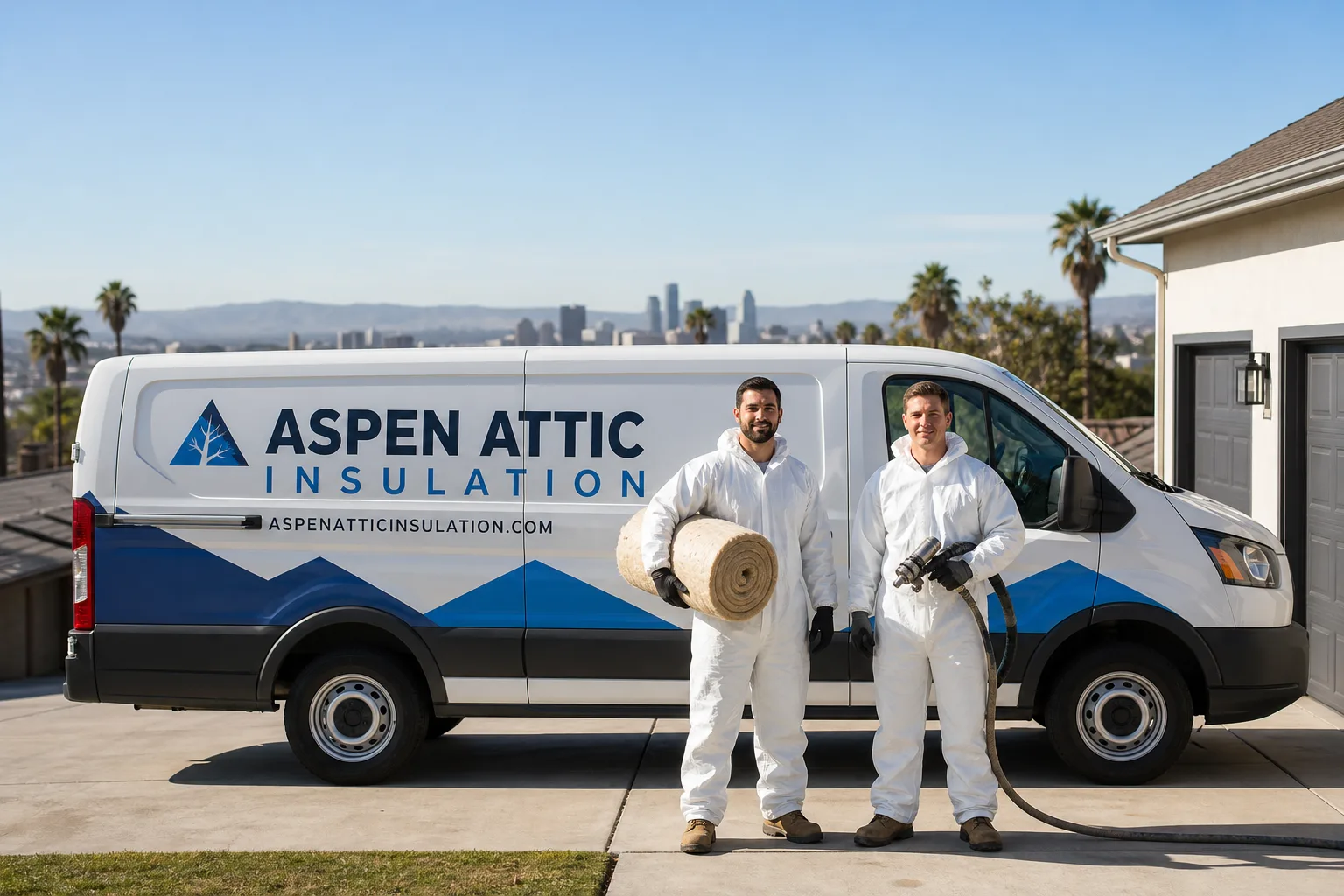
Fast, Reliable Attic Insulation Across Long Beach
Most Long Beach attic insulation jobs run $1,800 – $3,800 for blown-in cellulose in a typical 1,200-square-foot attic, and our crews can usually inspect and start work within 48 hours. We’re familiar with the tight lots off Ocean Boulevard, the alley-access homes in Belmont Shore, and the parking headaches around Fourth Street’s retro row. Dispatch and scheduling run through our Los Angeles office, but the crew that shows up at your door lives and works in the Long Beach area. Call us at (864) 428-1615 for a written estimate before any work begins.
Why Aspen Attic Insulation Is Long Beach’s Preferred Attic Insulation Company
We’ve built our reputation in Long Beach by solving problems that generic insulation contractors miss. Our technicians know the difference between a 1923 bungalow in Bluff Park and a 1954 tract home in North Long Beach, and they adjust the approach accordingly. Long Beach homeowners have left us strong reviews specifically mentioning our punctuality on tight streets and our willingness to explain what we found in the attic before quoting a price.
Response time to Long Beach neighborhoods averages same-day or next-day for inspections. We understand that a hot second floor in August or a damp attic smell after a marine layer morning can’t wait two weeks.
Every technician meets The Threshold Standard: background-checked, identity-verified, photo-badged, and sent to you by name and photo before the visit. If anyone else arrives, the visit is free and we make it right. This matters in Long Beach’s denser neighborhoods, where knowing who’s at the door is a genuine concern for homeowners who are often alone during the day.
Attic Cleaning Services in Long Beach
Attic Cleaning Services in Long Beach typically address decades of accumulated debris, rodent droppings, and degraded insulation in homes built before 1960. A full attic cleaning in this market runs $1,200 – $2,400 depending on square footage, contamination level, and whether the space has been used for storage. The marine layer’s damp air settles into dusty attics and turns them into musty, unhealthy spaces, especially in older homes near Alamitos Bay where ventilation was never part of the original design.
Debris Removal and Sanitization
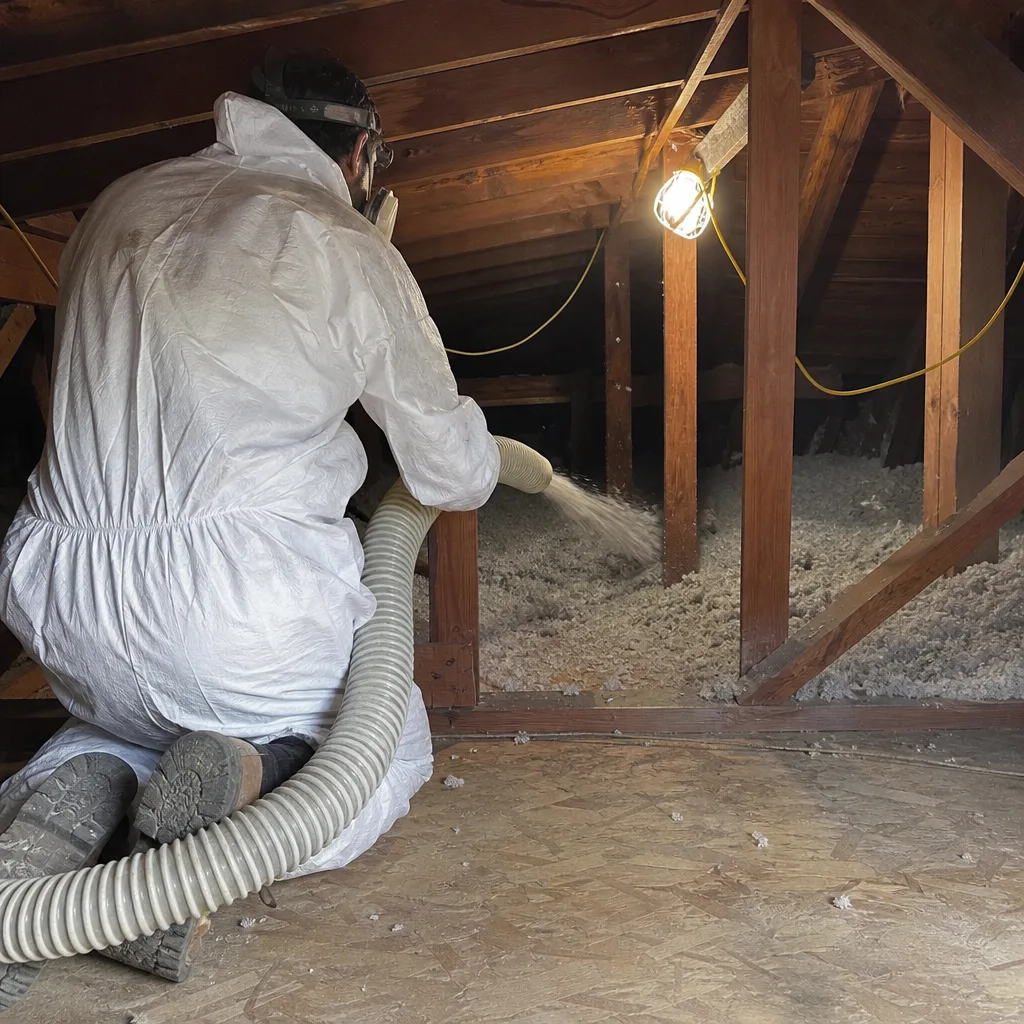
We remove old insulation, construction debris, and organic matter by hand and with HEPA-filtered vacuums. Every surface gets treated with an EPA-registered sanitizer before new insulation goes in. In Long Beach’s 1920s homes, we often find original lath and plaster fragments, old wiring casings, and rodent evidence that needs careful handling.
Ventilation Assessment Before Sealing
Cleaning reveals whether your attic can breathe. We check soffit vents, gable vents, and ridge lines for blockages. A clean attic with poor ventilation becomes a damp attic within one Long Beach winter, so we fix airflow before we add anything new.
What happens when you call
- 1
A real person answersNo phone trees - you reach a local pro.
- 2
You get an upfront price rangeHonest numbers before anyone is dispatched.
- 3
A background-checked tech heads outLicensed & insured, dispatched right away.
- 4
You approve before work beginsNothing starts until you say go.
Attic Mold Removal in Long Beach
Attic Mold Removal in Long Beach is almost always tied to moisture from the marine layer, not roof leaks. The combination of cool nighttime air and warm attic decks creates condensation that feeds mold on roof sheathing, especially in homes without proper ventilation. A typical attic mold remediation in Long Beach runs $2,500 – $5,500 depending on affected square footage, whether the sheathing needs replacement, and how accessible the space is. We’ve treated attics in Belmont Heights where the mold was visible only on the north-facing sheathing, right where the fog rolls in heaviest.
Source Elimination and Drying
Killing mold without fixing the moisture source is a waste of money. We identify whether the problem is bathroom vents dumping into the attic, blocked soffit vents, or simply air leakage from the living space. Then we dry the deck with commercial dehumidifiers before any treatment begins.
Post-Remediation Prevention
After remediation, we install proper ventilation and air-sealing to keep the marine layer out. In some Long Beach homes, this means adding baffles at the eaves and a sealed attic hatch, the exact combination that prevents recurrence.
Trusted Brands We Service in Long Beach
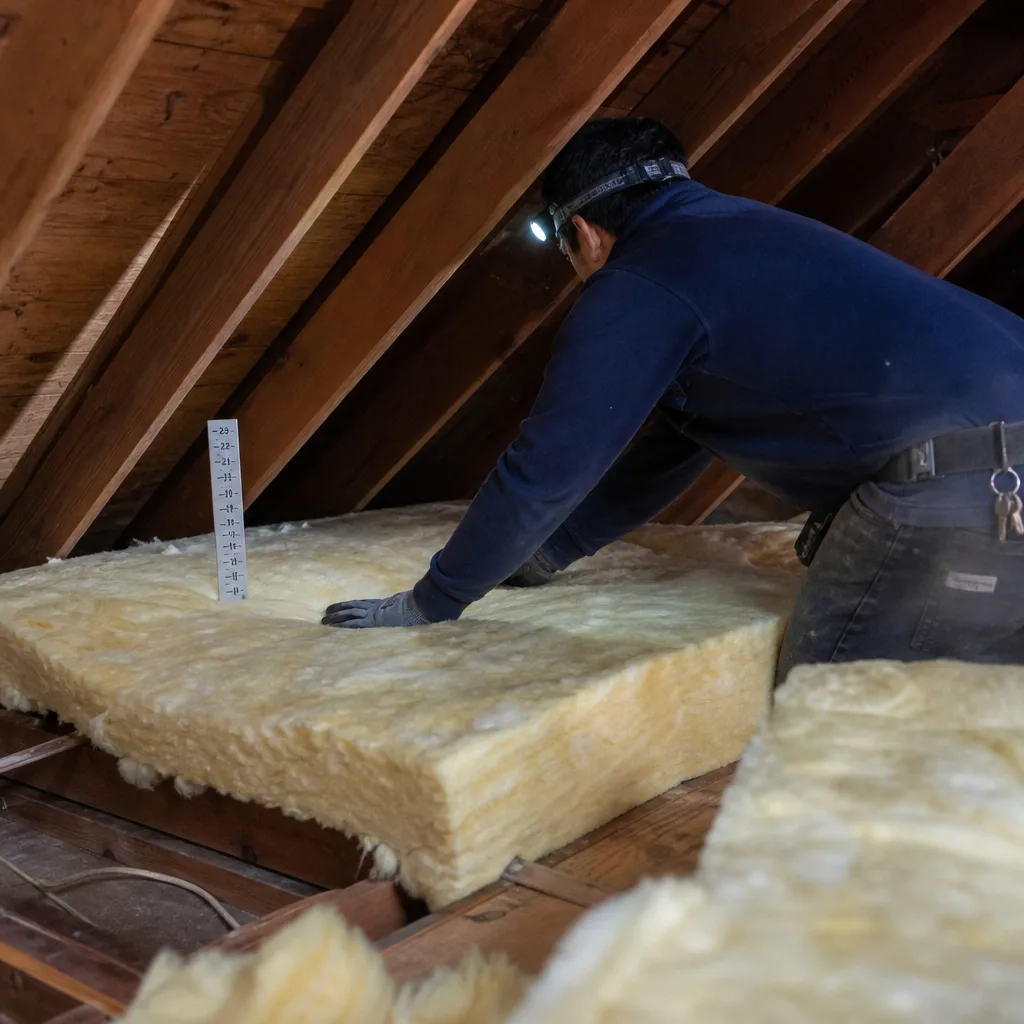
We stock materials from eight industry-leading brands, and we match the product to the specific house, not the other way around. For Long Beach’s historic bungalows with exposed rafter tails, we often use GreenFiber cellulose or Rockwool mineral wool, both of which fill irregular cavities without requiring visible structural changes. Owens Corning fiberglass batts work well in standard attics with clear joist bays and full access. Johns Manville products handle the moisture resistance needed near the coast. Because we keep inventory on hand, Long Beach homeowners aren’t waiting weeks for a special order while their attic loses heat or gains moisture.
Common Attic Insulation Problems We See in Long Beach Homes
- Knob-and-tube wiring buried under new insulation. In 1920s bungalows around Rose Park and Bluff Park, we regularly find active knob-and-tube circuits that previous owners or unqualified contractors covered with fiberglass. This creates a fire hazard that home inspectors flag and that many insurers won’t cover. We identify and map this wiring before adding any insulation.
- Marine layer moisture soaking fiberglass batts. The cool, damp air that rolls in from the Pacific condenses on attic sheathing during spring and fall nights. Standard fiberglass batts pressed against the deck trap this moisture, leading to compressed, ineffective insulation and mold on the roof boards within a single wet season.
- Zero insulation in original Craftsman attics. Many Long Beach homes were built with no attic insulation at all, just lath and plaster ceilings below open rafters. Homeowners install central air and wonder why the second floor won’t cool. The answer is usually that cool air is escaping straight through the roof.
- Ventilation added backwards after a retrofit. Well-meaning contractors install powered attic fans without sealing air leaks first, which pulls conditioned air out of the house and can actually increase energy bills. We see this mistake frequently in postwar homes near Lakewood.
Pricing for Attic Insulation in Long Beach, CA
| Service | Typical Range in Long Beach |
|---|---|
| Blown-in cellulose (1,200 sq ft attic, R-38) | $1,800 – $3,200 |
| Attic batt insulation replacement | $2,200 – $4,000 |
| Attic insulation top-up (existing partial coverage) | $900 – $1,800 |
| Attic baffles and ventilation prep | $400 – $900 |
| Attic cleaning services | $1,200 – $2,400 |
| Attic mold removal | $2,500 – $5,500 |
What moves you within these ranges? Attic accessibility is the big one. A standing-height attic with a pull-down stair takes half the time of a crawl space accessed through a closet ceiling. The condition of existing insulation matters too, removal adds labor. And historic district homes with exposed rafter tails require hand-fitting and careful depth control, which takes more time than blowing to a uniform depth in an open attic. We give you a written price before any work starts, always, with no post-job additions. Estimates are free. Call (864) 428-1615 to schedule.
We Also Serve Cities Near Long Beach
Our crews work throughout the Long Beach metro, including Long Beach itself plus Signal Hill, Carson, Seal Beach, and Lakewood. Same technician protocols, same written pricing, same 365-Day Done Right Promise apply in every city we serve. If you’re just outside Long Beach city limits, we can usually still get to you same-day or next-day.
Serving Long Beach, CA - Our Local Coverage Area
We’re based in the Long Beach area and know this community well. Use the map below to see our service coverage - if you’re nearby, we can almost certainly help.
FAQs About Attic Insulation in Long Beach
Yes. We blow insulation to a controlled depth that fills the cavity between rafters without covering the exposed tails themselves. A homeowner in Bluff Park called us about a second-floor bedroom that stayed hot despite a new HVAC system, and when our tech crawled the attic he found zero insulation between the rafters and visible rafter tails that couldn’t be obstructed. We blew in GreenFiber cellulose to an R-38 depth while keeping the rafter tails exposed and clear, then sealed the attic hatch with a weatherstripped cover to stop the marine layer from pushing damp air into the living space. The bedroom now holds temperature through August afternoons, and the homeowner passed a historic district review because nothing visible from the exterior changed. Call (864) 428-1615 if you have a similar situation.
Only after the wiring is properly evaluated and either replaced or given adequate clearance. Knob-and-tube wiring buried under blown-in insulation creates a fire hazard that inspectors flag and that voids many insurance policies. We map every circuit before adding insulation, and if we find active knob-and-tube, we’ll show you exactly where it runs and recommend a licensed electrician. We don’t bury problems. Call (864) 428-1615 for an inspection.
Yes, specifically when the wrong materials are used or ventilation is inadequate. The marine layer pushes cool, damp air against warm roof decks, creating condensation that soaks standard fiberglass batts and degrades their R-value within a season or two. Mineral wool and closed-cell foam handle this moisture better, and proper ventilation with baffles at the eaves is essential. We’ve replaced moisture-ruined batts in Belmont Shore homes that were installed just three years earlier. Call (864) 428-1615 for a material recommendation specific to your attic.
Our trucks are compact service vans, not box trucks, and our technicians are trained to navigate alley access and permit parking in dense neighborhoods like Belmont Shore and the East Village. We confirm access details when you book, and we send the technician’s name and photo so you know who’s arriving. If street parking requires a temporary permit, we’ll tell you in advance. Call (864) 428-1615 to discuss your specific access situation.
Long Beach’s mild winters and warm summers mean cooling efficiency matters more than heating, so we target R-38 to R-49 in most attics, with emphasis on air-sealing to prevent conditioned air escape. The marine layer adds a moisture-control requirement that inland cities don’t face, so vapor-smart installation matters as much as raw R-value. In historic districts with limited cavity depth, we sometimes use higher-density materials like Rockwool to achieve effective R-values in thinner spaces. Call (864) 428-1615 for a free assessment of what your specific home needs.
Written by Garrett Sloane, Owner at Aspen Attic Insulation, serving Long Beach since 2002 as part of the Threshold Group family.