
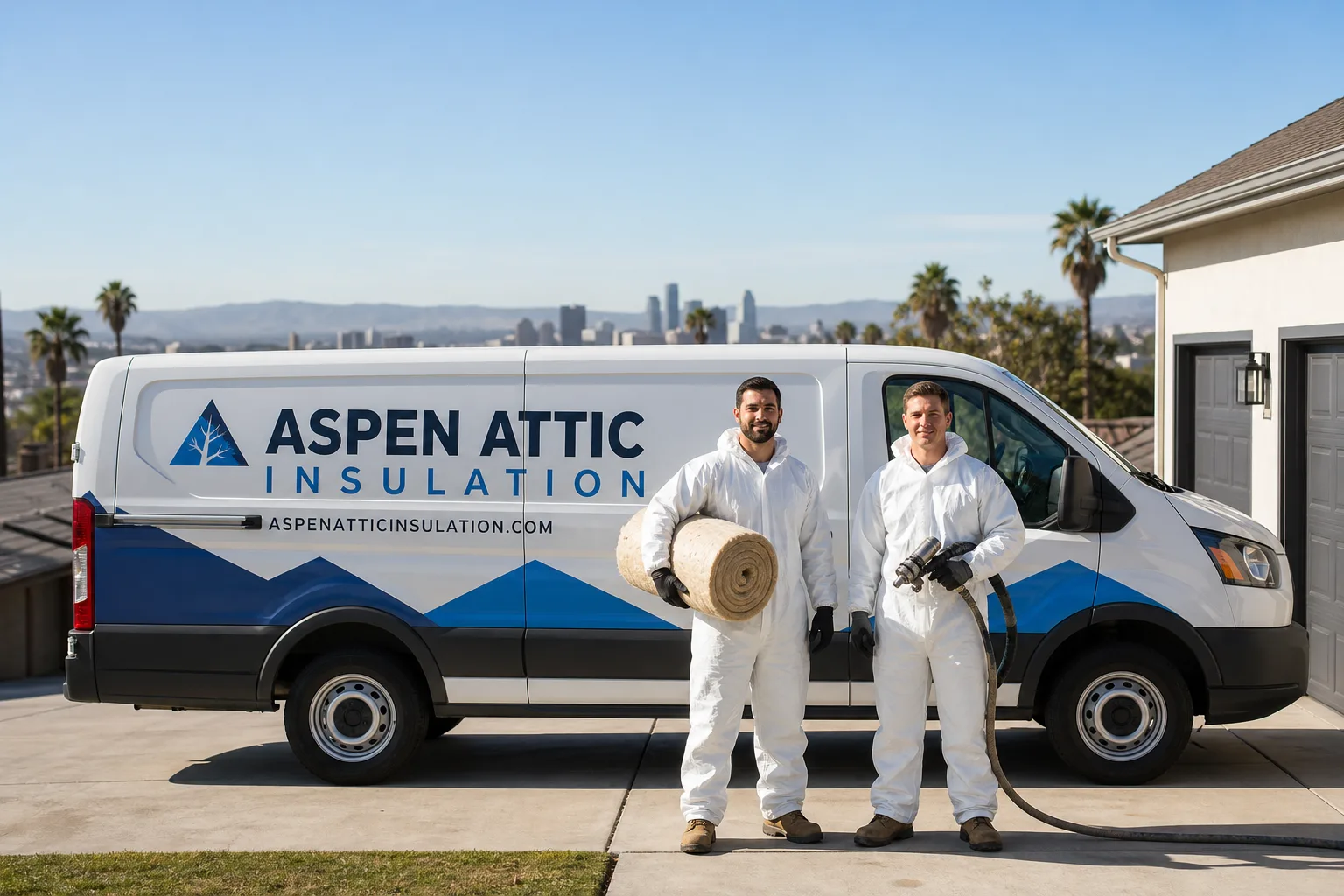
Fast, Reliable Attic Insulation Across Home Gardens
Attic insulation in Home Gardens typically costs between $1,800 and $4,500 for a full replacement, with most jobs completed in a single day and our Attic Insulation team dispatching from the Inland Empire office to reach Home Gardens within 45 minutes. We’re the local crew that knows this unincorporated county island inside out, from the 1950s tracts near the Santa Ana River to the 1970s infill closer to Corona’s border. If your upstairs rooms won’t cool down or your summer electric bills keep climbing, call (864) 428-1615. We’ll send you your technician’s name and photo before anyone knocks, and you’ll have a written price in hand before we lift a single batt.
Why Aspen Attic Insulation Is Home Gardens’s Preferred Attic Insulation Company
Home Gardens homeowners choose us because we show up prepared for what this specific pocket of Riverside County throws at attics. We’ve been part of the Threshold Group family since 2002, and our Inland Empire crews have handled enough Home Gardens jobs to know the local drill: county permits, Corona utility coordination, and attics that have been cooking since the Eisenhower administration.
Our reviews from Home Gardens customers consistently mention two things: the tech arrived exactly when promised, and the price on the invoice matched the written estimate to the dollar. No post-job add-ons, no “we found something else” surprises. That’s the Threshold Verified standard in action.
Response time to Home Gardens averages under an hour from your call, because our crews are already working the Corona-Riverside corridor. A live person answers the phone 24/7, so you’re not leaving a voicemail at 10 p.m. when your AC is running nonstop and you need someone out tomorrow morning.
We also know the neighborhood specifics. The 1960s homes off Cota Street and the river-side tracts near the Santa Ana River corridor have different attic geometries, different rodent pressures, and different permit paths than the 1980s infill closer to the 91. Our quotes reflect that local knowledge, not a one-size-fits-all square-footage formula.
Attic Ventilation in Home Gardens
Attic Ventilation in Home Gardens is non-negotiable for homes that sit in the inland Santa Ana River basin, where summer attic temperatures routinely push past 140°F and fall Santa Ana wind events pull superheated air through every ridge and soffit gap. Proper ventilation pairs with insulation; without it, even fresh R-38 batts will degrade faster as trapped heat bakes the fibers and adhesive binders. In Home Gardens, we typically see insufficient ventilation in the low-pitch gable attics built during the 1950s-70s tract boom, where original builders often skipped baffles or installed undersized ridge vents.
Baffle Installation and Soffit Clearance
We install prop-vent baffles between every truss bay to maintain a clear airflow channel from soffit to ridge, preventing fresh insulation from blocking the intake. In Home Gardens’s older tracts, we regularly find original batts stuffed tight against the eaves, choking off ventilation and creating moisture traps that compound the summer heat damage.
Ridge and Gable Vent Upgrades
When existing vents are undersized or deteriorated, we upgrade to continuous ridge vents or add screened gable vents sized to the attic’s cubic volume. This matters especially in Home Gardens, where the Santa Ana wind corridor can turn a poorly vented attic into a convection oven that forces your AC to work overtime.
Radiant Barrier in Home Gardens
Radiant Barrier in Home Gardens addresses the specific problem of inland basin heat radiating down from roof decking into living spaces, a challenge that standard batt insulation alone cannot solve. In this unincorporated county island, where summer sun pounds low-pitch gable roofs and fall Santa Ana winds supercharge attic temperatures, a properly installed radiant barrier can reduce attic heat gain by 20-30 percent. We use Galvalume-coated reflective sheeting or foil-faced OSB, installed with proper air gaps, to bounce infrared heat back toward the roof deck rather than letting it saturate your insulation and ductwork.
Retrofit in Tight Attic Spaces
Home Gardens’s 1960s tracts often have minimal headroom and crowded joist bays. Our techs staple radiant barrier to the underside of rafters rather than laying it over existing insulation, preserving the critical air gap and avoiding compression. This approach works in attics where a homeowner can barely stand upright.
Integration with Existing Insulation
Radiant barrier is not a replacement for adequate R-value; it’s a complement. In Home Gardens, we typically pair barrier installation with blown-in fiberglass or fresh batt insulation to address both radiant heat and conductive transfer. The combination handles the triple threat of river-basin sun, Santa Ana wind events, and decades of degraded original material.
Trusted Brands We Service in Home Gardens
We stock materials from eight industry-leading manufacturers, and for Home Gardens’s specific climate challenges we lean heavily on Johns Manville blown-in fiberglass for its thermal stability in extreme heat, Knauf EcoBatt for rodent-resistant formaldehyde-free applications, and Rockwool stone wool where fire resistance and density matter against Santa Ana wind infiltration. CertainTeed’s MemBrain smart vapor retarder also sees regular use in our Home Gardens jobs, where seasonal temperature swings can create condensation risks in under-ventilated attics. Because we keep these products on hand at our Inland Empire warehouse, most Home Gardens homeowners don’t wait on special orders. Your tech arrives with the right material for your specific attic condition, not whatever was left on the truck from yesterday’s job.
Common Attic Insulation Problems We See in Home Gardens Homes
- Roof-rat tunneling of original batts. The Santa Ana River corridor runs along Home Gardens’s western edge, and roof rats from that riparian habitat regularly access low-pitch gable attics. They tunnel through and compress original R-11 and R-19 batts, creating bare spots and fecal contamination that standard insulation upgrades miss if the rodent entry isn’t found first.
- HVAC and plumbing compression. Mid-century tract builders in Home Gardens ran flex duct and copper lines directly on top of attic batts. Over decades, that weight compresses insulation to a fraction of its original thickness, destroying R-value in the exact spots where conditioned air travels.
- 140°F-plus summer bake. Inland basin heat in Home Gardens pushes attic temperatures well past what coastal Orange County experiences. Standard batt adhesives break down faster here, and compressed insulation loses loft permanently once the fibers are heat-set flat.
- Santa Ana wind grit infiltration. Fall wind events drive fine dust and debris through unsealed attic penetrations, coating batt faces and degrading the vapor barrier. In Home Gardens, we find this especially in older homes with original recessed light housings and unsealed chase openings.
Pricing for Attic Insulation in Home Gardens, CA
Here’s what attic insulation costs in the Home Gardens market, based on actual quotes we’ve written in the past twelve months. Attic Insulation Top-Up with blown-in fiberglass over existing material runs $1,800 – $2,800 for a typical 1,200-square-foot single-story tract home. Full Attic Insulation Replacement, including removal of degraded batts, rodent and air-sealing check, and new R-38 blown-in or batt installation, ranges $3,200 – $4,500. Attic Batt Insulation using premium faced batts in specific joist bays costs $2,400 – $3,600 depending on accessibility. Attic Baffles & Ventilation Prep as a standalone service runs $800 – $1,400, while Radiant Barrier installation in a low-pitch gable attic typically adds $1,200 – $2,000 to any insulation package.
What moves you within these ranges: attic square footage, current insulation condition (removal adds labor), accessibility (crawl-style tracts take longer), and whether we find rodent damage requiring sealing before new material goes in. We always run that rodent and air-sealing check first in Home Gardens, given the Santa Ana River corridor pressure. Every homeowner receives a written price before any work starts. No post-job surprises, no “we found extra damage” add-ons. Call (864) 428-1615 for a free estimate and we’ll put exact numbers to your specific attic.
We Also Serve Cities Near Home Gardens
Our Inland Empire crews handle Attic Insulation in Home Gardens as our local focus, and we also dispatch to Los Angeles, San Diego, San Jose, and San Francisco through the Threshold Group network. Each location operates independently with the same Threshold Verified technician protocols: background-checked, photo-badged, name-and-photo sent before arrival, written price before work begins, and the 365-Day Done Right Promise on every job.
Serving Home Gardens, CA - Our Local Coverage Area
We’re based in the Home Gardens area and know this community well. Use the map below to see our service coverage - if you’re nearby, we can almost certainly help.
FAQs About Attic Insulation in Home Gardens
You’ll need a Riverside County permit because Home Gardens is unincorporated county territory, even though Corona surrounds it on all sides. Corona’s utility territory and any applicable HOA rules may also affect your project, especially if you’re upgrading electrical for a powered attic vent. Call (864) 428-1615 and we’ll walk you through which jurisdiction applies to your specific address, estimates are free.
Your attic likely sits closer to the Santa Ana River corridor, which serves as a highway for roof rats moving between riparian habitat and residential rooflines. The 1960s river-side tracts off Cota Street and similar streets see this pattern repeatedly. Corona homes farther from the corridor experience less rodent pressure. We start every Home Gardens quote with a rodent and air-sealing check for exactly this reason.
We regularly measure attic temperatures above 140°F in Home Gardens’s low-pitch gable attics during July and August, significantly hotter than coastal Orange County attics. That sustained heat degrades batt adhesives and permanent-presses compressed insulation flat. Radiant barrier and proper ventilation are essential here, not optional upgrades.
Yes. Santa Ana wind events drive hot, dry air and fine grit through unsealed attic penetrations, which degrades unprotected batt faces and forces dust infiltration into living spaces. In Home Gardens, we specify sealed-face batts or blown-in products without exposed kraft paper, and we emphasize air-sealing around recessed lights, chase openings, and top plates before installing new material.
Absolutely. We staple radiant barrier to rafter undersides rather than laying it over joists, preserving the critical air gap even in attics with minimal headroom. On that 1963 river-side tract off Cota Street, our tech opened a low-pitch gable attic and found the original R-11 batts tunneled and flattened by roof rats coming off the Santa Ana River corridor, with compressed batts pressing against a bed of HVAC flex duct. We pulled the fouled insulation, ran a rodent and air-sealing check first, then reinstalled Owens Corning batts to a full depth plus Galvalume radiant barrier, dropping afternoon attic temps well off the 140°F-plus the basin hits in summer. Most Home Gardens retrofits of this type run $3,400 – $5,500 depending on attic size and condition. Call (864) 428-1615 for a written quote.
Ready to fix your Home Gardens attic? Call (864) 428-1615 now. A live person will answer, schedule your free estimate, and send you your technician’s name and photo before anyone arrives at your door. You’ll get a written price before we start, and our 365-Day Done Right Promise covers every job in writing.
Written by Garrett Sloane, Owner at Aspen Attic Insulation, serving Home Gardens and the Inland Empire.