
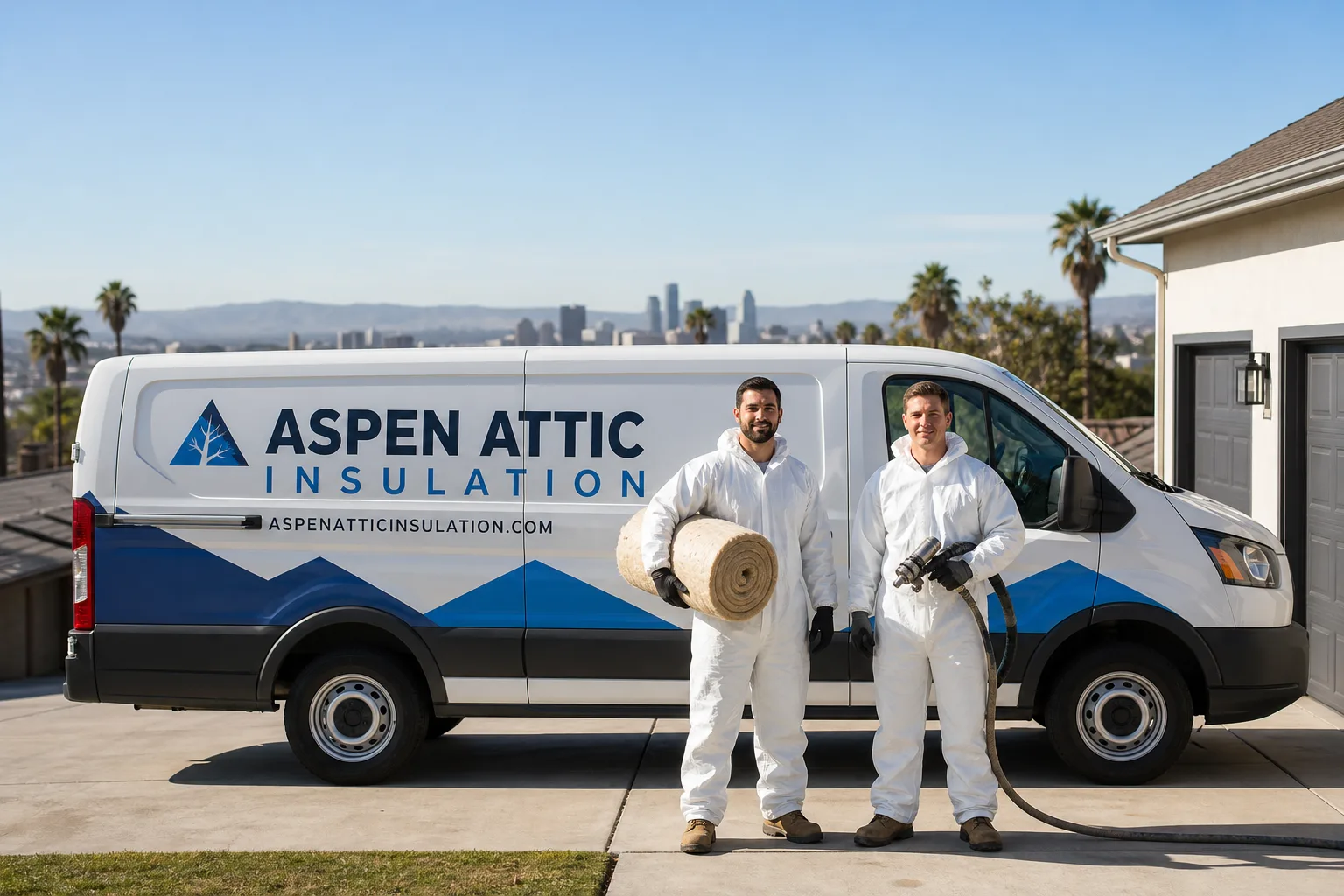
Fast, Reliable Attic Insulation Across Crestline
Most Crestline homes sit between 4,500 and 5,500 feet in the San Bernardino Mountains, where January lows hit 28°F and summer days push into the 90s. If your upstairs bedroom won’t hold heat or your cooling bills spike in July, the problem usually starts in the attic. Our crews drive Crestline regularly from the Inland Empire office, and we know the difference between a down-the-hill insulation job and what a mountain cabin actually needs. Call (864) 428-1615 for a free written estimate, or keep reading to see what your 1940s – 1970s home is up against.
Why Aspen Attic Insulation Is Crestline’s Preferred Attic Insulation Company
We’ve been insulating mountain homes since 2002 as part of the Threshold Group family, and Crestline’s mid-century cabins are a specialty we didn’t choose, they chose us. Homeowners here keep calling because we send a technician’s name, photo, and written price before anyone knocks. That’s The Threshold Standard, and it matters in a town where many residents are retired, home alone, or raising young kids and want to know exactly who’s walking up their driveway.
Our response time to Crestline typically runs same-day or next-day for standard calls, and we carry materials from eight brands including Owens Corning, Johns Manville, and GreenFiber so we’re not making a second trip because the warehouse only stocks one product. Every job carries our 365-Day Done Right Promise in writing. If the repair fails, we come back free.
Attic Ventilation in Crestline
Attic Ventilation in Crestline is not an add-on, it’s survival gear for a mountain roof system. The combination of heavy winter snowpack, freeze-thaw cycles, and summer heat buildup in unvented 1950s – 60s cabins creates condensation that rots roof decks and drives ice dams at the eaves. Proper ventilation pairs with insulation, it doesn’t replace it. In Crestline, we typically see ventilation problems in the original Lake Gregory and Crestline Village cabins where kneewall spaces or unvented rafter bays were never designed for year-round occupancy.
Signs Your Cabin Needs Better Airflow
Ice dams along the north slope in January, water stains on the ceiling after a thaw, or a musty attic smell in March all point to trapped moisture. We inspect soffit vents, ridge vents, and any blocked gable vents before adding insulation, because burying a wet attic in new material makes it worse. A typical attic ventilation assessment and correction in Crestline runs $400 – $900, depending on how many intake and exhaust points need opening or adding.
Baffles and Sealed Cavities
When we blow cellulose or spray foam into Crestline’s unvented rafter bays, we install baffles to maintain a continuous air channel from soffit to ridge. Without them, the new insulation blocks airflow and you’re back to condensation in two winters. Our crews factor in snow load depth and wildfire ember exposure when choosing vent types, because standard San Bernardino specs don’t account for either.
Radiant Barrier in Crestline
Radiant Barrier in Crestline pays for itself fastest on south- and west-facing roofs where summer sun pounds the attic to 140°F or higher. A radiant barrier is a reflective layer, usually stapled to the underside of the roof deck or laid over existing insulation, that blocks radiant heat transfer rather than slowing conduction like fiberglass or cellulose. In Crestline’s mountain climate, it cuts cooling load in July and August when the sun is intense at elevation and many cabins lack central air.
When to Pair Barrier with Insulation
We recommend radiant barrier on homes with good existing insulation that still run hot upstairs, or on metal and tile roofs common in the 1960s builds around Lake Gregory Drive. It does not replace R-value, it complements it. A typical radiant barrier installation in Crestline runs $1.20 – $2.00 per square foot of attic floor, or $1,500 – $3,200 for a standard 1,200-square-foot cabin attic.
Wildfire Ember Zone Considerations
Crestline sits in a wildfire ember zone, so we use Class A fire-rated radiant barrier products and avoid any material that could trap embers or off-gas under extreme heat. Our Owens Corning and Johns Manville radiant barrier lines are tested for this exact application, and we document the rating on every written proposal.
Trusted Brands We Service in Crestline
We stock materials from eight industry-leading brands, and for Crestline’s mountain climate we most often reach for GreenFiber blown-in cellulose, Owens Corning fiberglass when batt replacement makes sense, and Johns Manville mineral wool for fire-resistant applications in ember zones. Having multiple brands on the truck means we match the product to your specific roof structure, not just what the distributor had in stock. For Crestline homeowners, that translates to faster completion and no “we’ll be back next week” delays because the warehouse is down the hill in San Bernardino.
Common Attic Insulation Problems We See in Crestline Homes
- Sagged fiberglass batts in kneewall attics. The 1950s – 60s cabins along Lake Gregory and Crestline Village were built with fiberglass batts in unvented kneewalls. Two or three cycles of heavy snow load plus summer heat, and those batts collapse to the joists, delivering R-11 in name only while ice dams form at the eaves.
- Moisture-trapping unvented roof assemblies. Original weekend cabins had no reason to vent the attic, they were closed up all winter. Converted to year-round use without adding airflow, those same cavities trap condensation that freezes on the roof deck and drips back down in spring.
- Old wiring buried under new insulation. Mid-century Crestline cabins still run knob-and-tube or early Romex that gets hot. Adding blown insulation over it without air sealing or code-compliant clearance creates a fire risk and fails inspection if you ever sell.
- Floor joists over uninsulated crawl spaces. Many Crestline single-story homes have 2×4 walls and minimal attic insulation, but the real heat loss is often through the floor. Cold air pulls up from vented crawl spaces while the wood stove works overtime.
Pricing for Attic Insulation in Crestline, CA
We give every Crestline homeowner a written price before any work starts. No post-job surprises, no “it turned out to be more complicated” add-ons. Based on our 2024 – 2025 Crestline jobs, here is what typical work runs:
| Service | Typical Range in Crestline |
|---|---|
| Attic insulation top-up (blown cellulose over existing) | $1.80 – $3.50 per sq ft |
| Full attic insulation replacement (remove old, air seal, new blown-in to R-49) | $3.50 – $6.00 per sq ft |
| Attic batt insulation (new construction or accessible joist bays) | $2.00 – $4.00 per sq ft |
| Spray foam insulation (open-cell, unvented rafter bays) | $4.00 – $7.50 per sq ft |
| Attic baffles and ventilation prep | $400 – $900 total |
| Radiant barrier installation | $1.20 – $2.00 per sq ft |
A typical 1,200-square-foot Crestline cabin attic, full replacement with air sealing and blown cellulose to R-49, lands between $4,200 and $7,200. Factors that push toward the higher end: kneewall demolition, old batt removal, wiring remediation, or spray foam in unvented rafters. Call (864) 428-1615 for your exact number, estimates are free.
We Also Serve Cities Near Crestline
Our Inland Empire crews insulate attics across the San Bernardino Mountains and foothills. We regularly work in Crestline, Lake Arrowhead, Highland, San Bernardino, and Running Springs. If you’re between these towns or own a cabin off a forest service road, call us, we likely already know the driveway.
Serving Crestline, CA - Our Local Coverage Area
We’re based in the Crestline area and know this community well. Use the map below to see our service coverage - if you’re nearby, we can almost certainly help.
FAQs About Attic Insulation in Crestline
Crestline sits 3,000 feet higher, with winter lows 10 – 15 degrees colder and heating degree-days that demand R-49 in attics versus R-38 down the hill. The 4,500 – 5,500 foot elevation line also means snowpack sits on the roof for weeks, so insulation must work with ventilation and moisture control, not just thickness. Call (864) 428-1615 and we’ll measure your current R-value on the spot.
Yes, but only with spray foam or a carefully air-sealed blown-in system paired with baffles or conditioned attic conversion. Standard vented-attic specs from San Bernardino will trap moisture here. Our Attic Insulation crews assess every unvented cavity for existing condensation before recommending a strategy. The written price includes the moisture-management details.
Yes, and it’s non-negotiable. Knob-and-tube and early Romex need visible clearance and often replacement before insulation covers them. We coordinate with licensed electricians when needed, and we never bury hot wiring under new material. The condition of your attic wiring is checked during our free estimate visit.
The freeze-thaw cycle plus summer heat in unvented or kneewall spaces breaks down the fiberglass binder and lets gravity pull the batts off the ceiling. Snow load on the roof accelerates the compression. That’s why our crews in Crestline default to blown-in cellulose or spray foam, materials that don’t sag and that fill irregular cavities the batts never sealed. We removed collapsed batts from a 1962 A-frame off Lake Gregory Drive where the original R-11 had fallen to the joists, then blew in GreenFiber cellulose to R-49 with proper baffles, the upstairs bedroom finally held heat through January’s 28°F lows.
A radiant barrier pays back fastest on south- and west-facing roofs with poor summer cooling, common in 1960s Crestline cabins converted to year-round use. It does not replace insulation R-value, it blocks radiant heat gain that drives attic temperatures to 140°F in July. We evaluate roof orientation and existing insulation during every estimate, and we only recommend it when the math works for your specific home. Call (864) 428-1615 for a free assessment.
Ready to stop heating the sky above Crestline? Call Aspen Attic Insulation at (864) 428-1615. A live person answers 24/7. We’ll send you a technician’s name and photo before the visit, deliver a written price before any work starts, and back every job with our 365-Day Done Right Promise in writing.
Written by Garrett Sloane, Owner at Aspen Attic Insulation, serving Crestline and the San Bernardino Mountains since 2002.