
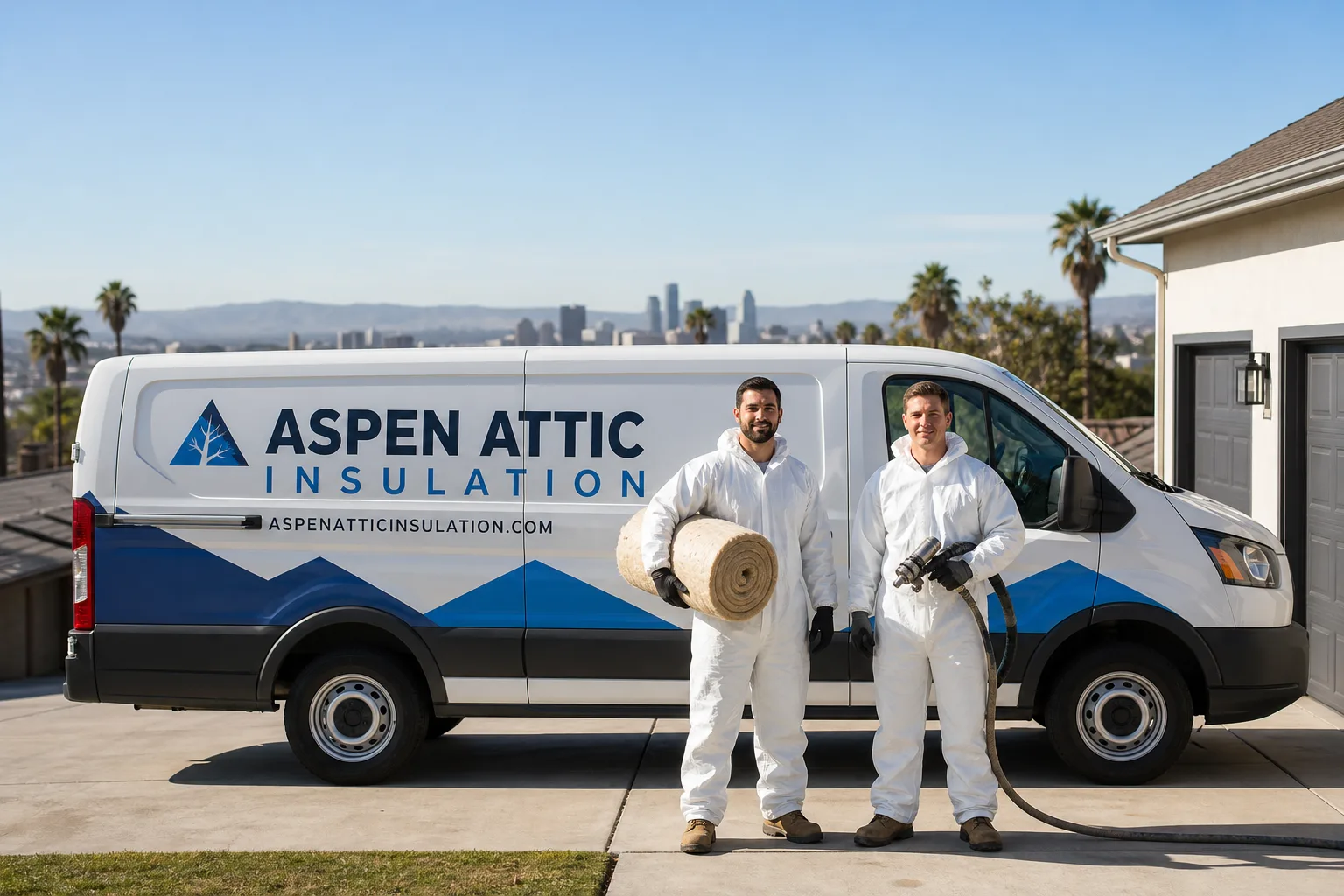
Fast, Reliable Attic Insulation Across Alpine
Attic insulation in Alpine, CA typically costs $1,800 – $4,500 for a full replacement and $800 – $2,200 for a top-up or partial upgrade, with most jobs completed in one day. Alpine’s 1,800-foot elevation and extreme day-night temperature swings demand insulation that slows afternoon heat gain and holds warmth through cold mountain nights, a combination coastal San Diego homes never face. We’re the Attic Insulation team at Aspen, and our crews serve Alpine from our San Diego dispatch office with same-day scheduling available. Call (864) 428-1615 for a free written estimate.
Alpine homeowners know the drill: 95°F by mid-afternoon, then 50-something by dawn. That 40°F+ swing punishes attics with poor insulation. We’ve worked ranch homes off Alpine Boulevard, custom estates in the Cuyamaca foothills, and ADUs tucked behind properties near Tavern Road. Each one needed something different because Alpine’s housing stock and climate create specific failure patterns you won’t find in El Cajon or Santee.
Why Aspen Attic Insulation Is Alpine’s Preferred Attic Insulation Company
We’ve built our reputation in Alpine on two things: showing up as promised and putting every price in writing before any work starts. Our 365-Day Done Right Promise covers labor and materials in writing, with a free second visit if anything fails. That matters here because Alpine’s climate is unforgiving, and insulation that underperforms shows up fast on your SDG&E bill.
Every technician we send to Alpine is background-checked, identity-verified, and arrives in a clean marked uniform with a photo ID badge. You’ll get their name and photo before they knock. If anyone else shows up, the visit is free and we make it right. That’s The Threshold Standard, and it’s how we’ve operated since 2002 as part of the Threshold Group family.
Calls are answered by a live person 24/7. No voicemail loops, no “we’ll call you back tomorrow.” When your upstairs bedrooms won’t hold heat or your AC runs nonstop through August afternoons, you need a human who can schedule a crew.
Attic Ventilation in Alpine
Attic Ventilation in Alpine is critical because the same 40°F+ diurnal temperature swing that stresses your insulation also traps moisture in poorly ventilated attic spaces. During cool, wet winters, condensation forms on roof decks when warm interior air meets cold surfaces; in summer, stagnant attic air can exceed 140°F, cooking your shingles from underneath and forcing your AC to fight harder. A typical attic ventilation assessment and upgrade in Alpine runs $600 – $1,800 depending on existing soffit and ridge vent configuration.
Ember-Resistant Vent Integration
Many Alpine homes rebuilt after the 2003 and 2007 wildfires received ember-resistant vents, but we’ve found these are often partially blocked by compressed insulation or installed without adequate intake airflow. We clear the obstructions and balance intake with exhaust so the vents protect against fire without suffocating the attic.
Moisture Management for Unvented Attics
Unvented attic assemblies are common in newer Alpine custom builds and some rebuilds. These need mechanical ventilation or carefully managed conditioned air, not the passive venting that works in coastal climates. We evaluate the assembly type before recommending any changes because getting this wrong invites mold during Alpine’s wet winter months.
Radiant Barrier in Alpine
Radiant Barrier in Alpine addresses a specific problem: afternoon solar gain on south- and west-facing roof decks that can push attic temperatures 30 – 40°F above ambient air. At Alpine’s elevation, UV intensity is higher than at sea level, and dark roofing materials absorb that energy all day. A properly installed radiant barrier can reduce attic heat gain by 20 – 30%, which directly cuts cooling runtime. Typical radiant barrier installation in Alpine runs $1,200 – $2,800 for a standard ranch home, depending on attic accessibility and whether we’re retrofitting or installing during new construction.
Roof Deck vs. Rafter Installation
We install radiant barrier directly to the roof deck when the attic is accessible and we can staple or spray-adhere the material for full contact. In tighter Alpine attics with limited headroom, we attach it to the underside of rafters instead. Both methods work, but deck-mounted barriers perform better because they block heat before it enters the attic cavity.
Pairing with Insulation, Not Replacing It
A radiant barrier is not a substitute for adequate R-value. In Alpine, we specify it as part of a system: R-38 to R-49 of blown-in cellulose or fiberglass below, radiant barrier above, and air-sealed top plates to stop convection. One without the others leaves you with hot spots and cold drafts.
Trusted Brands We Service in Alpine
We stock materials from eight industry-leading brands so we match the product to your specific Alpine home, not force what’s on the truck. For attic work in this market, we most often reach for Owens Corning fiberglass batts and blown-in systems, Johns Manville formaldehyde-free insulation for homeowners with chemical sensitivities, and Knauf EcoBatt with ECOSE technology for consistent density in blown applications. Rockwool comes out when we need fire resistance and sound dampening in ADU or workshop attics. We keep these materials on hand at our San Diego warehouse, so Alpine jobs rarely wait for special orders.
Common Attic Insulation Problems We See in Alpine Homes
- Compressed rebuild-era fiberglass at eaves and vents. After the 2003 and 2007 wildfires, many Alpine homes were reinsulated with fiberglass batts that installers compressed around ember-resistant vents or stuffed into tight eave spaces. Compressed fiberglass loses up to 50% of its R-value, creating hot spots that show up as uneven room temperatures and spiking summer electric bills.
- Rodent-tunneled spray foam in unvented attics. Custom ranch estates in the Cuyamaca foothills often used Icynene or Demilec spray foam for its air-sealing properties, but Alpine’s rural interface means mice and roof rats find their way in. They tunnel through foam, creating pathways for air and moisture that defeat the insulation’s purpose and leave telltale droppings and compressed trails.
- Condensation on roof decks during wet winters. Alpine’s cool, wet season brings occasional snow and prolonged periods of 40 – 50°F damp weather. Unvented attics with settled or damaged insulation allow warm, moist interior air to contact cold roof sheathing. We’ve found mold staining on the deck in homes where the insulation had compressed to R-19 or below in spots.
- Disconnected baffles and blocked soffit intake. Older ranch homes from the 1970s – 1990s often have original cardboard or thin plastic baffles that have collapsed or been knocked aside by storage activity or wildlife. Without functioning baffles, blown-in insulation slides into the eave and blocks soffit vents, choking airflow and creating the very ice-dam and moisture conditions ventilation is meant to prevent.
Pricing for Attic Insulation in Alpine, CA
Here’s what attic insulation costs in Alpine’s market, based on the homes we work on:
| Service | Typical Range in Alpine |
|---|---|
| Attic insulation top-up (add to existing) | $800 – $2,200 |
| Full attic insulation replacement | $1,800 – $4,500 |
| Blown-in cellulose or fiberglass (standard ranch) | $1,400 – $3,200 |
| Spray foam insulation (unvented attic, open-cell) | $2,800 – $6,500 |
| Radiant barrier installation | $1,200 – $2,800 |
| Attic ventilation upgrade | $600 – $1,800 |
| Attic baffles and air sealing prep | $400 – $1,100 |
What moves the price: attic square footage, current insulation condition and removal needs, accessibility (cathedral ceilings and tight scuttles add labor), and whether we’re air-sealing top plates and penetrations before insulating. Homes with rodent damage need cleanup and sanitization before new material goes in. We put your exact price in writing before any work starts. No post-job surprises, no “we found something extra.” Call (864) 428-1615 for a free estimate.
We Also Serve Cities Near Alpine
Our crews work throughout East County, including Alpine and neighboring Jamul, Lakeside, El Cajon, and Santee. Each community has its own insulation challenges, from Jamul’s canyon wind exposure to Santee’s warmer valley floor, and we adjust our recommendations accordingly. Scheduling and dispatch are coordinated from our San Diego office for efficient routing across the region.
Serving Alpine, CA - Our Local Coverage Area
We’re based in the Alpine area and know this community well. Use the map below to see our service coverage - if you’re nearby, we can almost certainly help.
FAQs About Attic Insulation in Alpine
Alpine’s 1,800-foot elevation produces day-night temperature swings of 40°F or more, so insulation here must resist heat flow in both directions. Coastal San Diego installs only worry about slowing heat gain; your attic has to perform at 3 p.m. and 3 a.m. We specify higher R-values and often combine dense-pack cellulose with radiant barrier to handle the dual mandate. Call (864) 428-1615 and we’ll assess what your specific home needs.
Maybe, but we’ve found problems in many rebuilt Alpine homes. Ember-resistant vents were often installed with insulation compressed around them, and the original batts may have been disturbed by wildlife or settling over 15 – 20 years. We offer free inspections that check R-value, compression, and vent clearance. If the insulation is compromised, we’ll show you exactly where and give you a written price to fix it.
Yes. Unvented attics rely on the insulation and air barrier at the roof deck rather than at the ceiling plane, and they need careful moisture management because Alpine’s cool, wet winters can drive condensation against cold sheathing. We typically recommend spray foam or dense-pack cellulose with continuous air sealing for unvented assemblies, not the vented-attic approach of blowing loose fill over a ceiling. Get the wrong strategy and you risk mold.
ADUs and workshops often have different construction types, HVAC systems, and occupancy patterns than the main house, so they need separate assessment. Many Alpine ADUs have shallow roof pitches or cathedral ceilings that limit insulation depth, and detached structures may lack the air sealing that comes naturally with attached construction. We evaluate each structure independently and specify materials like Rockwool where fire separation is required by code. Call (864) 428-1615 for a full-property estimate.
It makes sense for most south- and west-facing roof sections in Alpine. The combination of high elevation, intense UV, and dark roofing materials creates attic heat gain that exceeds what you’d see in coastal San Diego. A radiant barrier isn’t overkill; it’s a targeted tool that reduces the load your insulation and AC must handle. We don’t recommend it on north-facing slopes or in heavily shaded areas where the payback is longer. We’ll tell you honestly whether it’s worth it for your specific roof.
Ready to fix your Alpine attic? Call Aspen Attic Insulation at (864) 428-1615 for a free written estimate. We’ll send you the technician’s name and photo before they arrive, put the full price in writing before any work starts, and back every job with our 365-Day Done Right Promise.
Written by Garrett Sloane, Owner at Aspen Attic Insulation, serving Alpine and East County San Diego.