
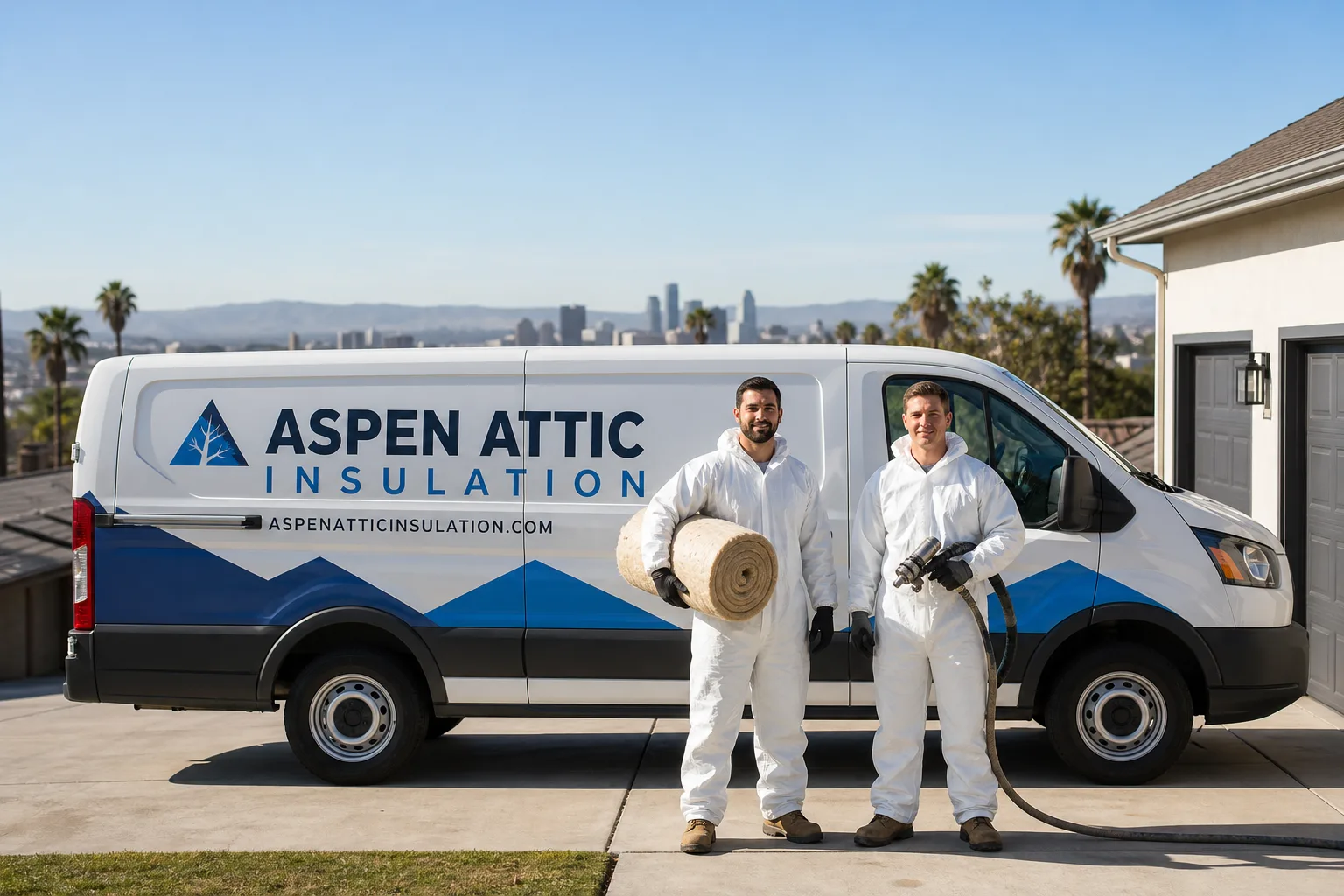
Fast, Reliable Blown In Insulation Across Banning
Blown-in insulation in Banning, CA typically runs $1.80 – $3.20 per square foot installed, with most attic jobs falling between $1,400 and $2,800 depending on existing conditions and the air-sealing work required first. We’re usually on-site in Banning within 24 – 48 hours of your call, and same-day estimates are common. Call (864) 428-1615 to schedule yours.
We’ve worked in Banning long enough to know the Pass wind doesn’t just rattle your windows. It strips insulation off the windward side of your attic and piles it in the corner. Our crews serve Banning from our Inland Empire dispatch office, and we’ve handled everything from mid-century stucco tracts near downtown to newer builds in the Sun Lakes and foothills areas. We don’t treat Banning like any other Inland Empire town because it isn’t.
Why Aspen Attic Insulation Is Banning’s Preferred Blown In Insulation Company
Banning homeowners call us because we put a name, face, and written price on every job before anyone knocks. Garrett Sloane built this operation on the Threshold Standard, and that means our Blown In Insulation team arrives with background-checked, photo-badged technicians in clean marked uniforms. You’ll get the tech’s name and photo sent to your phone before the visit. If anyone else shows up, the visit is free and we make it right.
Our 365-Day Done Right Promise covers every job in writing. Labor and materials, 365 days. If a repair fails, we come back free. No call-back windows, no voicemail loops. A live person answers our phone 24/7.
We know Banning’s housing stock. The mid-century and 1970s-80s stucco tracts around downtown and the west side. The newer Sun Lakes developments. The foothills homes catching full Pass wind. Each has different envelope problems, and we don’t quote until we’ve seen what we’re dealing with.
Blown In Fiberglass Insulation in Banning
Blown In Fiberglass Insulation in Banning works best for homeowners whose attics need high R-value with minimal settling over time, especially in the older stucco-and-frame homes that dominate the downtown and west side. We blow virgin fiberglass from brands like Johns Manville and Knauf into the attic cavity at a consistent depth, using baffles and retention strategies to keep it from scouring off the windward side under Pass winds. A typical blown-in fiberglass job in Banning runs $1.60 – $2.80 per square foot, with full attic retrofits on 1,200-square-foot homes landing around $1,900 – $3,400 depending on prep work.
When Fiberglass Makes Sense
Fiberglass doesn’t absorb moisture, which matters in Banning’s brutally hot attics where duct sweating and occasional winter condensation hit unsealed envelopes. It also holds its R-value longer than cellulose in wind-exposed conditions. We specify it for west-side and foothills homes catching the full force of San Gorgonio Pass winds.
Installation and Air Sealing Together
We never blow fiberglass over an unsealed attic. Our crew seals top plates, electrical and plumbing penetrations, and duct boots with Icynene spray foam first. Then we install the fiberglass. This sequence matters in Banning more than almost anywhere else in the Inland Empire.
Loose Fill Insulation in Banning
Loose Fill Insulation in Banning is the right call for homeowners who need to fill irregular joist cavities, cover existing uneven insulation, or achieve high density at a lower per-square-foot cost than batts. We blow cellulose and mineral wool loose-fill from brands like Rockwool and GreenFiber into attics at depths calculated for Banning’s climate zone, typically R-38 to R-49 for ceiling assemblies. A loose-fill job in Banning typically runs $1.40 – $2.60 per square foot installed, with most retrofits between $1,400 and $2,600.
Cellulose and Mineral Wool Options
GreenFiber cellulose gets treated with borate fire retardant and performs well in Banning’s dry climate. Rockwool mineral wool won’t burn, won’t absorb water, and adds sound dampening. We stock both and match the material to your specific attic conditions, not just what we have on the truck.
Holding Depth in Wind-Exposed Attics
Loose-fill can scour in Pass winds without proper baffling and air sealing. We install cardboard or synthetic baffles at eaves and windward ridges, then verify depth with attic rulers after blowing. This prevents the pile-in-the-corner problem we see on too many west-side Banning jobs.
Trusted Brands We Service in Banning
We carry materials from eight industry-leading brands, and we keep Johns Manville, Knauf, Rockwool, and CertainTeed blown-in products stocked for Banning jobs specifically. This means no waiting on a special order when your attic is hitting 140°F and your cooling bill is climbing. We match the material to your home’s construction and your budget, not force a one-size-fits-all product because it’s what we have. Every bag is verified authentic, installed to manufacturer spec, and covered under our 365-Day Done Right Promise.
Common Blown In Insulation Problems We See in Banning Homes
- Wind scour on the windward side. San Gorgonio Pass winds hit 30 – 60 mph sustained through the I-10 corridor, stripping loose-fill off west-side attic slopes and piling it in leeward corners. Homeowners think they have enough insulation; they actually have bare drywall on one side and a drift on the other.
- Unsealed top plates letting conditioned air escape. Banning’s older stucco-and-frame homes were built with minimal exterior sheathing. Air blows straight through unsealed top plates and electrical penetrations. Adding R-value without sealing these gaps is like pouring water into a cracked bucket.
- Ductwork sweating and leaking in unsealed attics. Ducts routed through 140°F Banning attics lose cooling capacity before air reaches your registers. Blown-in insulation over unsealed ducts just buries the leak. We seal first, then insulate.
- Original low-R-value insulation past its useful life. Many Banning homes still carry the insulation they were built with in the 1960s, 70s, or 80s. It’s compressed, settled, and often insufficient for current Title 24 standards. We assess what’s there and build a real retrofit plan.
Pricing for Blown In Insulation in Banning, CA
A typical blown-in insulation job in Banning runs $1,400 – $2,800 for a standard single-story attic in the 1,000 – 1,500 square foot range. Here’s how that breaks down:
- Attic air sealing (top plates, penetrations, duct boots): $400 – $800
- Blown-in fiberglass or loose-fill insulation, R-38 to R-49: $1.40 – $2.80 per square foot
- Duct sealing in attic (when needed): $300 – $600
- Baffles and wind-retention measures: $150 – $350
What drives cost up: extensive air sealing needed in older homes, removal of contaminated or fire-damaged existing insulation, ductwork repairs, or hard-to-access attics. What keeps cost down: clean attics with good access and minimal prep. We give you a written price before any work starts. No post-job surprises, ever. Estimates are free. Call (864) 428-1615.
We Also Serve Cities Near Banning
Our crews work throughout the Pass and surrounding communities. We handle blown-in insulation in Banning proper plus Beaumont, Calimesa, San Jacinto, and Yucaipa. Each has its own climate and construction patterns, and we adjust our approach accordingly.
Serving Banning, CA - Our Local Coverage Area
We’re based in the Banning area and know this community well. Use the map below to see our service coverage - if you’re nearby, we can almost certainly help.
FAQs About Blown In Insulation in Banning
San Gorgonio Pass winds scour loose-fill off windward attic slopes and pile it in leeward corners, leaving bare drywall exposed. This doesn’t happen in calmer inland towns. We prevent it with proper baffles, retention strategies, and air sealing before blowing. Call (864) 428-1615 for a free assessment of your attic’s wind exposure.
Yes, nearly always. Banning’s stucco-and-frame construction with minimal exterior sheathing means conditioned air escapes through unsealed top plates and penetrations. Adding insulation without sealing first wastes money. We air-seal with Icynene spray foam, then blow in your insulation. Call (864) 428-1615 for an estimate.
Only after the ducts are sealed. Unsealed ducts in a 140°F attic leak cooled air before it reaches your rooms. Burying them in insulation hides the problem. We seal duct boots and seams first, verify with a pressure test when needed, then insulate over. Call (864) 428-1615 to schedule.
Fiberglass from Johns Manville or Knauf for wind resistance and moisture tolerance. Rockwool or GreenFiber loose-fill for fire resistance and density. The right choice depends on your specific attic conditions, which we assess before recommending. Call (864) 428-1615 to talk through your options.
We inspect the attic for existing insulation condition, wind scour patterns, and unsealed penetrations. We air-seal top plates and penetrations with spray foam, seal duct runs if present, install baffles for wind retention, then blow in insulation at consistent depth to R-38 or R-49. Most jobs take one day. Call (864) 428-1615 for a free written estimate.
On a 1970s stucco tract home off West Ramsey Street near the I-10 corridor, our crew found the original loose-fill insulation scoured down to bare drywall on the windward side of the attic – Pass winds had been blowing it into the leeward corner for years. We air-sealed the top plates and plumbing/electrical penetrations with Icynene spray foam, sealed the duct runs routed through the 140°F attic, then blew in GreenFiber loose-fill at a consistent depth with baffles to hold it against wind scour. The homeowner stopped losing conditioned air through the envelope and the ducts stopped sweating in summer.
Banning sits at the wind-scoured San Gorgonio Pass, where sustained 30-60 mph winds and extreme summer heat hit homes on the mesa and foothills simultaneously, so insulation work here is really about sealing the building envelope against blow-through air infiltration before R-value even matters – a priority that’s nearly inverted from nearby Palm Springs or Beaumont. Much of the housing stock is older and under-insulated, meaning a Banning job often combines attic air-sealing, duct sealing, and added R-value in one visit to keep up with the Pass’s wind-driven energy loss. Stucco-and-frame construction with minimal exterior sheathing means this air sealing happens from the attic and interior, not from outside, because there’s no sheathing to seal against. Local techs know that Banning homes on the windward west side near the I-10 corridor routinely lose attic insulation to wind scour and blow-through, so blanket-batt jobs get re-done unless they’re secured and the envelope is sealed first – a Pass-wind failure mode you don’t see in calmer inland towns.
Written by Garrett Sloane, Owner at Aspen Attic Insulation, serving Banning since 2002.