
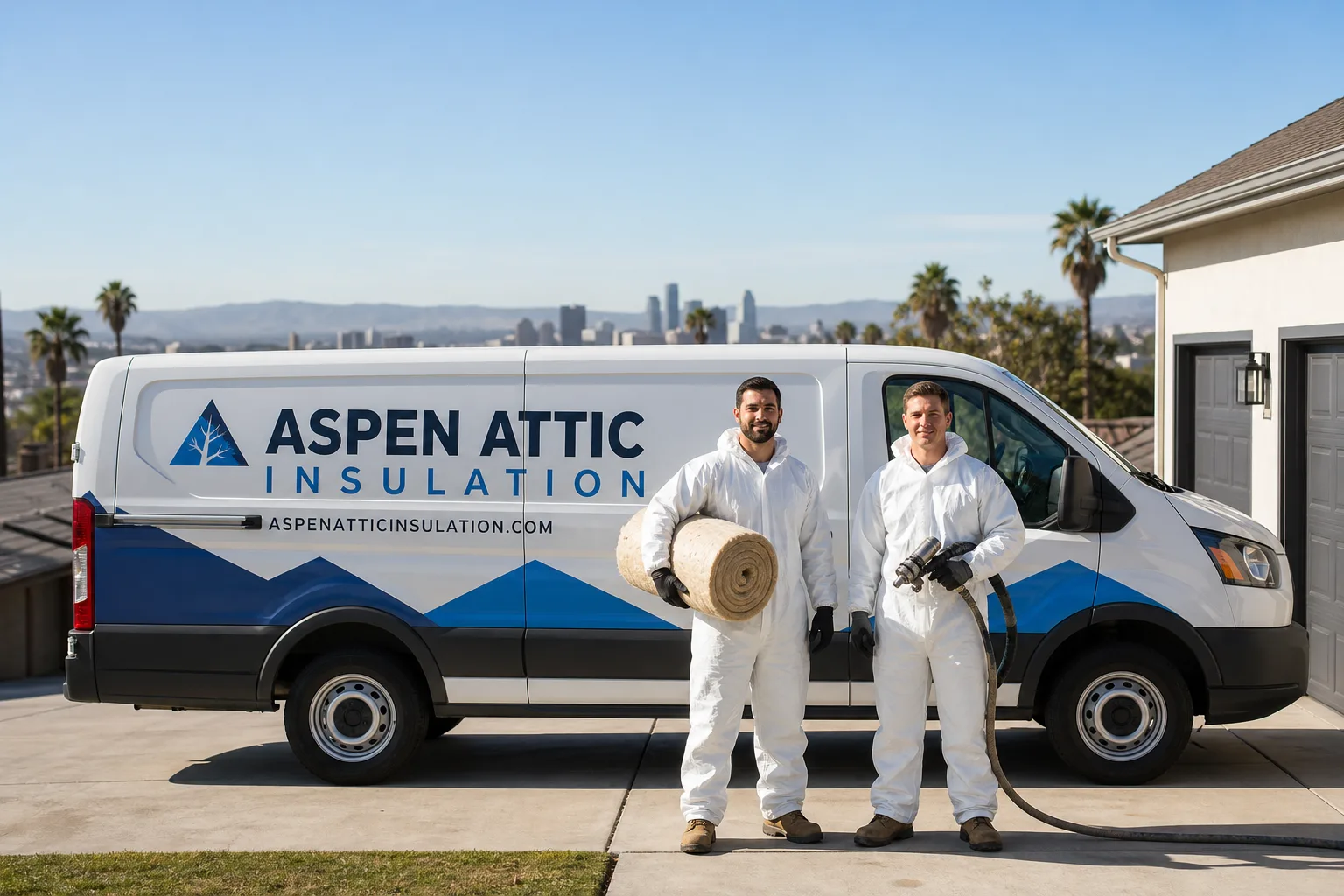
Fast, Reliable Blown In Insulation Across Arcadia
Blown in insulation in Arcadia typically costs $1.80 to $3.20 per square foot installed, with most ranch-style homes running $2,400 to $4,800 for a complete attic. We dispatch crews to Arcadia from our Los Angeles office, and most homeowners get same-day or next-day scheduling. Call (864) 428-1615 for a free written estimate.
We’ve worked in Arcadia’s 1950s – 1970s ranch tracts long enough to know the real problem isn’t always thin insulation, it’s the 2 – 3 inches of eave clearance that chokes ventilation when someone blows new material over unbaffled vents. That’s why our Blown In Insulation team starts every Arcadia job by checking airflow, not just R-value. On Santa Anita Oaks ranches, Lower Rancho homes near the county club, and the post-war streets off Baldwin Avenue, we’ve seen the same pattern: original fiberglass batts compressed to nearly nothing, rodent debris, and attic temperatures that spike 30 degrees above ambient because the intake vents got buried decades ago.
Why Aspen Attic Insulation Is Arcadia’s Preferred Blown In Insulation Company
Arcadia homeowners call us back because we send a technician’s name and photo before anyone knocks. Every tech is background-checked, identity-verified, and arrives in a clean marked uniform with a photo ID badge. If someone else shows up, the visit is free and we make it right. That’s The Threshold Standard, and it’s how we’ve operated since 2002.
Our crews know the San Gabriel Valley’s dry heat patterns and how they punish Arcadia’s low-pitch roofs. We don’t quote from a template. We climb into the attic, measure eave clearance, check for existing baffles, and give you a written price before any work starts. No post-job surprises. Every job carries our 365-Day Done Right Promise in writing, covering labor and materials, with a free second visit if anything fails.
Calls are answered by a live person, 24/7. No voicemail loops. No call-back windows.
Blown In Insulation Contractors in Arcadia
Blown In Insulation Contractors in Arcadia need to understand more than blower machine operation; they need to sequence the job around ventilation first, insulation second. The work involves removing old or contaminated material, installing baffles at the eaves to protect intake vent clearance, air-sealing top plates and penetrations, then blowing loose cellulose or fiberglass fibers to fill the attic cavity uniformly. In Arcadia’s housing stock, this sequencing matters because the original 1960s construction assumed different airflow patterns than modern codes require.
Most Arcadia homeowners need blown-in insulation when their original fiberglass batts have compressed below R-7, when rooms stay hot despite running the AC, or when energy bills spike during San Gabriel Valley summer afternoons. A typical full attic job in Arcadia runs $2,400 – $4,800, with smaller partial fills or top-offs at $1,200 – $2,200.
Ventilation-First Sequencing
We don’t touch the blower until we’ve verified baffles are in place. In Arcadia’s older ranches, missing this step buries the eave vents and traps radiant heat. We check every intake path, install Owens Corning or Johns Manville baffles where needed, then proceed.
Material Matching to Condition
Some attics need full removal first. Others allow targeted air-sealing and blow-over. We stock eight brands including Knauf and Rockwool so we’re not forcing whatever’s on the truck. The right product for your attic’s condition, not our convenience.
Cellulose Insulation in Arcadia
Cellulose Insulation in Arcadia performs well in the dry San Gabriel Valley climate, where moisture concerns are minimal and fire-treated cellulose’s density helps block air movement through the attic floor. Made from recycled paper fibers treated with borate for fire and pest resistance, blown cellulose settles into irregular cavities better than batts and provides consistent coverage across the joist tops. For Arcadia’s ranch-style homes with open attics and scattered recessed light housings, this gap-filling behavior matters.
Arcadia homeowners choose cellulose when they want better sound dampening than fiberglass provides, when they’re replacing rodent-contaminated batts, or when local fire codes favor the treated material. Installed costs in Arcadia run $1.90 – $3.40 per square foot for cellulose, slightly above fiberglass due to material density and the extra attention needed around electrical fixtures.
Borate Treatment and Local Pests
Arcadia’s mature tree canopy and older neighborhoods see roof rat activity. Cellulose’s borate treatment resists pests that fiberglass doesn’t deter. We inspect for entry points before blowing, because no insulation replaces exclusion work.
GreenFiber and Owens Corning Options
We carry GreenFiber recycled cellulose and Owens Corning stabilized cellulose blends. GreenFiber suits homeowners prioritizing recycled content. Owens Corning’s blend adds synthetic fibers for reduced settling over time. We explain both and let you choose.
Trusted Brands We Service in Arcadia
We stock materials from eight industry-leading brands: Owens Corning, Johns Manville, Knauf, Rockwool, CertainTeed, Icynene, Demilec, and GreenFiber. For Arcadia customers, this means no waiting for special orders when your attic needs a specific R-value or fire rating. Our Los Angeles warehouse keeps Owens Corning fiberglass, Knauf blown-in systems, and Rockwool mineral wool on hand for same-week jobs. If your Santa Anita Oaks ranch needs a radiant barrier paired with Johns Manville fiberglass, or your Lower Rancho home calls for GreenFiber cellulose over rigid baffles, we don’t substitute without your approval. Fast turnaround starts with having the right material already loaded.
Common Blown In Insulation Problems We See in Arcadia Homes
- Choked eave vents from unbaffled blow-in. In Arcadia’s 1960s ranches, someone added insulation years ago without baffles, burying the 2 – 3 inches of intake clearance. The attic now functions as a solar collector. We pull the blocking material, install proper baffles, and re-blow correctly.
- Original batts left in place and topped. The compressed, rodent-contaminated R-7 layer stays wet with old urine and nesting debris, while new insulation just hides it. We remove the old layer entirely when contamination is present.
- Heat trapping without radiant barrier or ventilation fix. Adding R-value alone in Arcadia’s poorly ventilated attics can increase moisture retention and peak temperatures. We assess whether a radiant barrier or additional venting belongs in the scope before quoting blow-in work.
- Low-pitch roof clearance violations. Arcadia’s shallow roof pitches mean insulation depth near the eaves must stay below the sheathing plane. We mark and maintain clearance zones to prevent sheathing contact and moisture wicking.
Pricing for Blown In Insulation in Arcadia, CA
Most complete attic blow-in jobs in Arcadia range from $2,400 to $4,800, depending on attic square footage, existing material removal needs, and whether baffles and air-sealing are required. Partial fills or top-offs where the old material stays clean run $1,200 to $2,200. Cellulose runs $1.90 – $3.40 per square foot installed; fiberglass runs $1.80 – $3.20. Adding baffles and air-sealing typically adds $400 – $800 to the base job.
What moves the price: attic accessibility (hatch size and height), contamination level of existing material, number of recessed lights needing protection, and whether a radiant barrier is part of the scope. We give every Arcadia homeowner a written, itemized price before any work begins. No exceptions. Estimates are free. Call (864) 428-1615 to schedule.
We Also Serve Cities Near Arcadia
Our crews work throughout the San Gabriel Valley, including Arcadia neighbors in Monrovia, Temple City, Sierra Madre, and San Gabriel. Each community has its own housing stock patterns and ventilation challenges, and we adjust our approach accordingly.
Serving Arcadia, CA - Our Local Coverage Area
We’re based in the Arcadia area and know this community well. Use the map below to see our service coverage - if you’re nearby, we can almost certainly help.
FAQs About Blown In Insulation in Arcadia
Without baffles, the new insulation drifts into the eave vents and blocks the 2 – 3 inches of intake clearance that Arcadia’s 1950s – 1970s ranches were built with. Choked vents turn the attic into a radiant oven, and the house runs hotter than before we started. We install baffles first to keep the airflow path open, then blow. Call (864) 428-1615 for a free inspection and written quote.
Only if the batts are clean, dry, and reasonably intact. Most Arcadia attics we open have batts compressed to R-7 or less, contaminated with rodent debris, or stained from past leaks. Burying that layer traps the problem. We remove contaminated batts, then blow fresh cellulose. Call (864) 428-1615 and we’ll tell you which category your attic falls into.
In the San Gabriel Valley’s intense summer sun, a radiant barrier often pays for itself faster than additional R-value alone. Arcadia’s dry heat means the primary load is radiant transfer from roof sheathing, not conductive loss. We evaluate your attic’s peak temperatures and ventilation before recommending whether radiant barrier belongs in your scope. Call (864) 428-1615 for a specific assessment.
Low-pitch roofs have less vertical space for insulation depth near the eaves, and the shallow angle means summer sun hits the sheathing longer each day. We maintain strict clearance at the eaves to prevent sheathing contact, and we often recommend pairing blow-in with a radiant barrier because the geometry concentrates heat load. Every Arcadia job we quote accounts for this. Call (864) 428-1615 for details.
We stock eight brands and typically use Owens Corning, Johns Manville, Knauf, Rockwool, or GreenFiber for Arcadia blow-in jobs, matched to your attic’s condition and your priorities. We don’t default to one product. The brand goes in the written quote before work starts. Call (864) 428-1615 to discuss which material fits your home.
Written by Garrett Sloane, Owner at Aspen Attic Insulation, serving Arcadia and the San Gabriel Valley since 2002.