
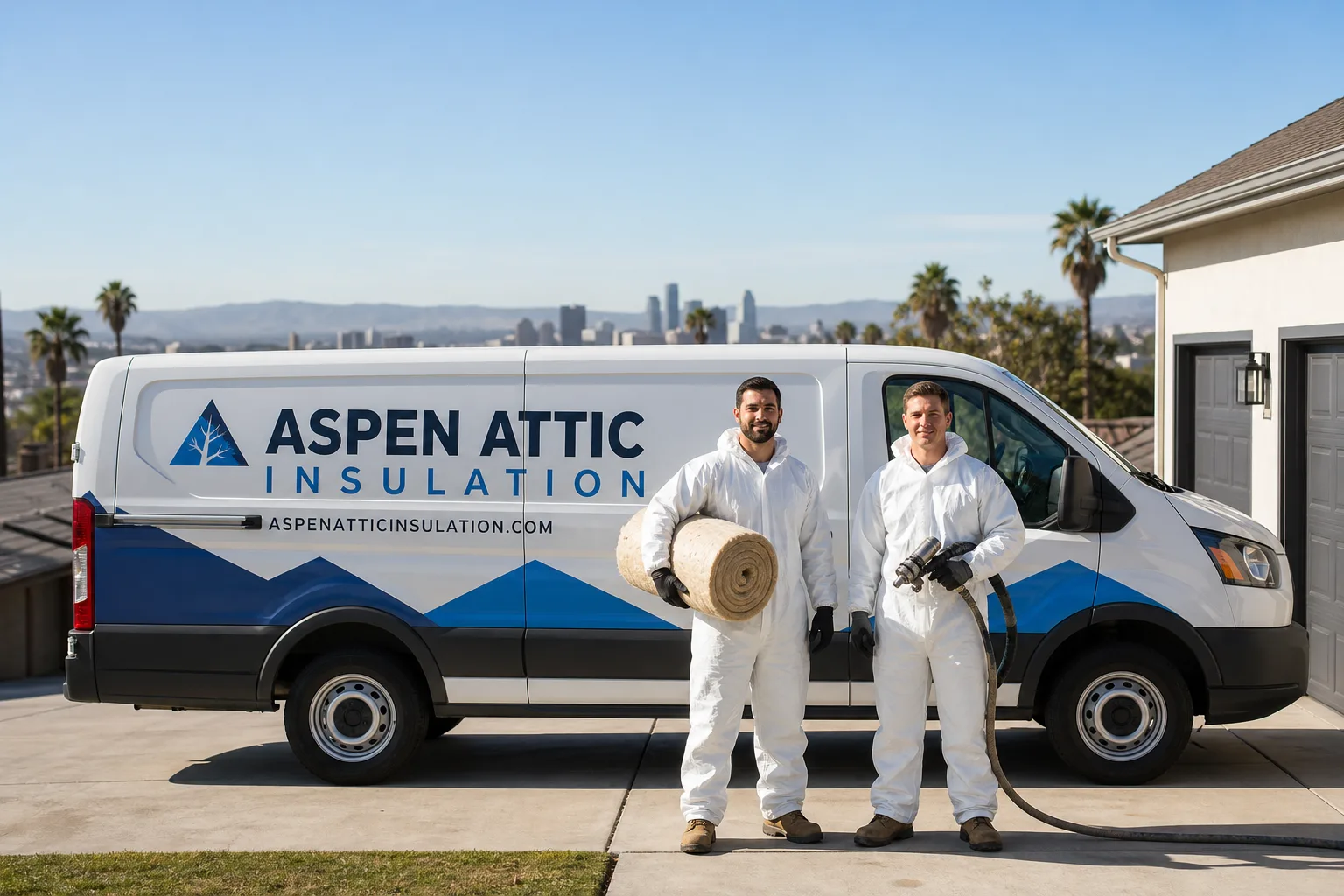
Fast, Reliable Attic Insulation Across Diamond Bar
Attic insulation in Diamond Bar typically costs $1,800 – $4,500 for a full replacement, with blown-in top-ups running $900 – $2,200 and radiant barrier installation adding $1,200 – $2,800. Most Diamond Bar jobs are completed in a single day, and our crews are dispatched from the Los Angeles office with same-day availability for urgent heat issues. Call (864) 428-1615 for a free written estimate.
We’ve worked in Diamond Bar long enough to know the difference between a flat-lot tract home off Grand Avenue and a hillside custom build in The Country. That local knowledge changes everything about how we approach your attic. The steep pitches, limited clearance, and split-level designs that define so much of Diamond Bar’s housing stock aren’t quirks – they’re structural realities that demand specialized equipment and crews who’ve done this work in your specific neighborhood before. When you hire our Attic Insulation team, you’re getting technicians who understand that a standard rollout blower won’t fit in a 30-inch ridge clearance, and who show up with the right gear for your roof geometry.
Why Aspen Attic Insulation Is Diamond Bar’s Preferred Attic Insulation Company
Diamond Bar homeowners choose us because we remove the two uncertainties that keep people from calling: not knowing who will walk through their door, and not knowing what the final bill will say. Every technician is background-checked, identity-verified, and sent to you by name and photo before the visit. They arrive in a clean marked uniform and show a photo ID badge at the door. If anyone else shows up, the visit is free and we make it right. That’s The Threshold Standard, and it’s how we’ve operated since 2002.
Our response time to Diamond Bar averages same-day or next-morning scheduling, with emergency heat-load calls prioritized during summer Santa Ana events. We know the local building patterns – the 1960s – 1990s tracts with original R-11 batts, the 1980s stucco-and-frame builds with inadequate top-plate sealing, the newer hillside custom homes with complex multi-tier attic spaces. That familiarity means faster diagnosis, accurate written pricing before any work starts, and no surprises.
Every job carries our 365-Day Done Right Promise in writing. If the repair or installation fails, we come back free. The price you approve beforehand is the price you pay. No post-job add-ons, no “we found something else” charges. We’ve found that Diamond Bar homeowners, particularly in The Country and the older tracts near Diamond Bar Boulevard, value that transparency enough to choose verified trust over the lowest quote.
Attic Ventilation in Diamond Bar
Attic Ventilation in Diamond Bar is not optional – it’s structural protection. The combination of 95°F+ summer days, Santa Ana wind events, and hillside homes with complex roof geometries creates attic heat loads that destroy shingles, warp plywood, and force air conditioners to run hours longer than necessary. Proper ventilation moves that superheated air out before it radiates downward into your living space.
In Diamond Bar’s 1960s – 1990s tract homes, we regularly find attics with insufficient soffit venting and no ridge vents at all. Builders of that era prioritized speed over airflow. In hillside properties, especially split-level designs, the multi-tier roof planes create dead-air zones that standard vent layouts miss entirely. Our crews calculate net free vent area for each attic zone individually, not as a single blanket number.
When Ventilation Becomes Critical
You’ll know your Diamond Bar attic needs ventilation work when upstairs rooms stay hot past 10 p.m., when your asphalt shingles are curling after eight years instead of twenty, or when you find mold spotting on the north-facing plywood. These are symptoms of trapped moisture and heat, not separate problems. We install baffles, soffit vents, ridge vents, and powered exhaust fans as needed – always with written pricing first.
Hillside-Specific Airflow Challenges
Split-level homes in Diamond Bar’s hillside areas often have attic cavities that don’t communicate with each other. A ridge vent on the upper tier does nothing for the lower tier’s heat buildup. We map each cavity’s airflow path and install dedicated intake and exhaust for isolated zones. This takes longer than standard vent installation, but it’s the only way to protect a multi-tier roof in Diamond Bar’s climate.
Radiant Barrier in Diamond Bar
Radiant Barrier in Diamond Bar pays for itself faster than in almost any other Southern California city. The intense solar load on dark asphalt shingles, combined with Santa Ana wind events that strip away convective cooling, drives attic temperatures past 140°F in summer. A properly installed radiant barrier – typically a reflective foil product or reflective roof decking – can reduce attic heat gain by 20 – 40 degrees, which directly reduces your cooling load and extends HVAC life.
We install radiant barriers in two configurations depending on your Diamond Bar home’s construction. In standard gable attics with adequate clearance, we staple perforated foil to the underside of roof rafters, creating an air gap that blocks radiant heat while allowing moisture to escape. In low-clearance hillside attics like those in The Country, we use reflective roof decking or spray-applied radiant coatings that don’t require working space we don’t have.
Combining Barrier with Insulation
Radiant barrier alone won’t stop conductive heat transfer through your attic floor. In Diamond Bar, we typically pair it with blown-in fiberglass or cellulose to R-38 or R-49, depending on your home’s age and energy goals. The barrier handles the roof’s radiant load; the insulation handles the temperature differential between attic and living space. Together they cut summer cooling costs substantially in a climate where AC runs six months a year.
Stucco and Wood-Frame Considerations
Diamond Bar’s predominant stucco-over-wood-frame construction creates a particular moisture dynamic. Stucco is permeable; it breathes. Without proper attic ventilation paired with your radiant barrier, that moisture can accumulate in the roof assembly. We specify perforated radiant barrier products and ensure existing soffit-to-ridge airflow is functional before installing any reflective layer. This prevents trapping moisture against your rafters.
Trusted Brands We Service in Diamond Bar
We stock materials from eight industry-leading brands – Owens Corning, Johns Manville, Knauf, Rockwool, CertainTeed, Icynene, Demilec, and GreenFiber – and we match the product to the specific conditions of your Diamond Bar attic, not just what we have on the truck. For the low-clearance attics common in The Country, we often specify Owens Corning L77 loose-fill fiberglass, which achieves full R-38 coverage at lower installed depths than competing products. For top-ups in older Diamond Bar tracts with existing batt insulation, Johns Manville Climate Pro blown-in cellulose fills gaps and irregularities that batts leave exposed. Knauf EcoFill and Rockwool Comfortbatt see regular use in our fire-zone and sound-dampening installations. Because we maintain local inventory for Diamond Bar and surrounding areas, we’re not waiting on a distributor run to start your job.
Common Attic Insulation Problems We See in Diamond Bar Homes
- Skipped coverage in low-clearance attics. Steep hillside roof pitches in The Country leave attic spaces with too little clearance for standard insulation equipment, resulting in skipped areas and uneven coverage. We use specialized low-clearance blowers and extension hoses that reach where standard machines can’t.
- Drafts from split-level air leaks. Split-level and multi-tier designs common in Diamond Bar’s hillside homes expose walls to outdoor temperature swings, and without careful air sealing at top plates and knee walls, drafts undermine any added insulation. We seal before we insulate – always.
- Underbuilt original insulation in tract homes. Intense summer heat above 95°F combined with Santa Ana winds drives heat through under-insulated attic floors in Diamond Bar’s 1960s – 1990s tract homes, where builders often installed only R-11 or R-19 batts. A full replacement to modern R-38 or R-49 standards cuts cooling costs measurably.
- Blocked soffit vents from added insulation. Well-meaning homeowners or prior contractors blow insulation deep into eaves, burying soffit vents and killing airflow. We install proper baffles to maintain the intake-exhaust cycle your roof was designed for.
Pricing for Attic Insulation in Diamond Bar, CA
Here’s what attic insulation costs in Diamond Bar’s current market:
- Attic insulation top-up (blown-in over existing): $900 – $2,200
- Attic batt insulation replacement: $1,400 – $3,200
- Full blown-in attic insulation replacement: $1,800 – $4,500
- Radiant barrier installation: $1,200 – $2,800
- Attic ventilation upgrade (baffles, vents, fans): $800 – $2,400
What moves you within these ranges? Attic square footage is the baseline, but in Diamond Bar the bigger cost drivers are access difficulty and air sealing extent. A flat-lot home with a standard scuttle hatch and straight runs costs less than a hillside property requiring specialized low-clearance equipment and extensive top-plate sealing. We assess every attic in person, provide a written price before any work starts, and that price doesn’t change. Estimates are free – call (864) 428-1615 to schedule.
We Also Serve Cities Near Diamond Bar
Our crews work throughout the San Gabriel Valley and eastern Los Angeles County, including Diamond Bar neighbors in Walnut, Pomona, Chino Hills, and Rowland Heights. Each community has distinct housing stock and climate exposures, and we adjust our approach accordingly – flatter lots in Walnut and Rowland Heights don’t present the same hillside challenges we plan for in Diamond Bar and Chino Hills.
Serving Diamond Bar, CA - Our Local Coverage Area
We’re based in the Diamond Bar area and know this community well. Use the map below to see our service coverage - if you’re nearby, we can almost certainly help.
FAQs About Attic Insulation in Diamond Bar
The Country’s steep roof pitches and limited attic clearance require specialized low-clearance blowers, smaller crew configurations, and longer installation times per square foot. Standard equipment literally won’t fit. We also spend more time on air sealing in split-level homes where multiple attic zones connect to living space. The added labor and equipment cost typically runs 15 – 25% above a comparable flat-lot job. Call (864) 428-1615 for a written estimate specific to your home’s geometry.
Radiant barrier is strongly recommended for Diamond Bar’s climate, given the 95°F+ summers and intense solar load on dark roofing. Vapor barrier requirements depend on your existing insulation type and attic ventilation. Stucco breathes, so we generally avoid additional vapor retarders that could trap moisture; instead we prioritize perforated radiant barriers paired with adequate soffit and ridge ventilation. We’ll assess your specific attic conditions and recommend the right combination.
Sometimes, but we need to inspect first. 1970s Diamond Bar batts are often compressed, moisture-stained, or installed with gaps that make top-up ineffective. If the existing material is dry, uncompressed, and free of rodent contamination, we can blow Owens Corning or Johns Manville loose-fill on top to reach R-38 or R-49. If it’s compromised, removal and replacement is the better long-term value. We’ll show you what we find and give you both options in writing.
Split-level homes create isolated attic cavities that don’t share airflow, so a single ridge vent won’t protect the whole roof. Each tier needs its own calculated intake and exhaust path. In Diamond Bar’s hillside properties, we also see more complex hip-and-valley roof geometries that standard vent calculators don’t address accurately. We measure each cavity separately and design ventilation zone by zone.
We recommend R-38 as the practical minimum for Diamond Bar, with R-49 as the better long-term investment given summer heat loads and rising energy costs. The 1960s – 1990s tracts we work in most often were built to R-11 or R-19, so the jump to R-38 produces immediate, noticeable cooling savings. In homes with radiant barrier installed, R-38 performs like a higher nominal value because the barrier reduces the temperature the insulation must resist.
Written by Garrett Sloane, Owner at Aspen Attic Insulation, serving Diamond Bar since 2002.