
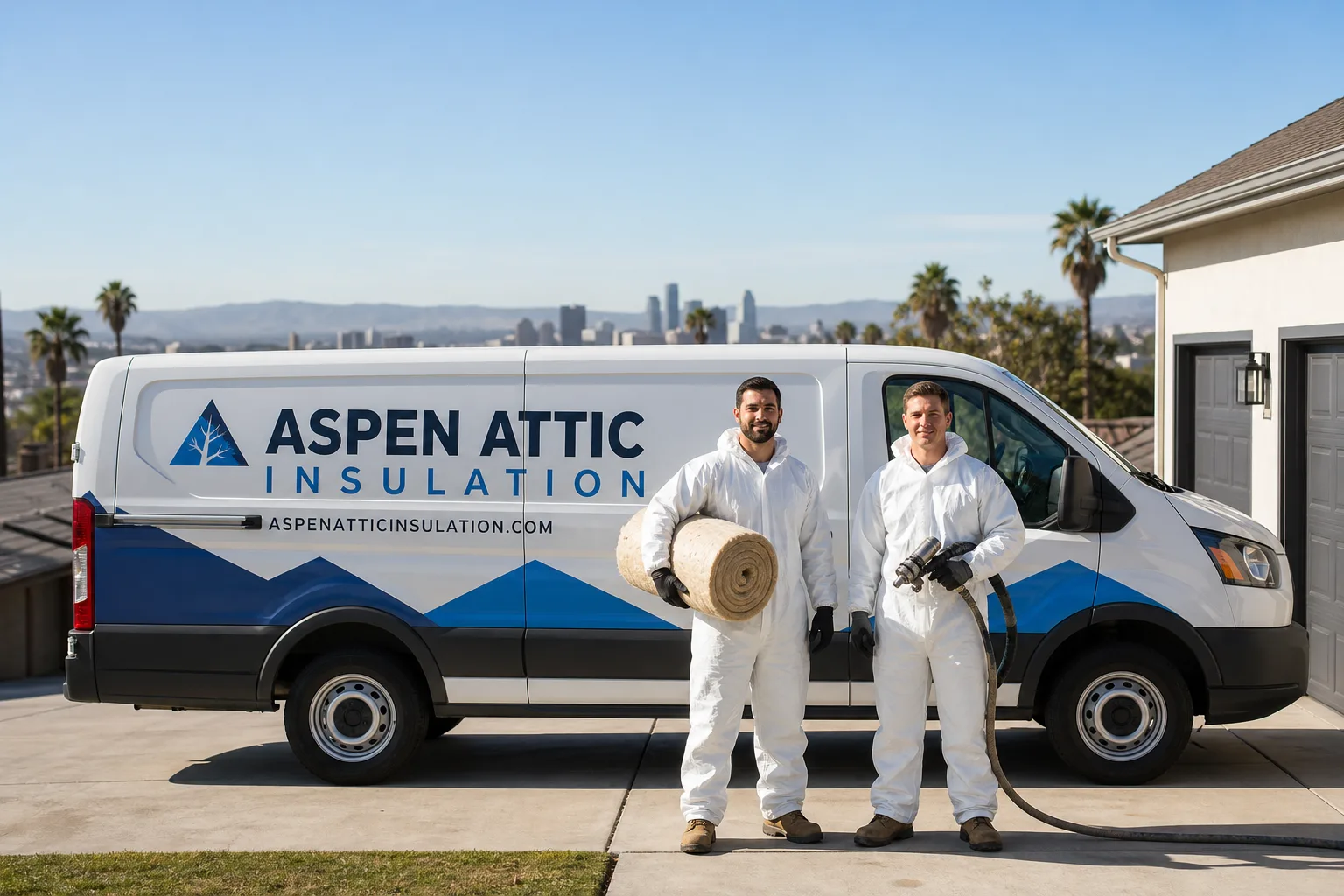
How Much Does Insulation Cost in San Francisco?
Insulation in San Francisco typically costs $1,900 to $5,400 for an average attic or crawlspace job, with most single-family homes landing between $2,400 and $3,800. Blown-in attic insulation runs $1.80 to $3.20 per square foot installed, while spray foam runs $4.50 to $9.75 per square foot. Same-day estimates are free, and every homeowner gets a written price before anyone touches a ladder.
San Francisco is not a typical insulation market. The fog belt, the 1906-era housing stock, the unheated crawlspaces in the Sunset and the sun-baked attics in Bernal Heights all price differently. A contractor quoting flat rates by ZIP code is guessing. We’re not.
As part of the Threshold Group family of independently owned locations, we’ve been doing this since 2002. We put the price in writing before the work starts and back every job with our 365-Day Done Right Promise.
Insulation Cost Breakdown (2026)
Here’s what San Francisco homeowners are actually paying this year. These are installed prices – materials, labor, cleanup, and disposal included. No line-item surprises after the fact.
| Service | Typical Range | Notes |
|---|---|---|
| Blown-in attic insulation | $1,800 – $3,200 | 500 – 1,000 sq ft attic; loose fiber fill |
| Spray foam (open cell) | $2,200 – $4,100 | Best for older Victorians with irregular framing |
| Spray foam (closed cell) | $3,500 – $7,000 | Higher R-value, vapor barrier built in |
| Crawlspace insulation | $2,000 – $4,800 | Common in Sunset, Richmond, Parkside |
| Attic air sealing (add-on) | $600 – $1,400 | Stops the stack effect before adding insulation |
| Insulation removal (old material) | $1,200 – $2,900 | Required if old material is contaminated or rodent-damaged |
| Whole-home attic + crawlspace package | $4,200 – $8,500 | Most common two-zone job in SF |
What pushes a job toward the top of those ranges? Attic access is the big one. A Victorian in the Mission with a 14-inch hatch and 30 feet of ductwork in the way takes longer than a 1950s Sunset home with a proper pull-down stair. Old knob-and-tube wiring also adds time – we don’t leave insulation resting against live conductors. And if we find rodent damage or water-stained material from a past roof leak, removal and disposal gets added to the scope.
What keeps it lower: open access, modern framing, no existing insulation to remove, and a clear attic with no mechanical obstructions. Homes in Noe Valley and Glen Park that were retrofitted in the last 20 years often qualify for a simple top-off.
What Affects Insulation Pricing in San Francisco
Pricing here isn’t random. Six factors drive almost every quote we write.
- Attic access and geometry. San Francisco has the tightest attic access of any market we work in. Post-1906 homes often have 12 to 18 inches of clearance under the roofline. If a technician can’t stand up, labor goes up – not because we’re penalizing you, but because the job genuinely takes longer.
- Fog and moisture load. The Sunset, Richmond, and Outer Parkside sit under marine fog most of the year. Insulation choice has to account for that. Paper-faced batts fail faster in damp crawlspaces than spray foam or faced mineral wool, so we spec the material to the microclimate, not the catalog.
- Housing age and code triggers. Any home built before 1978 triggers a lead-safe work practice requirement under EPA RRP rules. That adds containment time and disposal cost. We handle this every week in Bernal Heights and the Mission.
- Existing material condition. If old insulation is wet, matted, or has rodent tunnels through it, top-off is a waste of money. Removal comes first. We find this in maybe a third of the pre-1940 homes we inspect.
- Air sealing scope. Insulation without air sealing underperforms. We check for the top plate gaps, plumbing penetrations, and recessed can lights that let interior air escape into the attic. Sealing is a modest add-on with an outsized payoff.
- Material brand and R-value target. We carry Owens Corning, Johns Manville, Knauf, Rockwool, CertainTeed, Icynene, Demilec, and GreenFiber. The higher the R-value target – the amount of thermal resistance – the more material and labor. San Francisco’s mild climate means you rarely need the extreme R-values pushed in colder markets, which keeps costs reasonable.
Why Insulation Costs More in San Francisco Than Most Markets
A homeowner moving here from Sacramento or Portland often asks why the same job costs $800 more. Fair question. Three reasons.
First, labor. San Francisco tradespeople are paid on a higher scale, and the city’s permitting and parking realities add hours to a normal day. Second, access. Most of the housing stock wasn’t designed with attic insulation retrofits in mind. Third, moisture. We spec materials that tolerate the marine layer, and those cost more than standard batts.
That said, the payoff here is real. A properly insulated and sealed home in a fog-heavy neighborhood holds warmth overnight, cuts heater runtime, and reduces condensation on north-facing windows. We’ve seen heating bills drop 18 to 30 percent on well-executed retrofit jobs in the Sunset and Richmond.
Blown-In vs. Spray Foam: Which Costs More and Why?
Spray foam costs more up front – typically two to three times the per-square-foot price of blown-in. It also delivers more. Closed-cell foam adds structural rigidity, blocks vapor, and hits higher R-values per inch. Blown-in cellulose or fiberglass is the pragmatic choice for a straightforward attic top-off with good access and no moisture issues.
In San Francisco specifically, we lean spray foam in crawlspaces and anywhere the fog is relentless, and blown-in for upper attics that stay dry. The right answer depends on what we find when we open the access panel. That’s not a sales line – it’s a material reality. A contractor who quotes one product for every home isn’t matching the material to the job.
How to Save on Insulation
The single biggest lever is air sealing before you insulate. Sealing gaps costs $600 to $1,400 and can improve the performance of the insulation you’re already paying for by 15 to 25 percent. Skip it and you’re heating the attic.
A few other ways to keep the number down:
- Bundle attic and crawlspace. Combining both in one visit saves mobilization and equipment time – typically $400 to $800 off the combined price versus scheduling separately.
- Take the top-off when it’s viable. If your existing blown-in is dry and at least 4 inches deep, topping off is far cheaper than full removal and reinstall.
- Check for local rebates. Bay Area utility programs and state efficiency incentives occasionally cover part of an attic insulation upgrade. We’ll tell you what’s currently available during your estimate – we don’t chase rebates that don’t exist.
- Do the small stuff first if you’re on a tight budget. Recessed light covers, attic hatch weatherstripping, and duct sealing are modest jobs with real returns.
- Get a written price before work begins. Every estimate we write is fixed before a technician steps inside. Call (864) 428-1615 for a free one – no pressure, no follow-up sales calls.
One caution: don’t let a low bid talk you into skipping air sealing or installing unfaced batts in a damp crawlspace. That’s the job you’ll pay for twice.
How Long Does an Insulation Job Take in San Francisco?
A typical attic insulation job takes one day – four to six hours for a 700 to 1,000 square foot attic. Crawlspace jobs run similar. If removal of old material is involved, add a half day. Spray foam in a tight Victorian can extend to a full day and a half depending on access.
We don’t do multi-day open-ended jobs without telling you the schedule in writing first. You’ll know the start time, the end time, and the technician’s name and photo before the day begins. That’s part of The Threshold Standard we operate to – identity-verified, background-checked, uniformed technicians on every visit.
FAQs – Insulation Cost in San Francisco
How much does attic insulation cost in San Francisco?
Attic insulation in San Francisco costs $1,800 to $3,200 for blown-in and $2,200 to $7,000 for spray foam, depending on square footage, access, and material. An average 800-square-foot attic with good access typically lands around $2,400 installed. Call (864) 428-1615 for an exact quote – estimates are free.
Is it cheaper to repair or replace insulation?
Repair is cheaper when the damage is localized – a rodent tunnel or a single water stain – and runs $200 to $600. Full replacement costs $1,200 to $2,900 for removal plus new material. The rule we use: if more than 25 percent of the material is compromised, wet, or matted, replacement wins on performance. Call us and we’ll tell you which one your attic needs, not which one pays us more.
Can you insulate my crawlspace the same day I call?
Not usually the same day, but often within 48 hours. Crawlspace jobs require an on-site look first because moisture conditions and existing material vary so much between homes. Attic estimates can frequently be quoted over photos you text us. Call (864) 428-1615 and a live person will answer – no voicemail loops, anytime.
How much does it cost to insulate a 1,000 square foot house in San Francisco?
Expect $2,800 to $4,400 for attic and crawlspace combined on a 1,000-square-foot San Francisco home. Attic-only runs $1,900 to $2,900, crawlspace-only $2,000 to $3,200. The combined price is lower than the sum of the two because we’re already there. For a firm number on your specific address, call (864) 428-1615 – the estimate is free and the price is written before we start.
Will insulation actually lower my heating bill in San Francisco?
Yes, typically 18 to 30 percent on heating, and the effect is most noticeable in fog-heavy neighborhoods like the Sunset, Richmond, and Parkside. San Francisco has mild winters, so the savings are smaller than a cold-climate market, but the comfort gain – no cold drafts, less condensation – is what most homeowners actually notice. Call (864) 428-1615 to schedule a free estimate.
What to Expect When We Show Up
Here’s the part most homeowners care about and most pricing pages skip.
Before anyone knocks, we send you the technician’s name and photo. At the door, they’ll show an identity-verified photo badge and be wearing a clean marked uniform. If anyone arrives who doesn’t match the photo we sent, the visit is free and we make it right. That’s not a marketing promise – it’s the protocol we run on every job, part of The Threshold Standard.
The estimate is written and fixed before work begins. There’s no post-job adjustment, no “we found something extra” upsell. If we discover something mid-job that changes the scope – say, hidden moisture damage the inspection didn’t catch – we stop and get your approval on a revised written price before continuing. Every job is covered by our 365-Day Done Right Promise: if it’s not done right, we come back and fix it at no charge, and there’s a free second visit if a repair fails within the year.
We source materials from eight industry-leading brands – Owens Corning, Johns Manville, Knauf, Rockwool, CertainTeed, Icynene, Demilec, and GreenFiber – because the right product matters. A crawlspace in the Outer Sunset and an attic in Noe Valley don’t call for the same material, and we don’t pretend they do.
Getting a Straight Number
Insulation pricing in San Francisco is more variable than in most markets, mostly because the housing stock is. The ranges above give you a realistic anchor. The only way to get a firm figure is a walkthrough and a written quote. Call (864) 428-1615 – a live person answers 24/7, and the estimate is free. Written price before work starts, every time.
Written by Garrett Sloane, Owner at Aspen Attic Insulation, serving San Francisco since 2002.
Pricing reflects the San Francisco market as of 2026. Aspen Attic Insulation offers free estimates – call (864) 428-1615.
What Our Customers Say
"Vetted crew, which I liked. Installed baffles at the eaves so the vents stay clear."
- Sonia B."Quiet crew and a neat attic. Rooms stay even now."
- Jill K."Blown in cellulose up to R-49 in the attic. Tech badged in at the door and measured the depth with a ruler before and after. Upstairs bedrooms stopped being an oven."
- Fran T.