
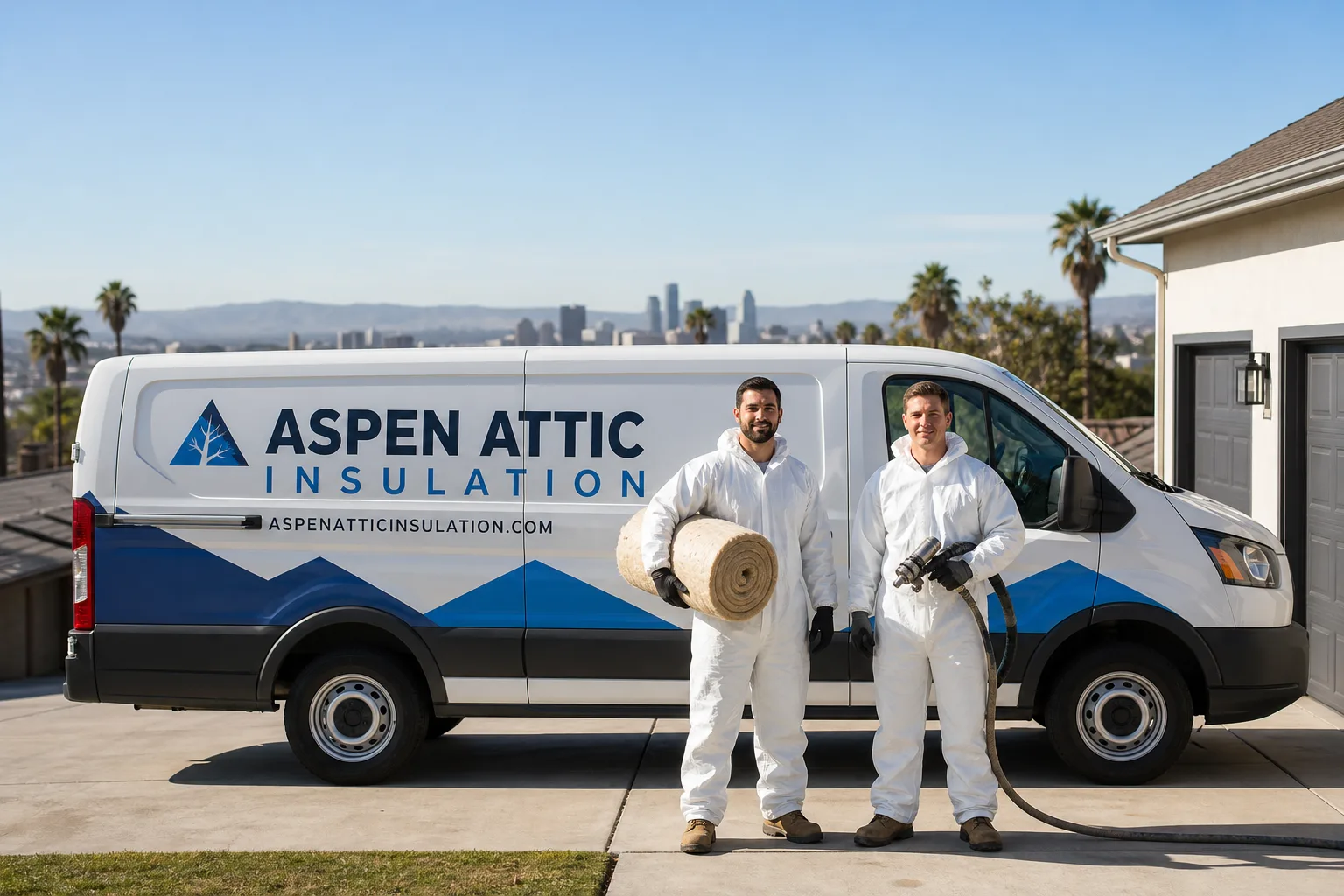
Fast, Reliable Spray Foam Insulation Across Compton
Spray foam insulation in Compton typically costs $1,800 – $4,500 for most residential jobs, with garage ceiling work starting around $1,200 and full exterior wall retrofits reaching $3,500 – $6,000 depending on stucco removal and rewiring needs. Our Spray Foam Insulation crews are dispatched from our Los Angeles office and usually reach Compton properties within 45 minutes to an hour. We know the difference between a 1947 tract house off Rosecrans Avenue and a 1962 ranch near Wilmington Avenue, and we price accordingly.
Compton’s housing stock isn’t like Long Beach’s or Downey’s. Most of what we see here are single-story wood-frame tract homes built between the 1940s and 1960s, stucco over rock lath or gypsum board, with walls that were never insulated and attics that barely meet modern standards. The urban heat island effect pushes attic temperatures well above what coastal areas see, which means your cooling system works harder and your energy bills climb faster than they should. We fix that with closed-cell and open-cell spray foam matched to each cavity, installed by technicians whose names and photos you receive before anyone knocks.
Call (864) 428-1615 for a free written estimate. A live person answers, 24/7.
Why Aspen Attic Insulation Is Compton’s Preferred Spray Foam Insulation Company
We’ve been part of the Threshold Group since 2002, and every location operates to the Threshold Verified standard. That means background-checked, identity-verified technicians who arrive in clean marked uniforms, show photo ID badges at your door, and are sent to you by name and photo before the visit. If anyone else shows up, the visit is free and we make it right.
Compton homeowners tell us the same thing: they want to know who’s coming, what it will cost, and that the work is guaranteed. Our 365-Day Done Right Promise covers every job in writing. Labor and materials, 365 days. If a repair fails, we come back free. Every homeowner gets a written price before any work starts, no exceptions.
We carry materials from eight industry-leading brands, including Owens Corning, Johns Manville, and Knauf, so we match the product to your home instead of forcing whatever’s on the truck. For Compton’s older stucco tract homes, that often means closed-cell foam with higher R-value per inch for thin wall cavities, or open-cell for attic applications where moisture management matters.
Our crews serve Compton daily, and we know the local conditions: the knob-and-tube wiring hidden behind stucco, the low-pitch roofs that trap heat, the Title 24 requirements that uninsulated walls can’t meet. This isn’t generic work. It’s specific to what Compton homes need.
Garage Spray Foam Insulation in Compton
Garage Spray Foam Insulation in Compton addresses a problem most homeowners feel before they measure it: the garage that hits 95 degrees by 10 a.m. and radiates that heat into the kitchen or bedroom above it. Most Compton garages are attached to 1950s tract homes with uninsulated ceilings, sometimes with a bedroom directly overhead. We spray closed-cell foam on the garage ceiling or roof deck to create a thermal barrier, stopping that heat transfer at the source.
A typical garage ceiling spray foam job in Compton runs $1,200 – $2,400, depending on square footage and whether we need to work around existing storage or electrical. Low-pitch garage roofs common in the Richland Farms and Sunny Cove areas are straightforward access for our rigs, but we always check for adequate ventilation first.
When Your Garage Needs Insulation
You’ll know it’s time when the room above your garage is the hottest in the house, or when your garage door opener strains in summer heat. We see this constantly in Compton’s post-war neighborhoods, where original construction treated the garage as an afterthought. Closed-cell foam at 2 – 3 inches on the ceiling deck fixes it permanently.
Ventilation Before Foam
We never spray foam without checking airflow. Compton’s urban heat island already pushes garage temperatures high; trapping that heat with an unventilated foam job would cook your stored items and void the manufacturer’s warranty. Our techs verify intake and exhaust paths before the first trigger pull.
Closed Cell Spray Foam Insulation in Compton
Closed Cell Spray Foam Insulation in Compton is our most common recommendation for exterior wall retrofits, and for specific reasons tied to this city’s housing stock. Closed-cell foam delivers R-6.5 to R-7 per inch, the highest R-value of any spray foam type, which matters when your wall cavities are only 3.5 inches deep and you’re trying to meet Title 24 without adding exterior framing. It’s also a vapor barrier when applied at proper thickness, critical for Compton’s older homes where stucco exteriors have absorbed decades of moisture.
A typical closed-cell exterior wall job in Compton runs $3,500 – $6,000 for a single-story home, including stucco removal, cavity prep, and re-stucco. That price assumes no active knob-and-tube wiring; if we find it, we coordinate licensed electricians to de-energize and reroute before foam goes in. We quote that separately, in writing, before work starts.
Wall Cavity Limitations
Compton’s 1940s – 1950s rock lath walls don’t leave much room. At 3.5 inches, open-cell foam tops out around R-13, below current code for exterior walls. Closed-cell at 2.5 inches hits R-16.5, meeting or exceeding Title 24 requirements without structural modifications. That’s why we specify it for most Compton retrofits.
Structural Rigidity
Closed-cell foam adds 20 – 30 pounds of compressive strength per square inch when cured. For Compton’s aging wood-frame tract homes, that extra rigidity helps stabilize walls that have settled and shifted over 70-plus years. It’s insulation that stiffens while it seals.
Trusted Brands We Service in Compton
We stock materials from eight premium brands, and we pull from Owens Corning, Johns Manville, and Knauf most often for Compton jobs. Owens Corning’s closed-cell formulations perform well in high-heat attic conditions. Johns Manville supplies open-cell products with low VOC off-gassing, important when we’re working in occupied homes near Compton Creek where residents already deal with air quality concerns. Knauf’s ecose technology gives us a plant-based binder option for chemically sensitive households. We don’t order special. These materials sit on our Los Angeles-area trucks, so Compton homeowners aren’t waiting two weeks for a specific foam blend. The right product for your cavity is already loaded.
Common Spray Foam Insulation Problems We See in Compton Homes
- Knob-and-tube wiring hidden behind stucco. Our crew was called to a 1953 stucco tract house near Compton Boulevard and Alameda Street where the homeowner complained of drafty rooms and sky-high summer cooling bills. After carefully removing a section of stucco, we found original rock lath, zero wall insulation, and live knob-and-tube wiring running through the cavities – so we de-energized and rerouted the circuits before spraying closed-cell foam. We finished the job with Icynene closed-cell spray foam in the exterior wall cavities, then applied a cool-roof coating to the low-pitch roof to cut the urban heat island load.
- Attic foam shrinkage from trapped heat. Compton’s low-pitch and flat roofs, common from the Dominguez Hills area to the western neighborhoods, create attics that function like solar ovens. Open-cell foam or under-applied closed-cell foam off-gasses and pulls away from the roof deck within two to three summers. We specify minimum 3-inch closed-cell on roof decks, with dedicated ventilation paths, to prevent this.
- Moisture trapping in uninsulated cavities. The warm-summer Mediterranean climate plus urban heat island effect pushes dew points in ways spray foam contractors from cooler climates don’t anticipate. Foam sprayed over damp stucco or into cavities with existing moisture condensates at the foam-to-substrate boundary, rotting studs from the inside. We moisture-test every cavity with thermal imaging before spraying.
- Garage-to-living-space heat bleed. Attached garages in Compton’s tract neighborhoods were built with nothing but drywall between garage ceiling and bedroom floor. In summer, that ceiling radiates 100-plus-degree heat upward. We spray 2-inch minimum closed-cell on garage ceilings to break that thermal bridge.
Pricing for Spray Foam Insulation in Compton, CA
Here’s what spray foam insulation costs in Compton’s market right now:
| Service | Typical Range |
|---|---|
| Garage ceiling spray foam (single bay) | $1,200 – $2,400 |
| Garage ceiling spray foam (double bay) | $2,000 – $3,600 |
| Closed-cell exterior walls, single-story home | $3,500 – $6,000 |
| Open-cell attic floor (1,200 sq ft) | $1,800 – $3,200 |
| Closed-cell roof deck (1,200 sq ft) | $3,000 – $5,500 |
| Rim joist spray foam (pier-and-beam foundation) | $800 – $1,800 |
Stucco removal and reinstallation adds $8 – $14 per square foot of wall area. Knob-and-tube rewiring is quoted by our electrical partners, with pricing given in writing before any demolition. Every estimate we provide is free, detailed, and fixed. The price you approve is the price you pay. Call (864) 428-1615 to schedule.
We Also Serve Cities Near Compton
Our crews work throughout the Los Angeles Basin, including Gardena to the west, Carson to the south, Lynwood to the north, and Paramount to the east. Each of these cities shares Compton’s mix of post-war tract housing and urban heat challenges, though the specific retrofit conditions vary. If you’re just outside Compton city limits, we still dispatch from our Los Angeles office and maintain the same response times and pricing structure.
Serving Compton, CA - Our Local Coverage Area
We’re based in the Compton area and know this community well. Use the map below to see our service coverage - if you’re nearby, we can almost certainly help.
FAQs About Spray Foam Insulation in Compton
Your garage ceiling is probably uninsulated drywall or bare framing, creating a thermal bridge that radiates heat into any room above it. Compton’s urban heat island pushes garage temperatures 10 – 15 degrees higher than shaded outdoor air, and that heat moves straight through uninsulated ceilings. We spray closed-cell foam on garage ceilings to break that transfer. Call (864) 428-1615 for a free garage assessment.
No, and any contractor who says otherwise is creating a fire and code violation. Compton’s 1940s – 1950s rock lath walls almost always conceal knob-and-tube wiring that must be de-energized and rerouted before foam goes in. We remove stucco sections, inspect with licensed electricians, then spray after the cavities are verified safe. The extra step adds time and cost, but it’s non-negotiable for safety.
We specify Icynene closed-cell foam for most Compton exterior wall retrofits because it bonds aggressively to irregular surfaces and delivers the R-value needed in thin cavities. For attic applications where moisture management is the priority, we often use Johns Manville open-cell products. The specific recommendation comes after we inspect your cavities, measure depths, and check for existing moisture.
Yes. Uninsulated walls in Compton’s pre-1960s tract homes typically perform at R-3 to R-5, far below current Title 24 standards. Closed-cell foam at 2.5 inches achieves R-16.5 in wall cavities, bringing most retrofits into compliance without exterior framing modifications. We document R-values and installation depths for permit applications.
Absolutely. Compton’s heat island pushes attic and roof deck temperatures 15 – 20 degrees higher than coastal Los Angeles on summer afternoons, which accelerates foam off-gassing and increases moisture drive from stucco exteriors. We specify higher-density closed-cell formulations for roof decks, verify ventilation rates with manual calculations rather than rules of thumb, and schedule stucco removal during drier periods to prevent moisture trapping. These aren’t theoretical concerns; they’re field adjustments we make on every Compton job.
Written by Garrett Sloane, Owner at Aspen Attic Insulation, serving Compton since 2002 as part of the Threshold Group family.