
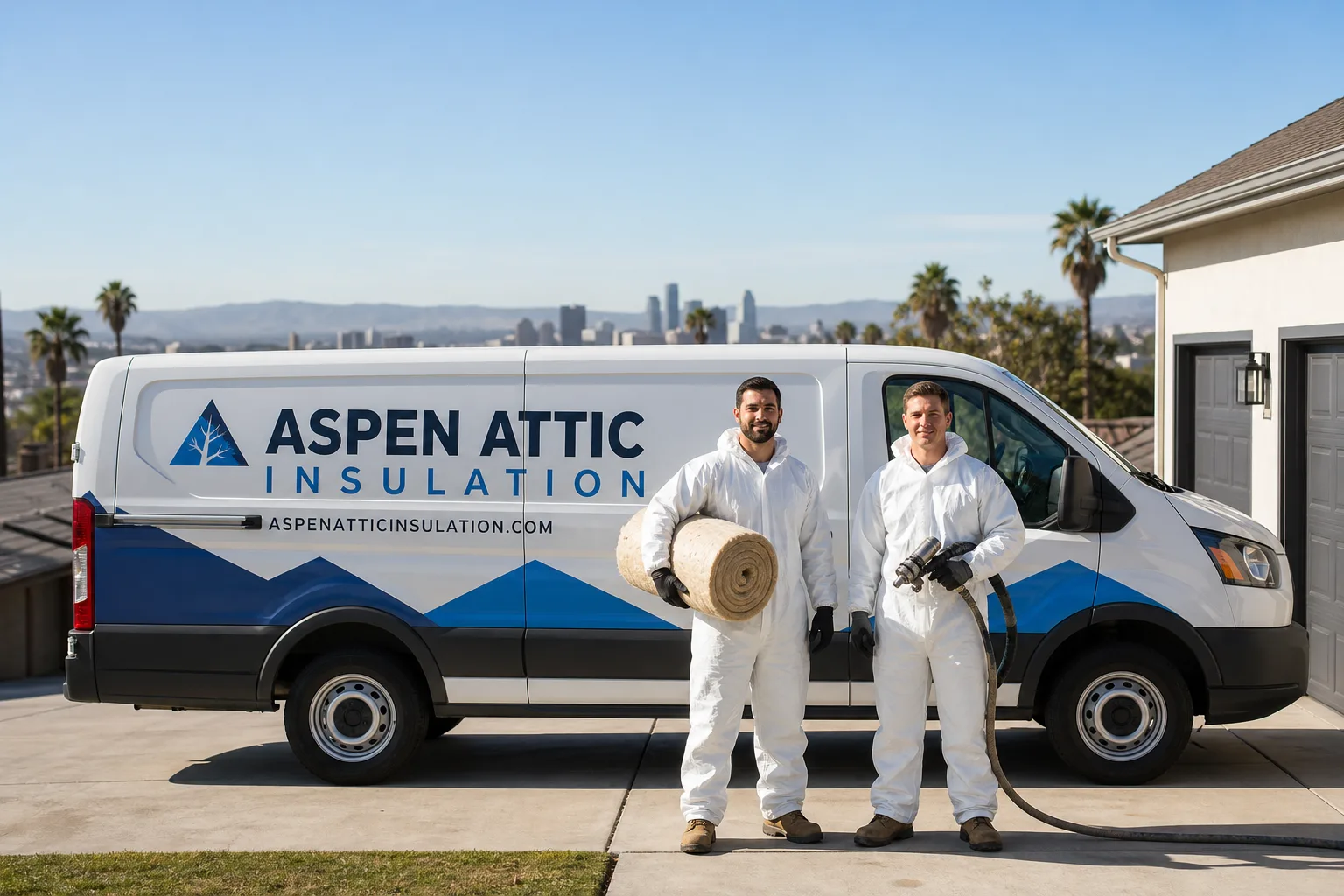
Fast, Reliable Blown In Insulation Across Manhattan Beach
Blown-in insulation in Manhattan Beach runs $1,800 – $3,800 for a typical attic, and most jobs are completed in a single day. Our crews are dispatched from the Los Angeles office and serve Manhattan Beach directly, so we understand the coastal conditions that destroy insulation here. Call (864) 428-1615 for a free written estimate.
We’ve worked in the bungalows off Highland Avenue, the raised foundations in the Sand Section, and the newer builds up on the hill near Manhattan Beach Boulevard. Manhattan Beach isn’t like inland South Bay cities. The marine layer sits heavy most mornings. Salt air works its way into every gap. And in the Sand Section, king tides push water up through crawl spaces that inland homes in Torrance or Gardena never deal with. That’s why our Blown In Insulation team treats moisture control as the first problem and thermal performance as the second.
Why Aspen Attic Insulation Is Manhattan Beach’s Preferred Blown In Insulation Company
Manhattan Beach homeowners have a specific worry: who’s walking through their door? We answer that before anyone knocks. Every technician is background-checked, identity-verified, and sent to you by name and photo before the visit. They arrive in a clean marked uniform and show a photo ID badge at the door. If anyone else shows up, the visit is free and we make it right. That’s The Threshold Standard, and it’s how we’ve operated since 2002.
Our 365-Day Done Right Promise covers every job in writing. If a repair fails, we come back free. Every homeowner gets a written price before any work starts. No post-job surprises. Calls are answered by a live person 24/7, not a voicemail loop.
We know the local housing stock. Original 1940s beach bungalows with minimal insulation. 1960s ranch homes with degraded vapor barriers. Post-2000 multi-story builds sealed tight but poorly ventilated. Each type fails differently in Manhattan Beach’s climate, and we match materials from eight premium brands to the specific problem.
Blown In Fiberglass Insulation in Manhattan Beach
Blown In Fiberglass Insulation in Manhattan Beach is loose fiberglass fibers blown into attic cavities and wall spaces to fill gaps that batts can’t reach. In Manhattan Beach, we use it most often in older homes with open attics and in retrofits where we need to add R-value without tearing out drywall. A typical attic job runs $1,800 – $3,200 depending on square footage and existing conditions. We source Owens Corning and Johns Manville fiberglass specifically rated for coastal humidity.
When Fiberglass Works Best
Blown fiberglass fits attics with irregular joist spacing, dropped soffits, and existing wiring that makes batt installation awkward. It fills around ducts and light fixtures without compression. In Manhattan Beach’s mild climate, we target R-38 to R-49 in attics, which is typically 10 – 14 inches of settled fiberglass.
Where Fiberglass Fails Here
Fiberglass near crawl space floors is a problem in Manhattan Beach. The Sand Section’s king tides wick moisture up through raised foundations. When blown fiberglass sits on damp joists or a failed vapor barrier, it mats into dark clumps within a season. We see this on 34th Street, on Marine Avenue, in the walk streets. The fix isn’t more fiberglass. It’s encapsulation first, then insulation.
Loose Fill Insulation in Manhattan Beach
Loose Fill Insulation in Manhattan Beach refers to cellulose or mineral wool fibers blown dry into attic floors and dense-packed into walls. We use GreenFiber cellulose and Rockwool mineral wool for Manhattan Beach jobs where fire resistance, sound dampening, or eco-friendly material matters. Typical loose fill attic jobs run $2,200 – $3,800. Dense-packing existing walls adds $1,500 – $2,800 depending on access.
Cellulose for Older Bungalows
GreenFiber cellulose, treated with borate for pest and fire resistance, works well in Manhattan Beach’s 1940s – 1960s bungalows where we’re filling empty wall cavities from the exterior. The material settles slightly but maintains R-value for decades when dry. The catch: it must stay dry. A single roof leak or crawl space flood turns cellulose into a mold source. We always inspect vapor barriers and roof flashing first.
Mineral Wool for Multi-Story Builds
Rockwool loose fill handles the newer Manhattan Beach homes built after 2000. These houses are sealed tight against coastal humidity but often lack proper attic ventilation. Mineral wool doesn’t absorb moisture like cellulose, and it won’t support mold growth. We pair it with baffle installation to keep soffit vents clear and prevent condensation against the roof deck.
Trusted Brands We Service in Manhattan Beach
We stock materials from eight industry-leading brands and match the product to the specific Manhattan Beach condition, not whatever’s on the truck. For blown-in work we pull most often from Owens Corning, Johns Manville, Knauf, and Rockwool. Owens Corning fiberglass handles standard attic fills with predictable settling rates. Johns Manville supplies high-density fiberglass for tight cavities. Knauf’s EcoSeal system pairs well with loose fill in retrofit jobs. Rockwool gives us fire-resistant, water-repellent mineral wool for damp-prone areas. We keep these materials on hand so Manhattan Beach customers don’t wait for special orders. Most jobs start within 48 hours of estimate approval.
Common Blown In Insulation Problems We See in Manhattan Beach Homes
- Marine-layer moisture destroys vapor barriers in pre-1970 bungalows. The cool, damp air that rolls in most mornings finds every gap in original kraft paper or missing polyethylene. Within one or two seasons, blown-in fiberglass mats down against drywall or joists and loses half its R-value. We find this constantly in the flat-roofed bungalows near the pier.
- King tide flooding in Sand Section crawl spaces kills loose fill. Raised foundations on 28th Street, 32nd Place, the walk streets. Saltwater wicks up through soil and sits against floor joists. Any insulation touching that damp wood becomes a mold nursery. Encapsulation has to happen before reinsulation.
- Post-2000 multi-story homes trap condensation in sealed attics. Builders sealed these houses tight for energy code but skipped proper ridge and soffit ventilation. Blown-in insulation against a roof deck with no air flow creates condensation that corrodes fasteners and stains drywall. We add baffles and verify venting before blowing anything new.
- Retrofit blown-in over old degraded material creates double trouble. Homeowners add new fiberglass on top of 60-year-old batts compressed by rodent activity or past leaks. The new material can’t perform because it’s sitting on a wet, compressed base. We remove the old, treat for mold if needed, then install fresh.
Pricing for Blown In Insulation in Manhattan Beach, CA
A typical blown-in insulation job in Manhattan Beach runs $1,800 – $3,800 for attics and $2,500 – $4,500 for crawl space encapsulation plus reinsulation. Wall dense-packing adds $1,500 – $2,800. What moves you within those ranges: attic square footage, existing material removal, accessibility, and whether we need to install or repair vapor barriers first.
The Sand Section jobs cost more because encapsulation is mandatory before insulation. Skip that step and you’re reinsulating again in a year. We give you a written price before any work starts. Every estimate is free. Call (864) 428-1615.
We Also Serve Cities Near Manhattan Beach
Our crews work throughout the South Bay. We handle Blown In Insulation in Manhattan Beach and also serve Hermosa Beach, El Segundo, Lawndale, and Hawthorne. Each area has different soil conditions, tide exposure, and housing stock, so we adjust materials and methods accordingly.
Serving Manhattan Beach, CA - Our Local Coverage Area
We’re based in the Manhattan Beach area and know this community well. Use the map below to see our service coverage - if you’re nearby, we can almost certainly help.
FAQs About Blown In Insulation in Manhattan Beach
King tides push saltwater up through raised-foundation crawl spaces in the Sand Section, and standard blown-in fiberglass or loose fill wicks that moisture directly into the material. Inland neighborhoods like the Hill Section or Liberty Village don’t have this tidal exposure, so their insulation lasts longer with basic vapor barriers. If your home is in the Sand Section, we always inspect for tide damage and recommend encapsulation before any blown-in work. Call (864) 428-1615 for a free crawl space assessment.
It can be, but only after the crawl space is properly sealed. Original 1950s bungalows in Manhattan Beach usually have degraded vapor barriers or none at all, and the marine layer keeps those spaces damp year-round. We remove old material, install a 12-mil sealed vapor barrier, verify dryness with a moisture meter, then blow in new insulation. Skipping the prep step wastes your money. We give you a written price for the full job before starting.
Wet or even damp insulation loses 30 – 50% of its rated R-value because water conducts heat where trapped air should resist it. Manhattan Beach’s marine layer keeps relative humidity high most mornings, especially within a few blocks of the beach. Without intact vapor barriers and proper ventilation, blown-in fiberglass mats down and cellulose absorbs moisture. We specify moisture-resistant materials and verify barrier integrity to protect your R-value.
Condensation is almost certainly forming against your roof deck. Newer Manhattan Beach homes are sealed tight for humidity control but often lack adequate ridge vents, soffit baffles, or both. Warm moist air hits the cold roof sheathing, condenses, and soaks your insulation. We inspect venting, add baffles if blocked, and replace any moisture-damaged material. The fix is ventilation first, insulation second. Call (864) 428-1615 and we’ll diagnose it.
We remove it. Old compressed or moisture-damaged insulation creates a compromised base that ruins the performance of new material on top. In Manhattan Beach specifically, old fiberglass often hides salt residue or mold from past marine layer intrusion. We vacuum out the old, inspect the deck and barriers, treat any mold, then install fresh blown-in insulation with full R-value. You’ll get a written price for removal plus new installation before any work starts.
Written by Garrett Sloane, Owner at Aspen Attic Insulation, serving Manhattan Beach since 2002.